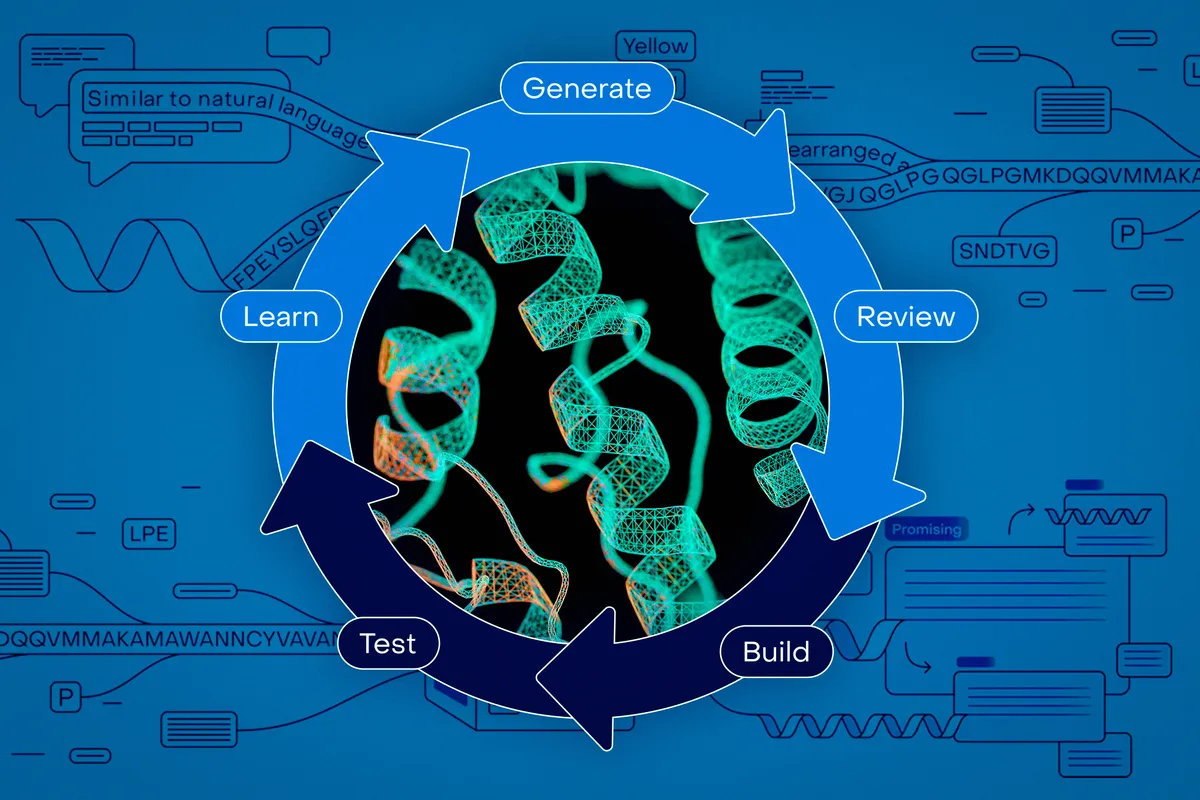
AI is busy rewriting the rules for drug development and disease understanding. But here’s the rub: most scientists aren't exactly fluent in machine learning. So, how do you get groundbreaking AI tools into the hands of the people who actually need to use them to, you know, cure things?
Enter OpenProtein.AI, a company that’s basically handing scientists the keys to the AI kingdom, no coding required. They’ve built a platform that lets researchers design proteins, predict their structures and functions, and even train their own models, all without needing to become a machine-learning expert overnight.
Your New Biotech Best Friend
Founded by Tristan Bepler PhD ’20 and former MIT associate professor Tim Lu PhD ’07, OpenProtein.AI is already supplying its specialized AI models for protein engineering to big pharma and biotech companies. And for academic scientists? It’s completely free. Let that satisfying number sink in.
We're a new kind of news feed.
Regular news is designed to drain you. We're a non-profit built to restore you. Every story we publish is scored for impact, progress, and hope.
Start Your News DetoxBepler calls it an exciting time, which, when you think about it, is both impressive and slightly terrifying. AI models are making protein engineering faster and more efficient, accelerating the development of treatments and industrial products. The ultimate goal? To create a “language” that can describe entire biological systems. Because apparently that’s where we are now.
Bepler's journey started at MIT in 2014, when he realized just how little we understood about the fundamental molecules of biology. He observed that biomolecules and proteins were too mysterious to predict how a whole genome or protein network would truly behave. So he dove deep into understanding proteins.
Before Google dropped AlphaFold, the protein structure prediction model that made headlines, Bepler was already exploring how to predict amino acid chains by sifting through evolutionary data. This led to one of the first generative AI models for understanding and designing proteins — what his team calls a protein language model. He was fascinated by the intricate dance between a protein’s sequence, structure, and function, wanting to use AI to jump straight from sequence to function, skipping the structure altogether.
After snagging his PhD in 2020, Bepler joined Lu’s lab. Lu remembers this as the moment AI and biology started to seriously flirt. They spotted a major gap: cutting-edge AI tools were out there, but the biologists who could actually use them didn't speak code. Thus, OpenProtein.AI was born, with the mission to democratize these powerful tools.
Bepler knew AI could supercharge scientific work. The challenge was making complex machine learning (which requires specific implementations, powerful GPUs, and fine-tuning) accessible. His solution? A user-friendly web interface where biologists can upload data and dive into protein engineering. It even includes open-source models like PoET, OpenProtein’s flagship protein language model.
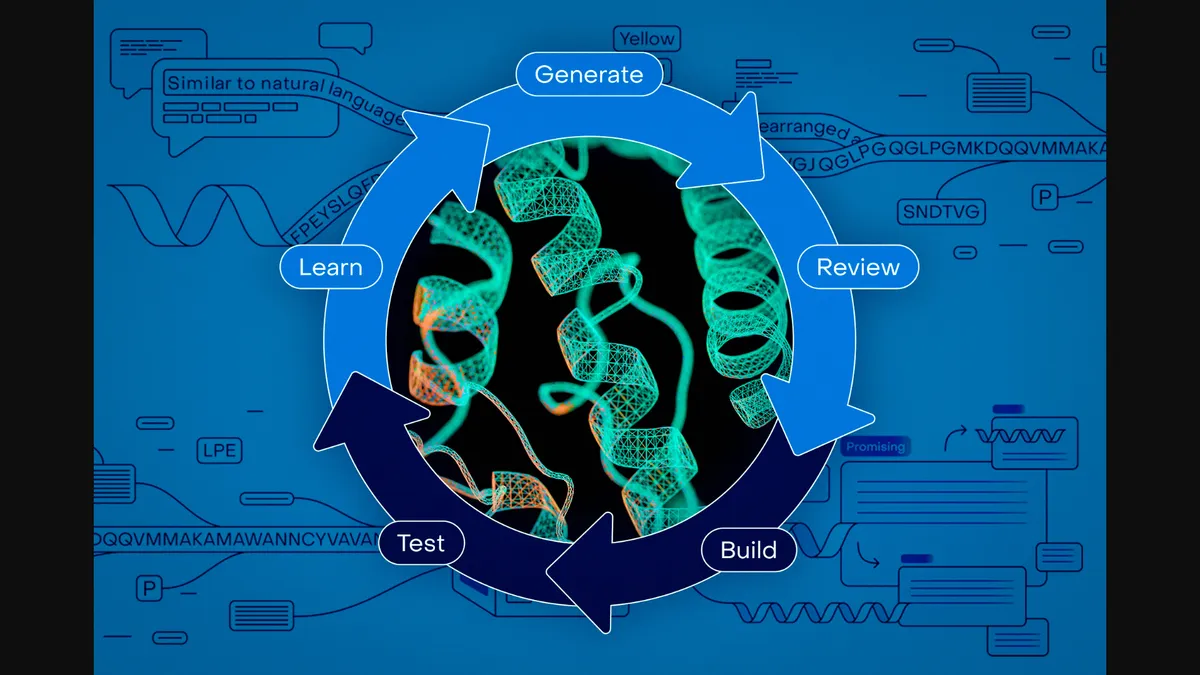
PoET, short for Protein Evolutionary Transformer, was trained on protein groups to understand evolutionary rules. It can even incorporate new information about protein sequences without needing a full retraining, allowing researchers to refine the model with their own experimental data. Researchers can use their own data to train models, optimize protein sequences, and then use other tools for analysis. Think of it as a digital protein library where you can design new proteins with similar traits to ones you’re interested in.
Crafting the Future of Medicine
Big pharmaceutical player Boehringer Ingelheim, for instance, started using OpenProtein’s platform in early 2025 and has already expanded their partnership. They'll be using it to engineer proteins for treating diseases like cancer and autoimmune conditions. Because if you’re going to fight the big battles, you might as well bring the biggest guns.
Last year, OpenProtein released PoET-2, an updated version that outperforms much larger models while using significantly fewer computing resources and less experimental data. Which, if you’re into efficiency and not melting down your lab’s server, is a pretty big deal.
Bepler is now focused on finding the right "language" to describe protein constraints and enzymatic reactions, so models can generate sequences to perform those reactions. Meanwhile, Lu is thrilled about predicting and designing dynamic features — proteins that can engage multiple biological mechanisms or change function after binding. Because why have a static protein when you can have one that moonlights as a shapeshifter?
As AI continues its rapid march, OpenProtein is ensuring scientists everywhere have the best tools to develop new treatments, faster. Lu emphasizes the importance of open ecosystems around AI and biology, ensuring these powerful resources aren't hoarded, allowing every researcher to advance science. Because the future of medicine shouldn't just be for the code-savvy.