A US robotics startup has developed an AI model that helps robots perform tasks they were never taught. This system, called π0.7, is an early step toward a robot brain that can handle new jobs using simple language.
Physical Intelligence, the San Francisco-based company, said the results were unexpected. If these findings are confirmed, it means robot AI could be advancing faster than expected.
A Robot Brain That Learns New Tricks
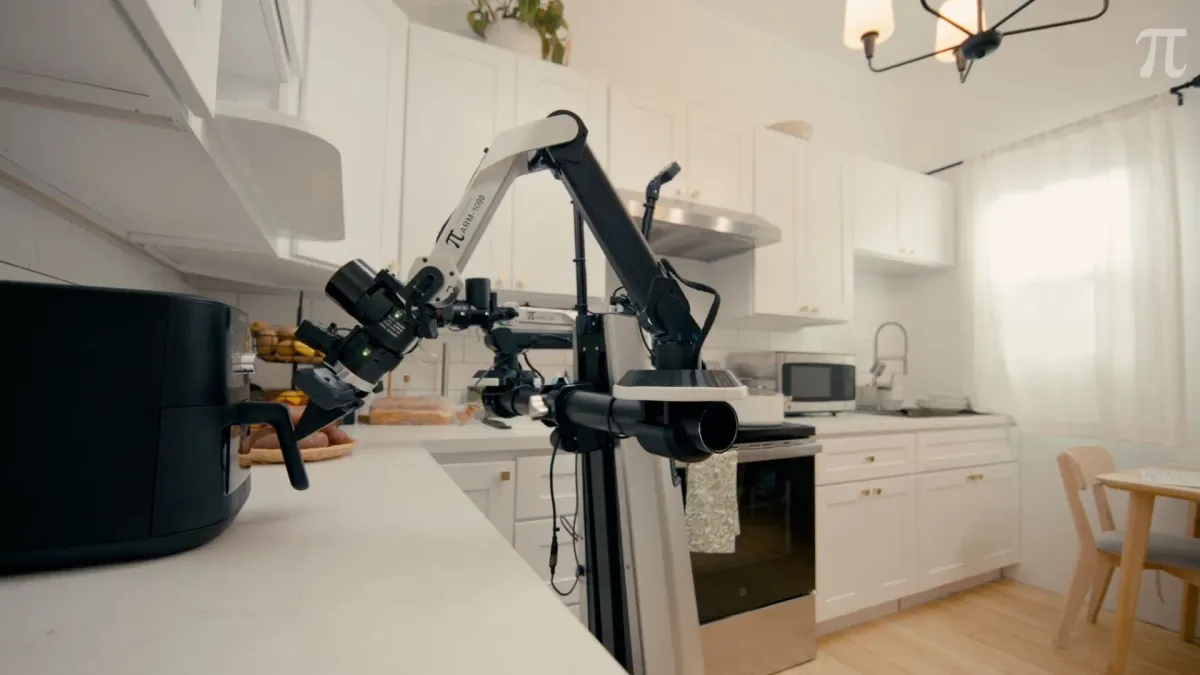
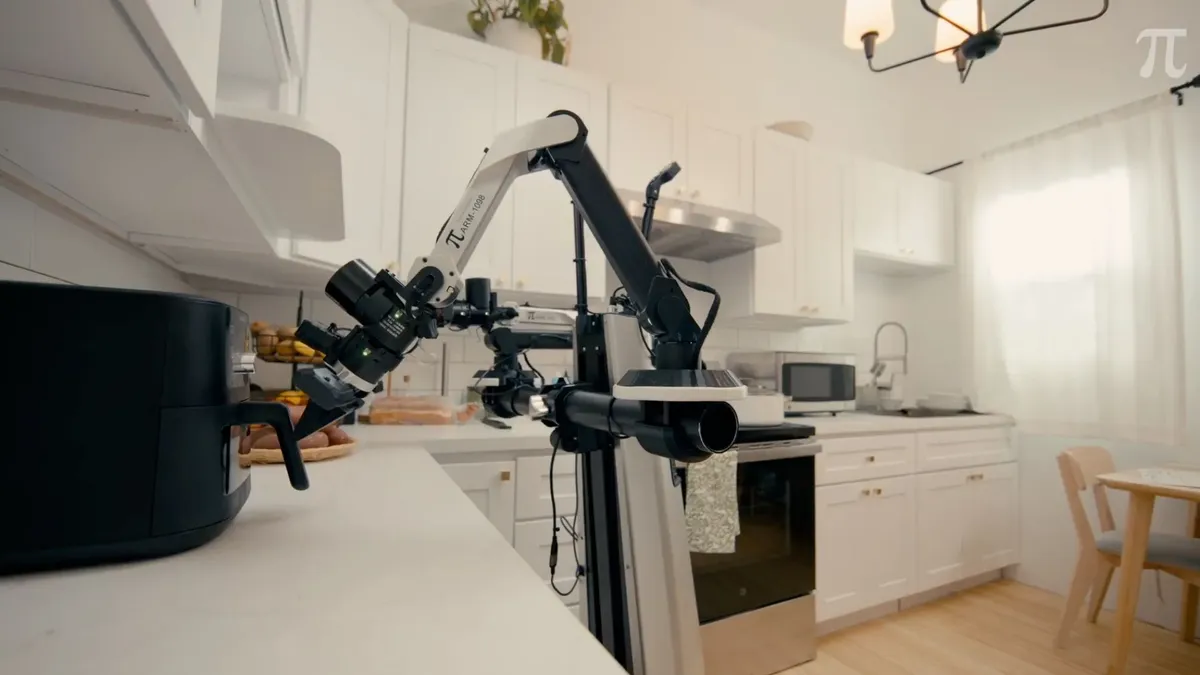
The company noted that π0.7 shows the first signs of "compositional generalization." This means it can combine skills from different tasks to solve new problems. For example, it can use new kitchen appliances or even fold laundry, even if it wasn't specifically trained for those tasks.
We're a new kind of news feed.
Regular news is designed to drain you. We're a non-profit built to restore you. Every story we publish is scored for impact, progress, and hope.
Start Your News DetoxThis new model is a big step toward a general-purpose robot brain. It can handle unfamiliar tasks with plain language instructions. Researchers say it's a clear improvement in how robots generalize. It can do many complex tasks as well as specialized systems. Crucially, it can also do tasks that weren't in its training data.
The model combines learned skills to solve new problems. This is different from traditional robot training, which usually needs new data and separate models for each task. Older systems struggled to combine skills in new ways. But π0.7 can use its existing abilities in new situations without extra fine-tuning. It also works better across different robots, environments, and tasks.
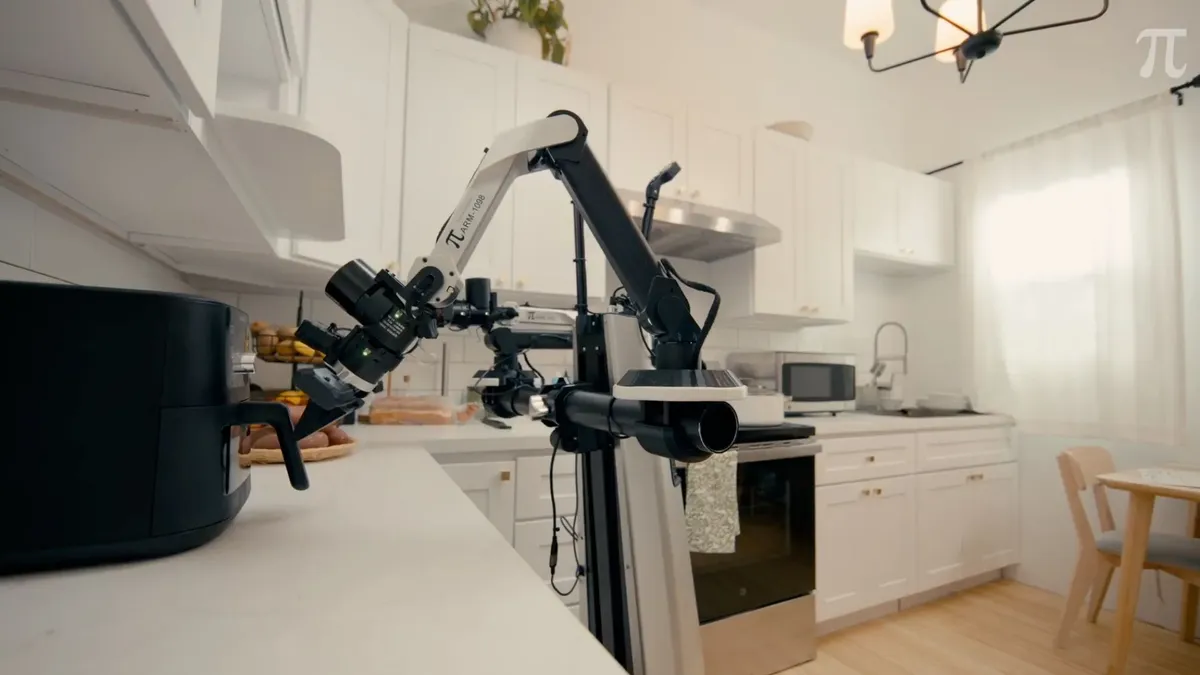
These results suggest robots are moving from task-specific training to more flexible, general systems. Their abilities can grow more efficiently as they learn to reuse and combine knowledge.
How the AI System Works
π0.7's ability to generalize comes from its training and how it receives instructions. It doesn't rely on just one data source. Instead, it uses a mix of inputs from many robot platforms, human demonstrations, and self-collected experiences.
The system is trained with rich, multi-modal prompts. These prompts define the task and also include execution details. They can have text instructions, visual subgoals (like how objects should be arranged), and parameters such as how long a task should take. This extra context helps the model understand different behaviors and strategies, making it more flexible.
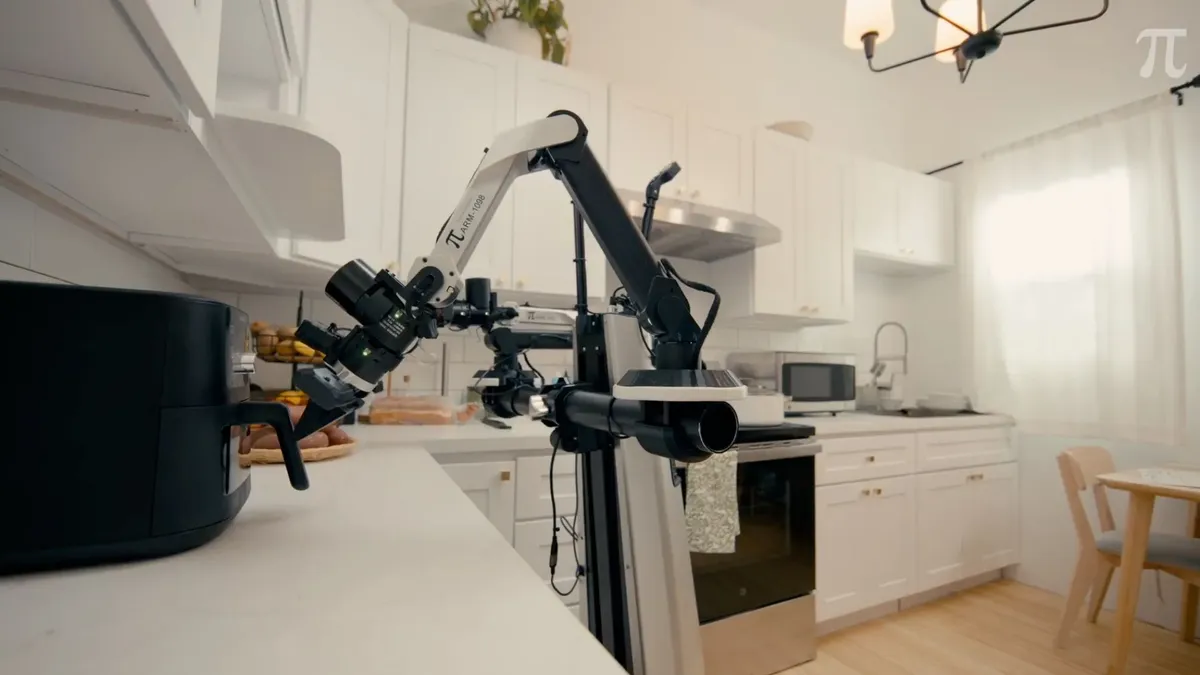
When the model is working, it can follow standard language instructions. It can also use guidance like desired strategies or visual targets. This allows it to adapt in real time and improve performance without needing to be retrained.
Tests showed the system could figure out how to use unfamiliar objects. It combined a few prior examples with its broader knowledge. With minimal guidance, it tried new tasks. Its performance improved a lot with structured, step-by-step instructions.
This approach highlights a shift toward interactive learning. Human feedback and prompt design are very important for the results. However, the system still needs detailed guidance for tasks with many steps. It can't yet do complex instructions from a single command on its own.
Researchers also pointed out that there are no standard benchmarks to test these systems. This makes independent validation difficult. The findings are still early, but they suggest robots will become more adaptable and able to do more than their original training allowed.