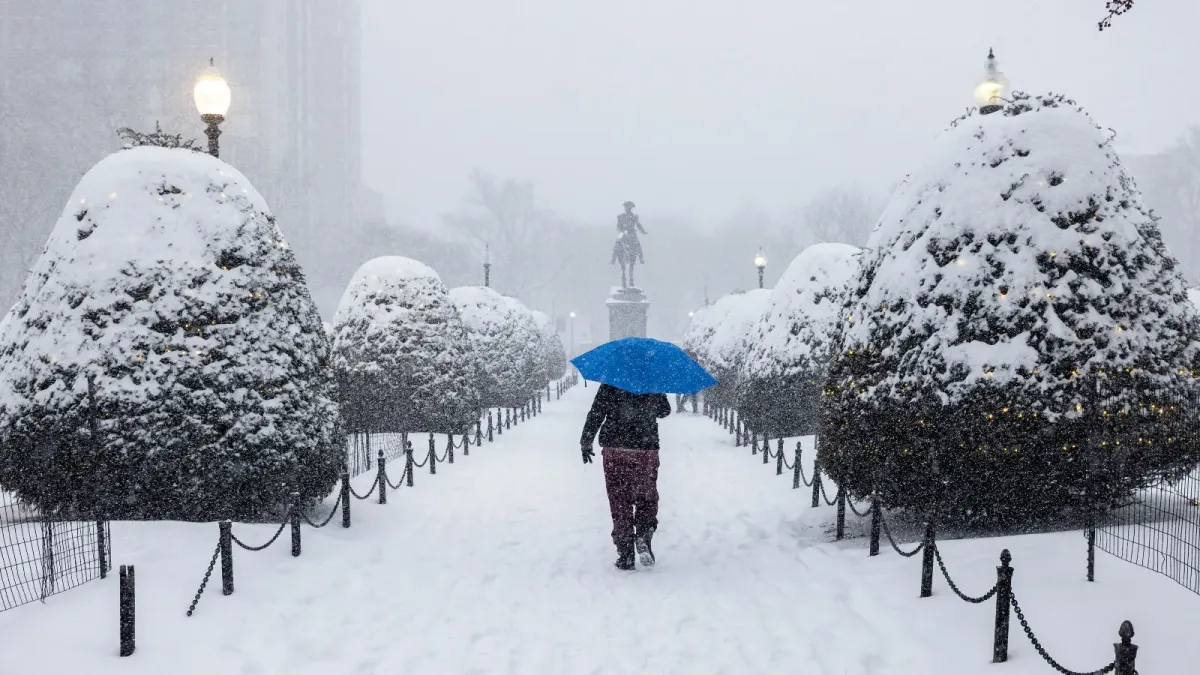
When Arctic winds hammered the Northeast last month, the region's electricity grid faced a familiar squeeze: millions of people turning up the heat, prices climbing, and aging power plants straining to keep up. But buried in the early performance data is a quiet vindication for a technology the federal government is actively trying to block.
America's two operating offshore wind farms — South Fork Wind off Long Island and Vineyard Wind off Massachusetts — did something notable during Winter Storm Fern. They performed as reliably as natural gas plants and outpaced coal facilities. South Fork, a 132-megawatt operation, ran at 52% capacity last month, matching New York's most efficient gas plants. Vineyard Wind, which can produce up to 600 megawatts, hit 75% capacity during the same period.
That matters because winter is when offshore wind actually shines brightest. The cold Atlantic generates stronger, more consistent winds than summer months. As Mikkel Mæhlisen from Ørsted (which jointly operates South Fork) put it: "The wind capacity in the Northeast is absolutely amazing, particularly over the winter."
We're a new kind of news feed.
Regular news is designed to drain you. We're a non-profit built to restore you. Every story we publish is scored for impact, progress, and hope.
Start Your News DetoxThe Economics of Staying Warm
When a cold snap hits, electricity prices spike because utilities fire up expensive backup power — often oil-burning plants that sit dormant most of the year. Connecticut's energy commissioner Katie Dykes watched this play out last month. "Variable resources like wind and solar, when they're operating during these cold weather periods, they're actually helping to keep a lid on prices," she said. "It means we can reduce the runtimes of those more expensive oil units."
The math is straightforward. Offshore wind costs nothing to fuel. It doesn't have the ramp-up time of fossil plants. When demand spikes at 6 p.m. on a January evening, it's already there. Long Island Power Authority's Gary Stephenson was direct about the missed opportunity: "I really wish we had that Sunrise facility online. That would have taken so much pressure off the natural gas system."
Five more offshore wind projects are currently under development, which would add over 1.7 gigawatts of capacity to New York City and Long Island — enough to power roughly 1.3 million homes. But here's the contradiction: while this cold snap offered real-time evidence that offshore wind works exactly as designed, the Trump administration is actively blocking new offshore wind permits and calling instead for more fossil fuel infrastructure.
Liz Burdock, president of the Oceantic Network, which advocates for marine renewable energy, framed it plainly: "Performance data is showing in real time that offshore wind delivers reliable power when the grid needs it the most."
The next winter storm will test the grid again. Whether the Northeast has more offshore wind capacity by then depends on decisions being made right now in Washington.