

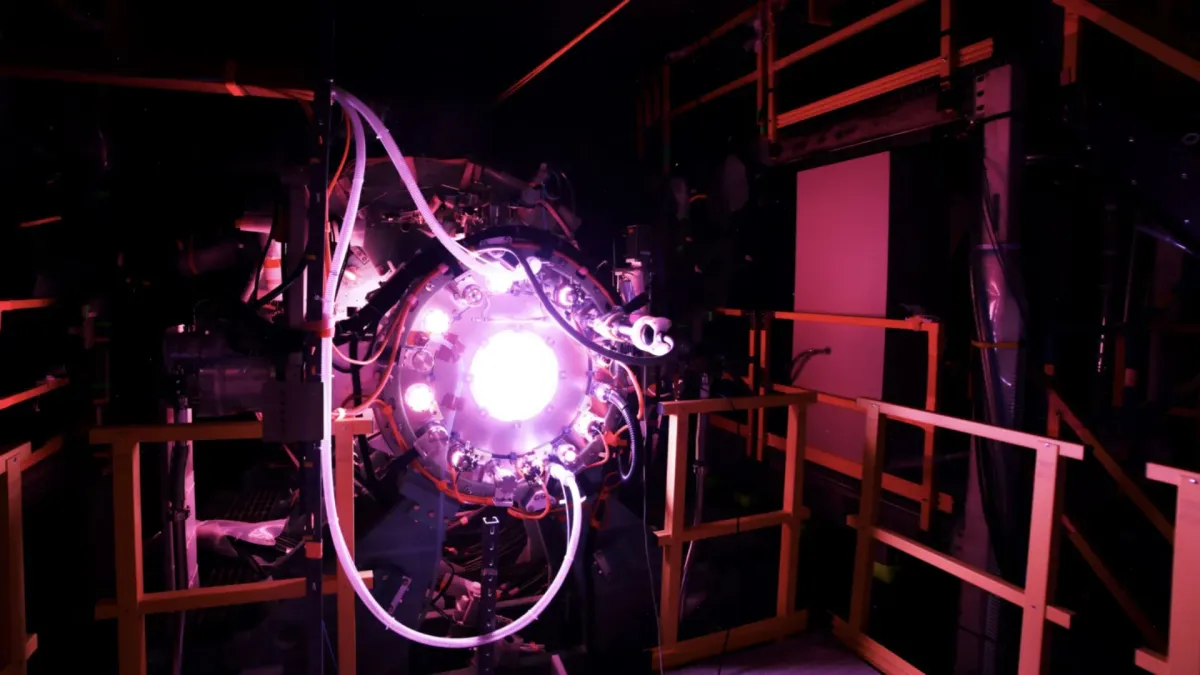
Helion, a Washington-based fusion startup, just did something no private company has done before: sustained deuterium-tritium fusion at 150 million degrees Celsius. It's the kind of technical milestone that matters most to people who've been watching fusion energy inch toward viability for decades.
The achievement came from Polaris, Helion's seventh-generation prototype, which began operating at the end of 2024. In January, it became the first privately built fusion machine to run on deuterium-tritium fuel—a significant step because it proves the company can operate across different fuel types and scale up their approach. Helion also became the first private company to receive regulatory approval to possess and use tritium for fusion demonstrations, which involved navigating real regulatory hurdles, not just lab conditions.
Why this matters for the timeline
Fusion energy has long suffered from a credibility gap. Decades of "fusion is 30 years away" promises have left people skeptical. What's different now is the iterative approach: Helion has built and operated seven prototypes, each one pushing harder technical targets than the last. CEO David Kirtley frames it plainly—"the surest path to commercializing fusion is building, learning and iterating as quickly as possible."
We're a new kind of news feed.
Regular news is designed to drain you. We're a non-profit built to restore you. Every story we publish is scored for impact, progress, and hope.
Start Your News DetoxThe 150-million-degree result isn't the final destination, though. Helion is using deuterium-tritium testing as a stepping stone toward deuterium-helium-3 fusion, which the company plans to use for actual commercial power generation. The difference matters: D-T fusion is well-understood and proven in research labs, but D-He-3 is cleaner and more efficient for commercial use. By testing D-T first, Helion validates its engineering approach before switching fuels.
Dr. Alan Hoffman, a plasma physics expert with 40 years in fusion development, noted the significance: "After reviewing the latest results from the Polaris prototype operating on D-T, I am proud of how far the field has come." That's not hype—it's recognition from someone who watched fusion research evolve from Los Alamos and the University of Washington.
The commercial stakes are already real. In July 2025, Helion broke ground on Orion, its first commercial fusion plant, in Malaga, Washington. The electricity it generates will go to Microsoft's grid. That's not a promise or a concept—it's a construction project with a customer waiting on the other end.
What comes next is the hardest part: proving that the engineering that works at 150 million degrees can scale to a power plant that actually delivers electricity cheaper than alternatives. Helion's iterative approach suggests they're treating that as another engineering problem to solve, not a theoretical puzzle.





