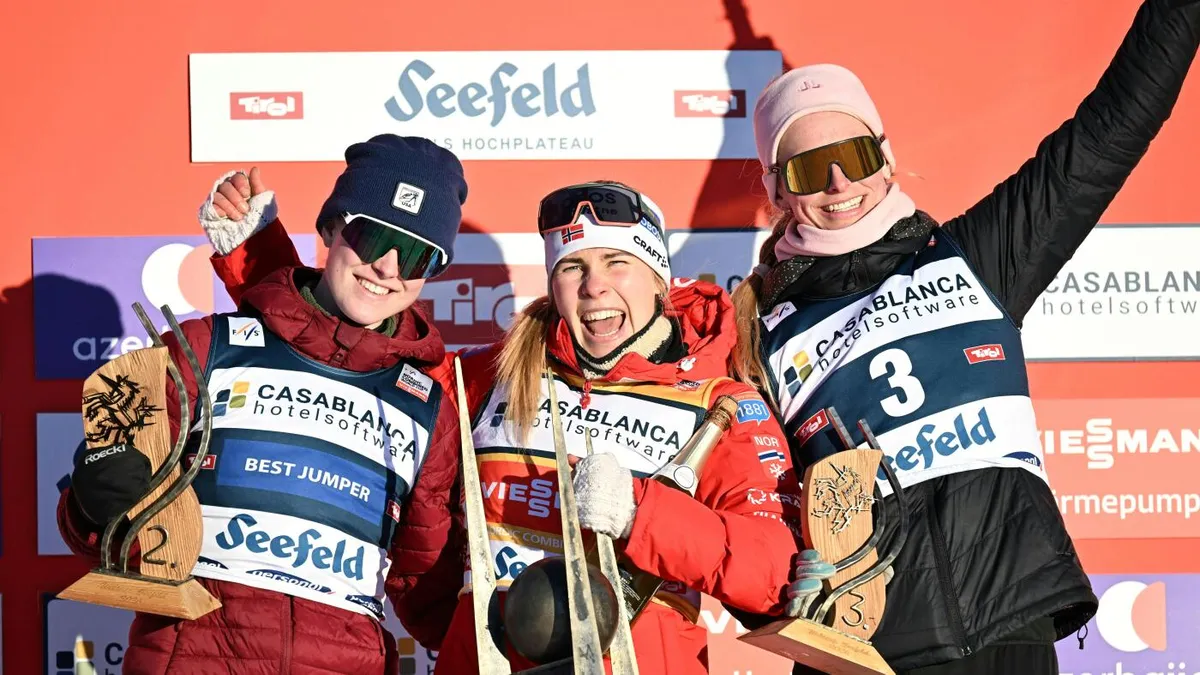
Annika Malacinski is ranked 10th in the world at Nordic combined—a sport that fuses ski jumping and cross-country skiing—but she won't compete at this week's Winter Olympics in Italy. Women aren't allowed to. The men's event has been Olympic since 1924. Women's Nordic combined didn't even exist on the World Cup circuit until 2020.
"We work just as hard, sacrifice just as much," Malacinski told NPR. "The only thing that is stopping me from being at the Olympic Village right now is because I'm a female."
It's a blunt reality wrapped in bureaucratic language. The International Olympic Committee has twice rejected women's Nordic combined for the Olympics—in 2022 and again for 2026—citing low viewership and limited participation across countries. But the athletes and their supporters argue the math doesn't add up: you can't build an audience for a sport you won't let people watch at the Olympics.
We're a new kind of news feed.
Regular news is designed to drain you. We're a non-profit built to restore you. Every story we publish is scored for impact, progress, and hope.
Start Your News DetoxThe Money and the Message
The exclusion has real consequences. Tara Geraghty-Moats, who won the inaugural women's World Cup title, was told by agents in 2020 that Olympic inclusion could make her a million-dollar athlete. Without it, the sport's elite women have a ceiling on how far they can go—and how much they can earn.
Malacinski's brother Niklas, also a Nordic combined athlete, put it plainly: "I'm hopeful we can maybe experience the podium picture again in 2030." The IOC has promised a full evaluation after 2026 to decide whether Nordic combined—for both men and women—stays in the Olympics at all. That's the real stakes. This isn't just about adding women to an existing program. It's about saving the sport.
Supporters point to recent momentum: women's Nordic combined joined the world championships in 2021 and the Youth Winter Olympics in 2020. Viewership jumped 25% during the 2024-2025 FIS World Cup season. Male athletes have publicly backed their female counterparts. Cross-country skier Zak Ketterson said the IOC's refusal to "set aside a little bit of money to include women's Nordic combined makes no sense."
The argument from athletes and federations is simple: let people watch women compete, and the audience will grow. The sport's two remaining medal events happen Tuesday and Thursday this week. The IOC is watching the numbers. So are the athletes counting on them.
Malacinski's message to the next generation of women in her sport: "If you work hard and the man has the opportunity, so should the woman." Right now, that opportunity doesn't exist. Whether it will in 2030 depends partly on what happens in the next few days.