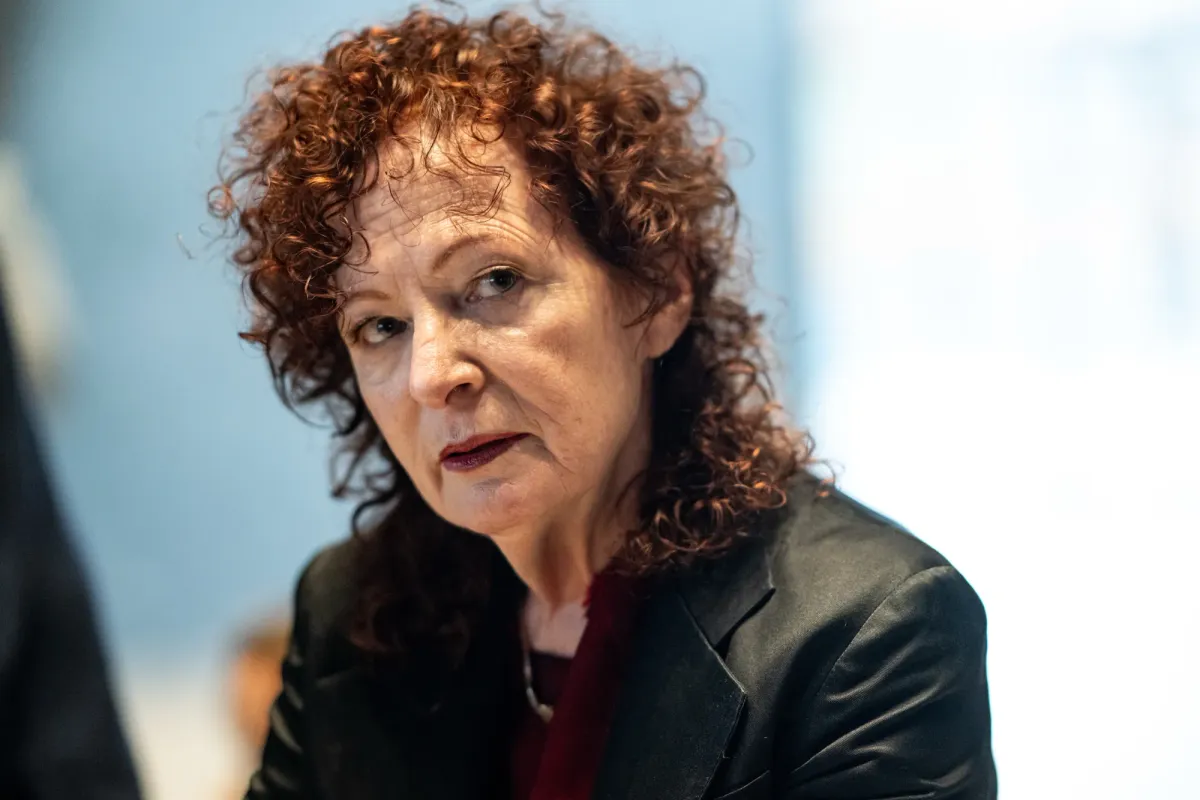
When Toronto's Art Gallery of Ontario decided against acquiring a new work by Nan Goldin last month, it wasn't a quiet curatorial choice. A trustee's intervention—reportedly calling the Jewish American photographer "antisemitic"—triggered resignations, an open letter, and a hard conversation about who actually decides what hangs on museum walls.
The rejected work, Stendhal Syndrome (2024), was supposed to arrive as part of a three-gallery collaboration with Vancouver and Minneapolis. But the vote was close: 11 to 9 against acquisition. What tipped it was the decisive influence of Judy Schulich, a major AGO donor and executive with one of Canada's largest private foundations. She hasn't commented publicly, but her intervention was clear enough that John Zeppetelli, the AGO's curator of modern and contemporary art who championed the work, resigned. Two volunteer committee members followed.
Vancouver and Minneapolis went ahead without Toronto. The city was out.
The pushback
Over 500 people signed an open letter demanding Schulich's resignation and calling for real curatorial independence at the AGO. The signatories included Goldin herself and Jewish groups like Jews Say No To Genocide and Independent Jewish Voices Toronto—a detail worth noting, because it complicates any simple reading of the conflict. These weren't outside voices; they were people within the communities being invoked to justify the decision.
We're a new kind of news feed.
Regular news is designed to drain you. We're a non-profit built to restore you. Every story we publish is scored for impact, progress, and hope.
Start Your News DetoxThe letter frames this as part of a larger pattern: wealthy donors shaping what museums show, not through explicit censorship but through the kind of pressure that makes curators resign and boards recalculate. It's a question that's been simmering in the art world for years, especially as geopolitical tensions have made institutions nervous about controversy.
AGO director Stephan Jost defended the decision by pointing to complexity. "We are a public museum and pluralism is a reality," he said. "Today's geopolitical climate has created challenges around the world for cultural organisations like ours as we are being asked to mediate conflicts beyond our control." It's a fair observation—museums are caught between competing pressures. But the letter's point stands: when a donor's personal objection overrides curatorial judgment, something fundamental shifts.
The AGO has since announced a governance restructure, splitting its modern and contemporary art committee into two (20th-century and 21st-century) later in 2026. Whether that addresses the core issue—donor influence over artistic decisions—remains to be seen.
Worth noting: the AGO already owns three Goldin photographs in its permanent collection, acquired decades ago. The conversation now is about what happens next time a donor objects to a work.