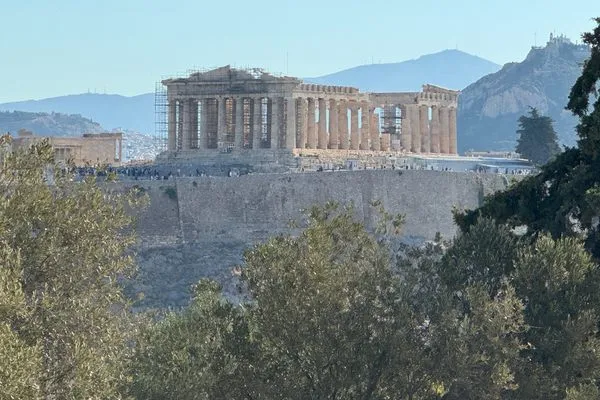
Imagine turning ancient marble fragments and broken pottery into stunning pathways. That's exactly what happened on Philopappou Hill in Athens, Greece. This wasn't just a paving job; it was an art project that brought history back to life underfoot.
Back in the 1950s, the Greek government wanted to spruce up the area around the Acropolis. They needed new walking trails up Philopappou Hill. It was a rocky, dusty place with narrow dirt tracks. They tapped a local architect named Dimitris Pikionis, who had a wild idea.
Pikionis, born in 1887, had studied engineering and architecture abroad before returning to Greece. He had a vision for merging modern design with ancient Greek roots. When he took on the hill project in 1954, he didn't rely on stacks of blueprints. Instead, he worked right there on site with his team, making decisions as they went.
We're a new kind of news feed.
Regular news is designed to drain you. We're a non-profit built to restore you. Every story we publish is scored for impact, progress, and hope.
Start Your News DetoxA Hillside Mosaic
His goal was to plant new trees, add steps, pave the paths, and create spots to sit with killer views of the Acropolis. But here's the clever part: his team didn't just use new materials. They gathered ancient ruins, marble scraps, stones from old buildings, and even ceramic pieces found lying around.
Students and local stonemasons then shaped these forgotten fragments with chisels. They carefully cemented them into the paths, creating a one-of-a-kind mosaic. Every step you take on these paths is a walk through history, literally. It's like the hill itself tells a story with every piece.
The project quietly finished in 1958. It didn't get a grand opening, but its impact was huge. When the Acropolis joined the UNESCO World Heritage List in 1987, Pikionis's pathways were recognized as part of that historic site. Many now call it one of the most important landscape architecture projects of the last century.
So, next time you're in Athens, know that those beautiful paths aren't just paths. They're a secret collage, a testament to turning forgotten pieces into something truly special.