Get this: a tiny genetic tweak that helps animals thrive in thin mountain air might just hold the key to repairing nerve damage in people. Scientists found a specific gene mutation, common in high-altitude creatures, that seems to protect and even rebuild nerve tissue. This could be huge for conditions like cerebral palsy and multiple sclerosis (MS).
It’s like evolution already figured out a natural repair kit. This isn't about some brand-new drug. Instead, it’s about boosting what our bodies already do, using compounds we naturally produce.
Liang Zhang, one of the lead researchers, put it simply: nature's full of genes that help organisms adapt. We can learn so much from these built-in solutions.
We're a new kind of news feed.
Regular news is designed to drain you. We're a non-profit built to restore you. Every story we publish is scored for impact, progress, and hope.
Start Your News DetoxThe Brain's Protective Shield
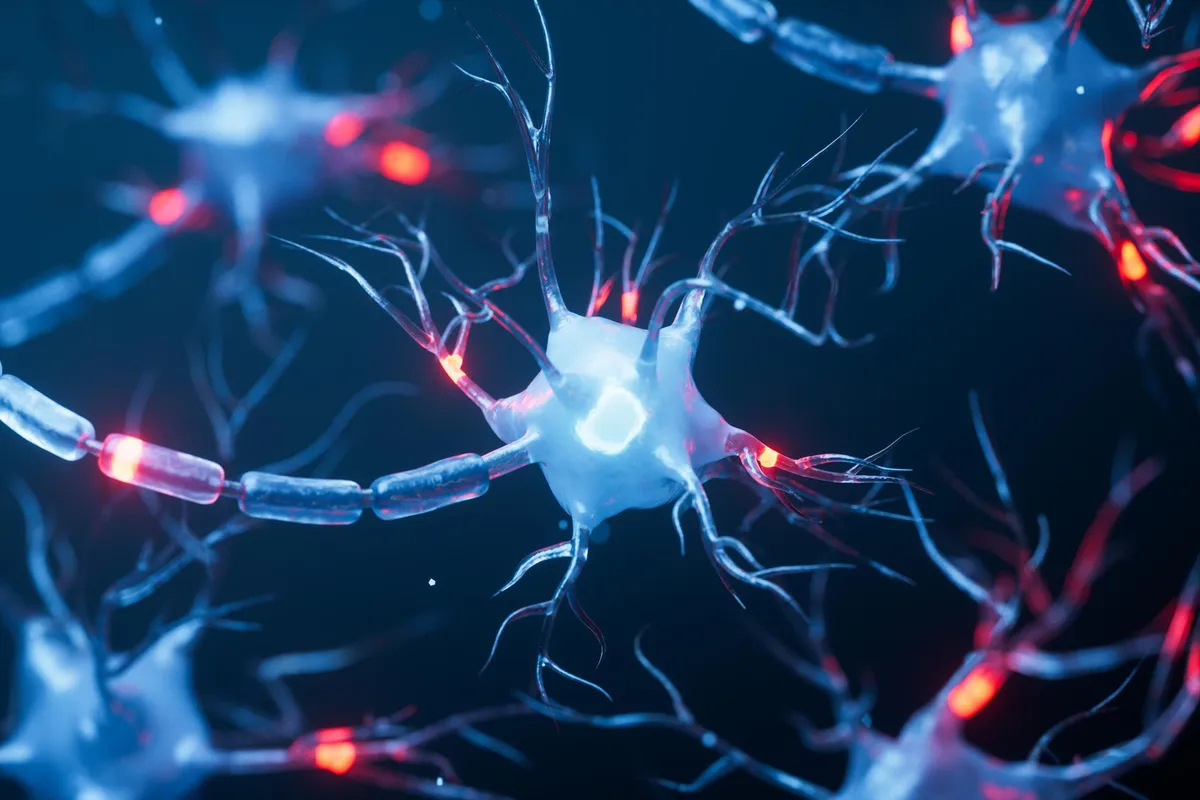
Think of myelin as the insulation around your brain's electrical wires. It helps signals zip around super fast. If you don't get enough oxygen during early brain development, this myelin can get damaged. That's a big reason for cerebral palsy in newborns.
In adults, myelin damage is a hallmark of MS. Here, the body's own defense system mistakenly attacks this vital layer. Even reduced blood flow, which happens as we age, can harm myelin and contribute to issues like memory problems.
Scientists previously noticed that animals living on the Tibetan Plateau — that's nearly 15,000 feet up! — have a unique mutation in a gene called Retsat. They suspected this change helped creatures like yaks keep their brains working normally despite the low oxygen.
Zhang’s team put this idea to the test. They exposed newborn mice to low-oxygen conditions, similar to living at over 13,000 feet, for about a week.
Turns out, the mice with the Retsat mutation did way better. They aced tests for learning, memory, and even social behavior. Their brain scans showed they had more myelin wrapped around their nerve fibers. Pretty clever, right?
A Natural Fix for Damage
The team then wanted to know if this mutation could actually repair myelin damage, like what happens in MS. In mice with the mutation, myelin grew back faster and more completely after an injury. The damaged areas even had more of the specific cells that make myelin.
What’s the secret? These mice had higher levels of a compound called ATDR, which comes from vitamin A. The Retsat mutation seems to crank up the enzymes that turn vitamin A into these helpful molecules. And those molecules then help myelin-producing cells grow and mature.
When researchers gave ATDR to mice with an MS-like condition, those animals showed milder symptoms and moved around much better. That’s seriously cool.
Current MS treatments mostly focus on calming the immune system. But ATDR is already in everyone's body. These findings suggest a whole new way to tackle nerve damage using molecules your body already knows how to make. It’s like finding a hidden “repair mode” that evolution tucked away.