Discovering New Life in Cambodian Caves
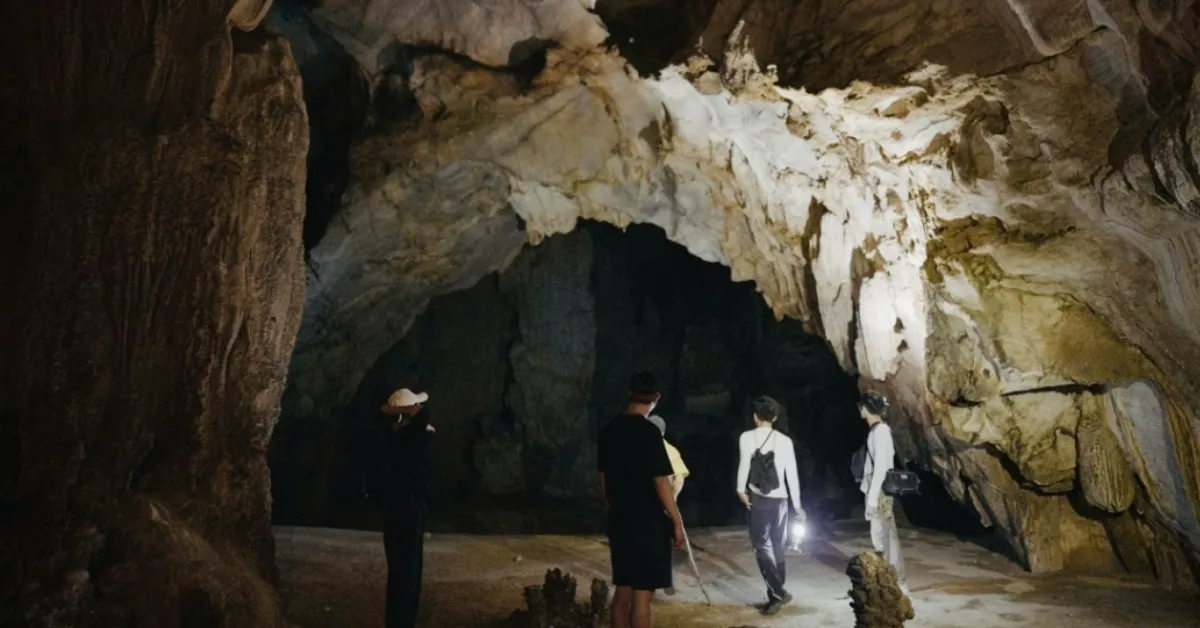
Three years ago, researchers from Flora & Fauna, a global conservation charity, explored Cambodia's Battambang Province. They aimed to count animals in the region. The team hoped to find threatened species like the Sunda pangolin and green peafowl. These animals live in the area's 60 karst caves, which are rock formations made of limestone.
The researchers found a "treasure trove" of 11 new species. This included three new gecko species, two millipede species, two micro-snails, and a stunning turquoise pit viper. They conducted their survey from November 2023 to July 2025. Cameras helped them collect images and information on birds, mammals, and reptiles.
Seven of these species, including some geckos, millipedes, and snails, have already been officially described. The striking blue-and-green pit viper is still being officially recognized as a new species. The term "pit" refers to a heat-sensitive organ on its head. This organ helps it detect prey.
We're a new kind of news feed.
Regular news is designed to drain you. We're a non-profit built to restore you. Every story we publish is scored for impact, progress, and hope.
Start Your News DetoxSothearen Thi, the Karst Biodiversity Coordinator, noted that Cambodia's karst areas hold many scientific secrets. He told IFLScience that much is still unknown about these unique ecosystems and their diverse creatures.
Why New Discoveries Matter
These new species discoveries are exciting. They are also crucial for updating conservation strategies worldwide. Evolutionary biologist Lee Grismer, who supported the survey, said they are still processing what they've learned.
Image via Phyroum Chourn / Fauna & Flora
In 2024, Flora & Fauna researchers identified a striped Kamping Poi bent-toed gecko species (Cyrtodactylus kampingpoiensis). They then realized that the region's four distinct populations seemed to be evolving differently. Grismer stated that understanding what exists is essential for conserving the planet's biodiversity. He emphasized that we cannot protect something if we do not know it is there.