In 1849, Thomas Almond Ayres traveled from New Jersey to California, hoping to find gold. However, he soon shifted his focus from mining to art. He found that a paintbrush was more useful than a pickaxe.
After a year, Ayres returned to San Francisco with many sketches. These included drawings of Gold Rush towns and mining areas.
Yosemite's Early Popularity
Ayres used his artistic talent to sketch famous California landscapes, including several spots in Yosemite Valley. The area was already known for its beauty. But after one of Ayres' drawings was published, Yosemite's popularity grew significantly.
We're a new kind of news feed.
Regular news is designed to drain you. We're a non-profit built to restore you. Every story we publish is scored for impact, progress, and hope.
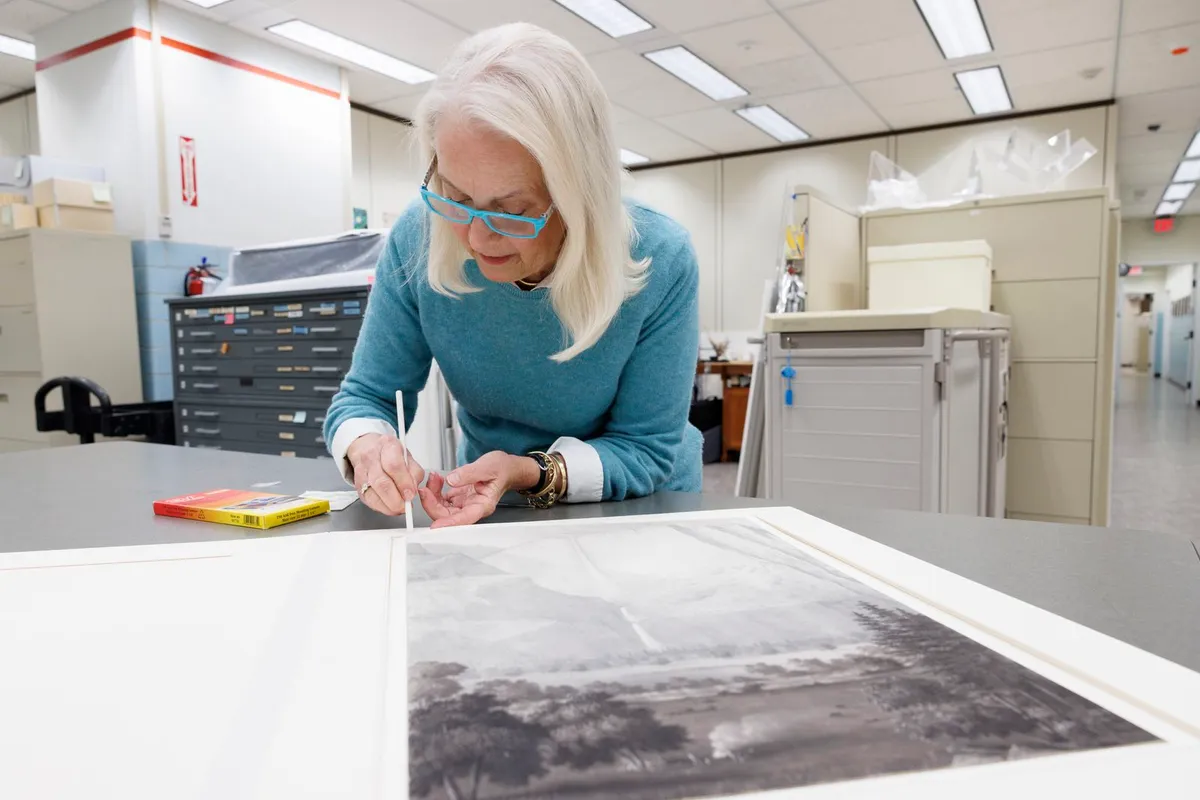
Start Your News DetoxThe Library of Congress recently acquired two of Ayres’ early Yosemite artworks. These include a drawing and a lithograph, both from 1855.
These works are among the earliest widely seen images of Yosemite. They came before Carleton Watkins’ famous photographs and Albert Bierstadt’s paintings from the 1860s.
The Library of Congress noted that Ayres’ artwork made Yosemite a sensation. It captivated the country, just as Ayres himself had been enchanted by the place.
The library bought the drawing and lithograph with funds from the James Madison Council. This group supports the library. The acquisition helps celebrate the 250th anniversary of the Declaration of Independence. The library plans to make these images available online.
Ayres' Journey to Yosemite
Ayres first visited Yosemite Valley in June 1855, when he was 39. He traveled with James Mason Hutchings, an English entrepreneur. They followed two Miwok guides along a trail used by Indigenous people for hunting and gathering. They had heard stories of a beautiful landscape.
Ayres spent several days sketching "High Falls," now known as Yosemite Falls. He made many versions of the scene to display and sell. Hutchings published one in Illustrated California magazine, which he created to promote tourism. The drawing, titled The High Falls, Valley of the Yo Semity, California, and a lithograph were both published in 1855.
The original 14-by-20-inch drawing was made with graphite, ink, chalk, and charcoal on paper. Ayres signed it "Thos. A. Ayres, del." These marks are still visible.
The drawing shows people gathered around a campfire in the foreground. Behind them are the tall waterfall and granite cliffs.
Sara W. Duke, a curator for the Library of Congress, said Ayres’ drawing captures Yosemite's serenity and majesty. She noted that these men understood the importance of preserving this pristine place, especially since gold mining had changed so much land.
About ten years later, federal leaders passed the Yosemite Grant Act of 1864. This law protected the land for public use. Ayres returned to the valley in 1856. He visited famous landmarks like El Capitan, Half Dome, and Bridalveil Fall.
Ayres described Bridalveil Fall, then called Cascade of the Rainbow, in the Daily Alta California in August 1856. He wrote that the water breaks into "fleecy forms" as it descends. Sometimes the sun lights up its spray with rainbow colors, hanging like a "prismatic veil."
After his second Yosemite trip, Ayres went to Southern California to continue his art. He is believed to have died in the spring of 1858. He was on the schooner Laura Bevan sailing from San Pedro to San Francisco when it wrecked off the coast of Malibu. His body and his Southern California sketches were never found.
Duke noted that having a drawing from Ayres' 1855 Yosemite experience is a wonderful gift to the American people.
In October 1890, Congress established Yosemite National Park. This protected about 1,500 square miles of land, thanks to efforts by John Muir and other conservationists. In 1906, California gave Yosemite Valley and the Mariposa Grove of Giant Sequoias to the federal government to become part of the new park.