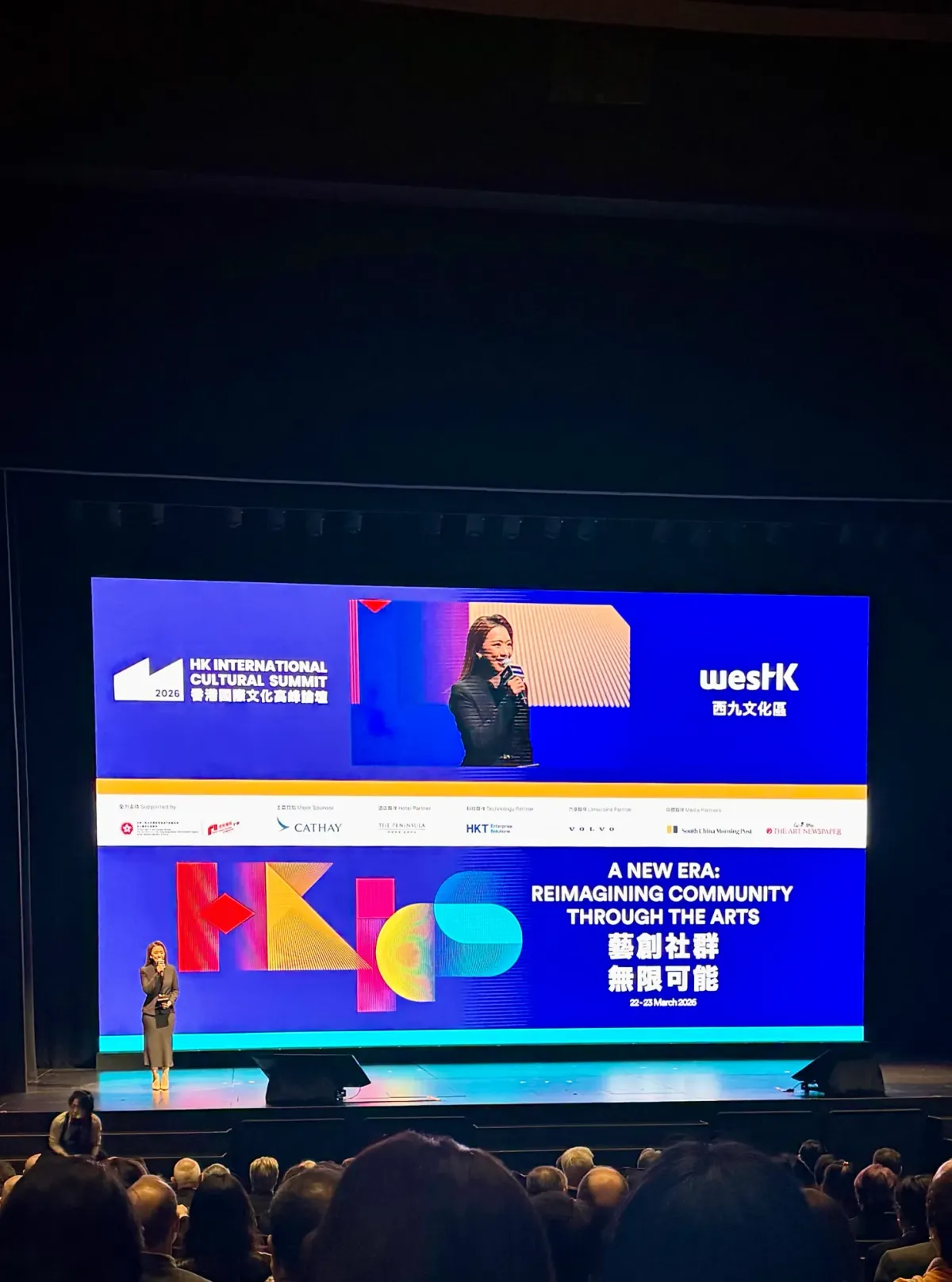
Hong Kong's Secretary for Culture, Sports and Tourism, Rosanna Law, opened the Hong Kong International Cultural Summit by stating that culture matters more than ever in complex global times. She noted that culture can cross borders. This year's summit hinted at how global events are reshaping cultural influence. Hong Kong is working to become a self-sufficient arts hub for its residents and the wider region.
The 2026 summit, called "A New Era: Reimagining Community Through the Arts," took place at the M+ museum and the Hong Kong Museum of Art. Bernard Chan, chairman of the WKCDA Board, said the event shows Hong Kong is becoming a major international cultural center again. He also noted that arts and culture are becoming a bigger part of daily life in the city.
Chan announced new agreements between Hong Kong, Mainland China, and European and regional institutions. These cover training, performances, education, and sharing collections. Partners include the Misk Art Institute in Saudi Arabia, the Czech Academy of Visual Arts, and London’s Sadler’s Wells Theatre.
We're a new kind of news feed.
Regular news is designed to drain you. We're a non-profit built to restore you. Every story we publish is scored for impact, progress, and hope.
Start Your News DetoxChan highlighted that local investments are working, with almost half of museum visitors being residents. He also mentioned future developments: the West Kowloon Performing Arts Center opens next year, followed by the West Kowloon Academy for arts professionals. Details for a five-year partnership with Art Basel will be finalized soon.
New Models for Cultural Institutions
Adrian Ellis, chair of the Global Cultural Districts Network, warned that even successful institutions need to plan for "what comes after success." He was one of 30 speakers from 14 countries who shared advice on funding and engagement challenges. These issues are now more complex due to changes in how people support the arts.
Elaine Bedell, chief executive of London’s Southbank Centre, noted that her team increasingly has to justify government funding. She said public money for the arts is no longer guaranteed.
These discussions happened during a panel called "Multi-Disciplinary Arts Districts in the 21st Century—Challenges and Opportunities." Cultural districts, like Hong Kong's West Kowloon, are seen as a way to keep public interest in the arts alive.
Mariët Westermann, director and CEO of the Solomon R. Guggenheim Museum and Foundation, also spoke. She discussed the "Bilbao Effect," referring to the Guggenheim Bilbao's success in boosting the Basque region's economy since 1997.
Westermann explained that cultural districts can drive economic and social growth. She noted that 40% of Guggenheim visitors are locals. Her advice was to stop chasing the "Bilbao Effect" and aim for "Bilbao 2.0." This means focusing on creating unique, site-specific museums. She stressed that cultural districts need strong institutions, especially art museums, to thrive.
Bedell advised Hong Kong not to rely too much on government funding. She pointed out unexpected costs like maintaining roads, sewage, and public spaces.
Ellis encouraged cultural professionals to be more creative with revenue. He suggested looking into unconventional income sources like parking lots, art hotels, consulting, and franchising. He admitted this kind of thinking might not come naturally to those in the museum world.
Ellis believes that while museums are often conservative, they should think boldly about earned income for the future. He sees this as a necessary step due to upcoming trends.