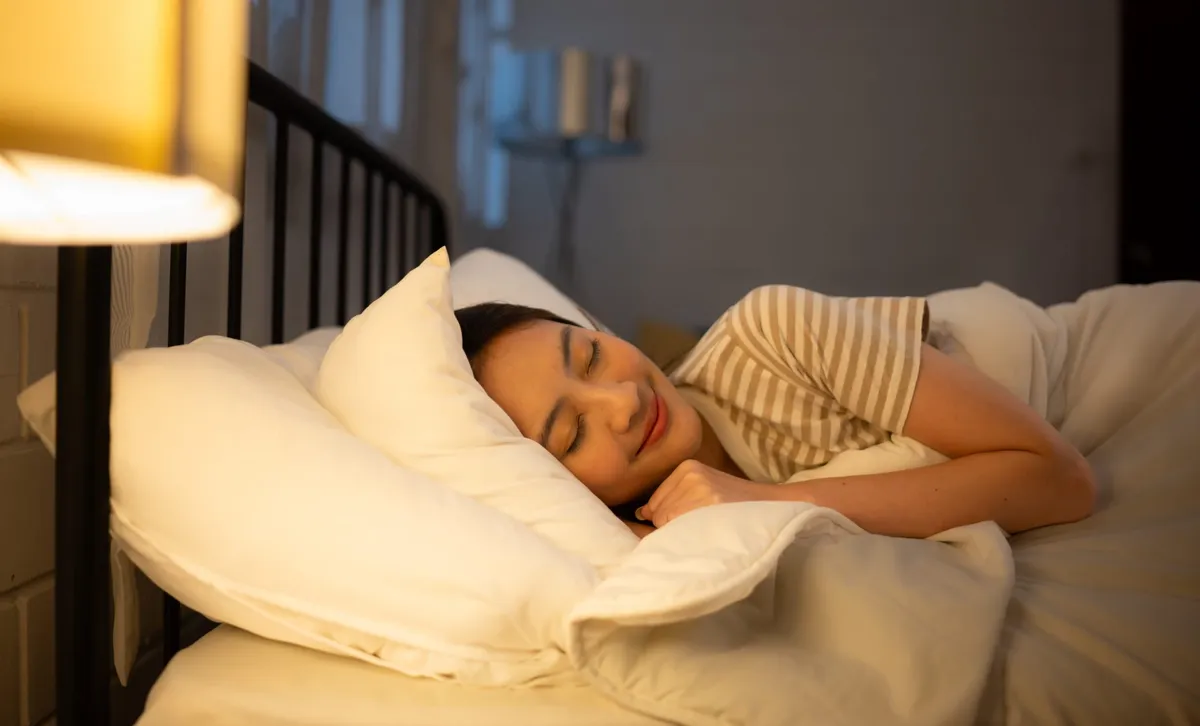
For many, a completely silent bedroom can feel unsettling. A soft hum, rain sounds, or white noise often makes it easier to fall asleep.
This habit is quite common. A 2023 UK survey found that about 50% of people use some sound to help them sleep.
Pink noise is a popular choice. It's often described as gentler and more natural than white noise. However, new research suggests that while pink noise might block disruptive sounds, it could also affect sleep quality in ways scientists are still trying to understand.
We're a new kind of news feed.
Regular news is designed to drain you. We're a non-profit built to restore you. Every story we publish is scored for impact, progress, and hope.
Start Your News DetoxWhat is Pink Noise?
When people talk about "sleep sounds," they usually mean different types of noise. These are categorized by how their sound frequencies are spread out.
Some sounds, like music or speech, have clear patterns. Others, such as ocean waves or birdsong, have a softer rhythm that many find soothing.
Noise, on the other hand, has no clear pattern. It's just a mix of frequencies.
White noise is the most well-known example. In white noise, every sound frequency has the same energy. This creates a consistent "hissing" sound. Research shows it can help some people focus by masking distractions.
Pink noise works differently. Its energy decreases as the frequency increases. For example, a 500 Hz tone has about twice the energy of a 1000 Hz tone. This creates a deeper, softer sound, often compared to steady rainfall or flowing water.
There's also brown noise, named after scientist Robert Brown. It has even more low frequencies. It often sounds like distant thunder or a powerful waterfall.
What a New Sleep Study Found
A recent study by the University of Pennsylvania, sponsored by the US Federal Aviation Authority, looked at how pink noise affects sleep. Researchers invited people to sleep in a lab. Their brain activity, heart rate, and muscle activity were monitored. This helped scientists track their sleep stages.
One night was a control night with no added sounds. Other nights included pink noise and simulated airplane noise.
When participants listened to pink noise in a quiet room, their sleep structure changed. Specifically, the amount of rapid eye movement (REM) sleep decreased.
REM sleep usually makes up about one-quarter of our total sleep. It's linked to dreaming. REM is important for memory, brain plasticity, and emotional processing, especially in childhood.
Environmental noise, like airplanes, mainly reduced N3 sleep. This is the deepest stage of non-REM sleep. It's when the body does much of its physical repair.
Researchers then tested ways to block the airplane noise.
Earplugs were very effective. They restored about three-quarters of the N3 sleep lost due to environmental noise.
Pink noise, however, had a different effect. It reduced both REM sleep and N3 sleep. This suggests it might interfere with natural sleep under certain conditions.
Why Background Noise Still Helps Many
Despite these lab findings, the link between sound and sleep is not fully understood.
A 2022 review of sleep research found evidence that nighttime sound, especially pink noise, may help people fall asleep faster. Many also felt they slept better overall.
These results were often based on self-reported experiences, not the detailed measurements used in the Pennsylvania study. This difference in methods might explain the different conclusions.
So, a sound that technically changes sleep stages might still feel helpful if it reduces stress or blocks annoying noise.
When Background Noise Can Be Useful
For some, background sound is essential for sleep.
Tinnitus, for example, causes ringing or buzzing in the ears. This often becomes more noticeable in a quiet room at night. A gentle background sound can help mask this internal noise and make sleep easier.
Research suggests that letting people choose the sound they find most comfortable can help manage tinnitus symptoms.
However, scientists are still studying whether constant exposure to certain types of random noise could have long-term effects on hearing or brain processing.
Finding the Right Sound for Sleep
The current research doesn't necessarily mean pink noise is bad. It simply shows that sleep environments are very personal.
If background sounds help you relax and fall asleep, keeping them soft, steady, and calming is a good idea. If outside noise is the problem, simple solutions like earplugs can be surprisingly effective.
Sleep science is always evolving. The role of sound in sleep is still being explored. For now, the best strategy might be to pay attention to how your body responds. Then, create a sleep environment that consistently feels restful for you.