
Hedgehogs might be talking to each other in ways we can't hear. Scientists recently found that these animals can hear sounds at much higher frequencies than humans. This means they could be using noises that are silent to us to communicate.
This discovery could be a big step for protecting hedgehogs. Their numbers are dropping in the UK and Europe.

Uncovering Hedgehog Hearing
Dr. Sophie Rasmussen from the University of Oxford led the research. She wanted to see if special sound repellents could keep hedgehogs safe. Many hedgehogs die from accidents with cars, lawnmowers, and strimmers.
We're a new kind of news feed.
Regular news is designed to drain you. We're a non-profit built to restore you. Every story we publish is scored for impact, progress, and hope.
Start Your News Detox
To find out what hedgehogs hear, Dr. Rasmussen and her team played a series of beeps and pulses to hedgehogs. They measured the animals' brain activity to see which sounds they reacted to.
The results were surprising. Hedgehogs can hear sounds up to 85 kilohertz (kHz). To compare, humans can only hear up to 20 kHz. Dogs hear up to 45 kHz, and cats up to 65 kHz. Sounds above 20 kHz are called ultrasound.
The scientists also built a 3D model of a hedgehog's ear. They found it has a special chain of bones. These bones help high-pitched sounds travel through the ear efficiently, similar to how bats use echolocation.
Solutions for Hedgehog Safety
This new understanding could help create sound repellents that only affect hedgehogs. These devices wouldn't bother humans or pets.

Thousands of hedgehogs die in road accidents each year in the UK and other European countries. The species is considered "near-threatened."
Dr. Rasmussen hopes to work with companies to design audio devices. These devices could keep hedgehogs away from dangerous machines like cars and lawnmowers. Some cars already have devices to deter large animals like deer.
The Society of Motor Manufacturers and Traders (SMMT) noted that ultrasonic whistles are available for consumers. However, more research is needed to confirm how well they work for hedgehogs.
More studies are needed to figure out exactly which noises would scare hedgehogs away. Researchers need to know if it should be a scream or a pulsing sound. It's also important to make sure these sounds don't keep hedgehogs out of gardens, which are vital habitats for them.
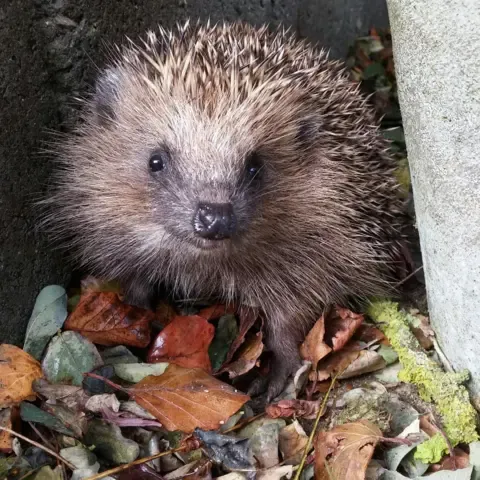
This research also helps us understand the hedgehog's world better. Many hedgehogs in rescue centers might be stressed by sounds we can't hear. It's also possible that hedgehogs are "blabbering all the time" using these high-frequency sounds, and we just never knew it.
Deep Dive & References: The European hedgehog (Erinaceus europaeus) has an extended high-frequency hearing range - Biology Letters, 2024