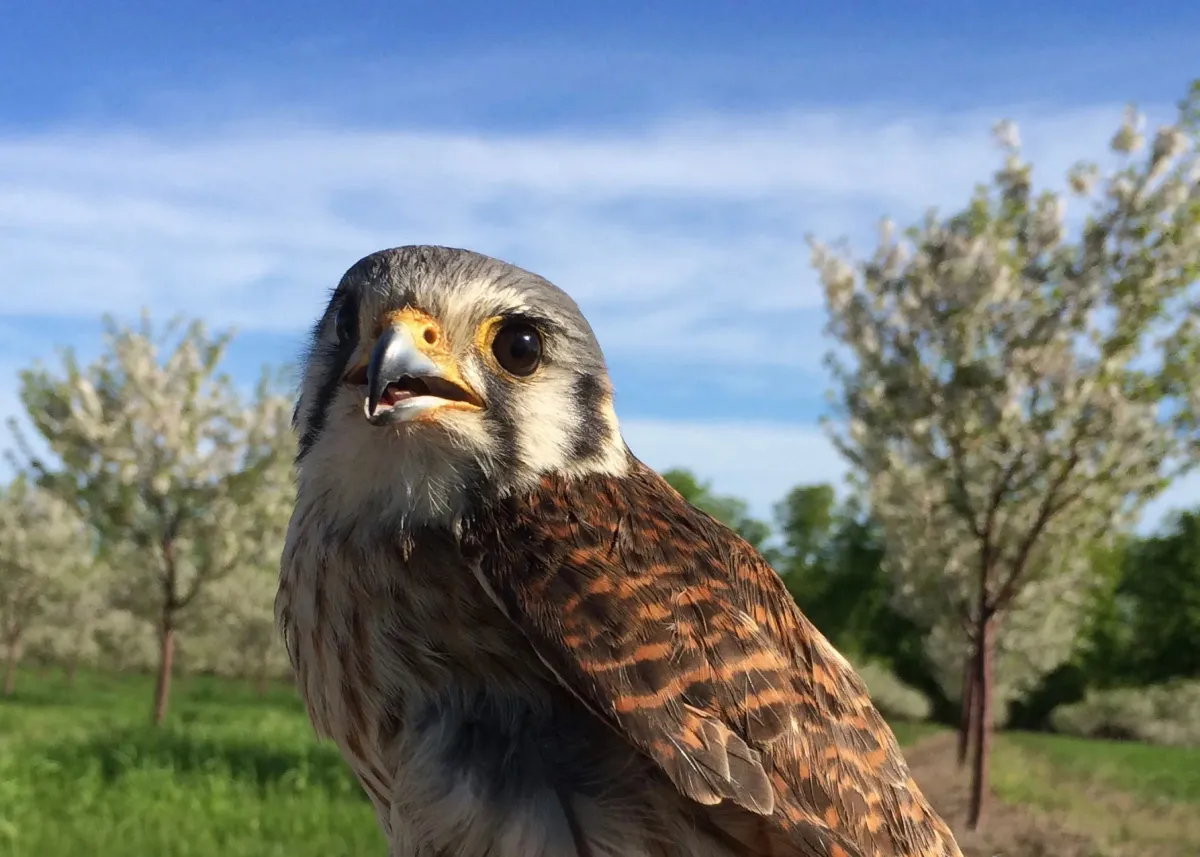
American kestrels—the smallest falcons in the U.S.—are naturally gifted hunters. They hover motionless above orchards, scanning for insects, mice, and smaller birds. Now researchers at Michigan State University have discovered they're also surprisingly effective food safety guards.
The problem kestrels solve is real. Cherry growers across Michigan, Washington, California, and Oregon lose between 5% and 30% of their harvest each year to birds that peck at fruit and leave droppings behind. Those droppings matter: they can carry pathogens like Campylobacter, a bacterium that causes foodborne illness. Farmers have tried nets, noise makers, scarecrows, and sprays to keep birds out, but these methods are expensive and often don't work well enough.
A study published in the Journal of Applied Ecology tested a deceptively simple idea. Researchers installed nest boxes in eight sweet cherry orchards in northern Michigan to attract kestrels. The falcons moved in quickly—they naturally nest in tree cavities—and the results were striking. Birds like robins, grackles, and starlings visited orchards with nesting kestrels far less often. Cherry damage dropped more than tenfold.
We're a new kind of news feed.
Regular news is designed to drain you. We're a non-profit built to restore you. Every story we publish is scored for impact, progress, and hope.
Start Your News Detox
How It Works
When kestrels hunt smaller birds, they don't just protect the fruit—they also reduce the contamination risk. Researchers found three times fewer bird droppings on cherry trees where kestrels were nesting. DNA analysis showed about 10% of droppings in the orchards contained Campylobacter, but the dramatic drop in fruit-eating birds more than offset the kestrels' own waste.

"They're really good at keeping the amount of poop down," said lead researcher Olivia Smith. "That means fewer opportunities for transmission."
To be clear: cherries aren't known to cause Campylobacter outbreaks. Only one documented outbreak has ever been traced to birds—migratory cranes in Alaskan pea fields in 2008. But for crops that have been linked to foodborne illness, like leafy greens, reducing bird droppings is a meaningful step.
The approach won't work everywhere. Kestrels are more common in some regions than others, and this strategy won't eliminate all bird problems farmers face. But for growers looking for alternatives to expensive, labor-intensive methods, it's genuinely promising. A nest box costs little to install and maintain. As cherry farmers in northern Michigan prepare for next season, they're getting something unexpected: a natural, low-cost tool that protects both their yields and the safety of the fruit they grow.