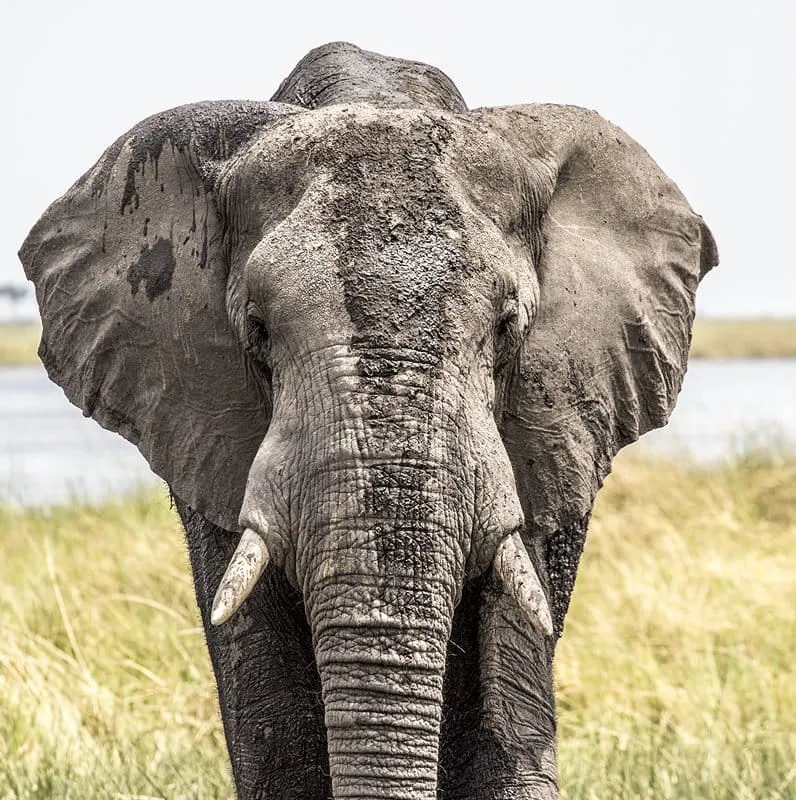
Khatijah Rahmat, a researcher at the Max Planck Institute for the History of Science, is exploring how animals, especially elephants, experience time. This concept, called animal temporality, could change how we approach conservation.
Rahmat believes that understanding an animal's relationship with time helps us see them as "feeling, remembering beings." This perspective can deepen our empathy and influence conservation policies.
Understanding Elephant Time
Rahmat's research relies on indirect observations because animal temporality is hard to study in a lab. She focuses on three key areas to interpret how elephants experience time: their eco-cultural heritage, human-impacted time, and individual history.
We're a new kind of news feed.
Regular news is designed to drain you. We're a non-profit built to restore you. Every story we publish is scored for impact, progress, and hope.
Start Your News DetoxShe explains that these areas are deeply connected and show the "temporal richness" of elephants. While we can't know exactly how they experience time, we can see evidence of it in their behavior.
Eco-Cultural Heritage
Elephants are highly social animals. Their survival often depends on the stored knowledge of matriarchs, the oldest and largest females in a herd. These matriarchs remember crucial information, like water sources during droughts or the politics of other herds. They guide the herd based on this accumulated memory.
When a herd loses its matriarch, it can lead to destabilization and a loss of wisdom. Researcher Gay Bradshaw's work on elephant trauma shows that elephants who lose matriarchs can exhibit behaviors similar to PTSD in humans, such as aggression and startle responses. This highlights the deep emotional and social intelligence of elephants.
Human-Impacted Time
Human activities like deforestation can profoundly affect elephant temporality. Rahmat argues that we often focus on material losses, like elephants losing paths or resources. However, human impact goes deeper.
For example, prolonged captivity in zoos can lead to boredom in animals. Rewilding efforts might involve introducing trauma to make wild animals fear humans. These actions impact elephants in ways that aren't always visible physiologically but affect their experience of time and well-being.
Rahmat also discusses "agreements" between species. These aren't formal contracts but rather expectations built over centuries of shared practices. In Malaysia's Belum Forest, Indigenous communities avoid certain paths during seasons when elephants prefer specific fruits, showing a mutual understanding.
When these agreements are broken, often by rapid deforestation or urbanization, conflict can arise. Elephants lose familiar habitats and are pushed closer to human settlements. This conflict isn't sudden but has a long history of violated understandings.
Individual History and Trauma
Elephants are dynamic creatures that adapt to changes. Studies show male elephants, traditionally solitary, are now forming herds in response to urbanization. They are also shifting their foraging patterns from day to night to avoid human contact.
Trauma can also manifest in unusual behaviors. Rahmat mentions a past phenomenon where juvenile male elephants were observed raping rhino calves, which some speculated was a trauma response.
She shared an anecdote about an eminent elephant scientist who was repeatedly hit by pineapples thrown by a specific female elephant. The scientist discovered this elephant was suffering from diarrhea due to substances he put in pineapples for his research. "
Implications for Conservation
Rahmat believes that recognizing animal temporality can lead to a deeper empathy for animals. For conservation, this means looking beyond population numbers. We should consider an elephant's "intangible heritage," their memories of places, and the traumas they experience as part of conservation efforts.
This approach challenges traditional assumptions about logic and evidence in science. It encourages us to acknowledge the "intrinsic and pervasive quality" of time in animal lives, pushing us to think more broadly about their well-being and suffering.
Deep Dive & References
Thesis - Khatijah Rahmat