Kimilson Lima, 43, works the land near Porto Real on Príncipe, a small West African island. When he signed up for something called the Faya Foundation's project, he knew exactly what mattered to him: "With this money we can have a proper floor in the house," he said. "And an inside toilet."
That's not poetry. That's the entire point.
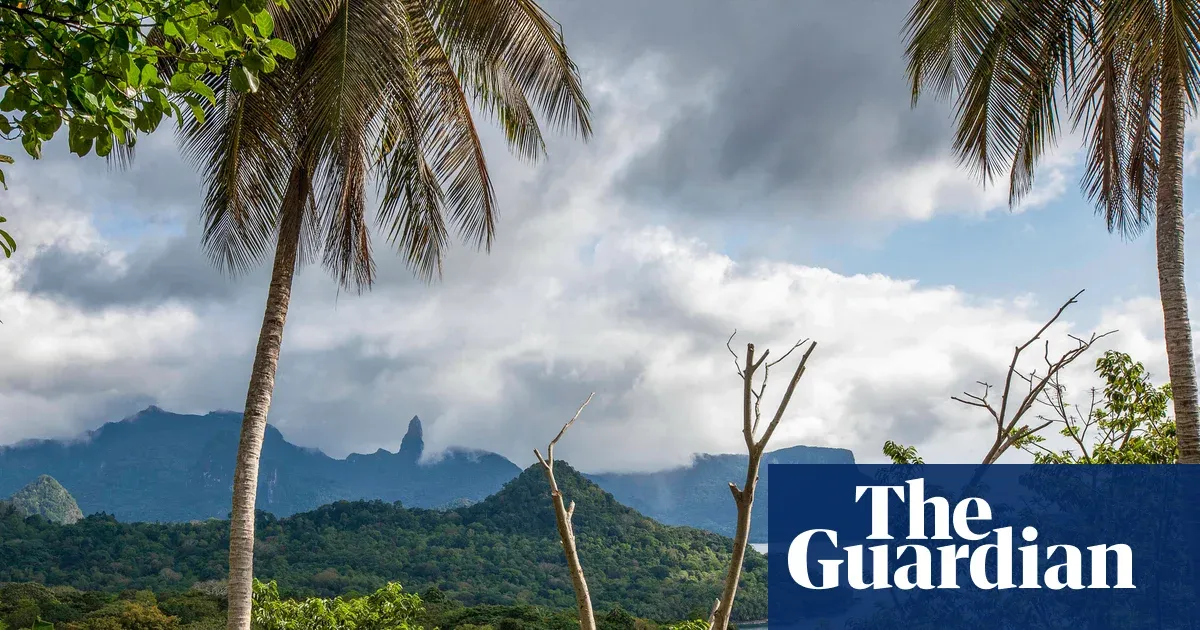
Príncipe sits 160 miles off the coast of West Africa, isolated long enough that it evolved its own world. Giant land snails as top predators. Rainforests found nowhere else. Scientists still discover new species here regularly enough that locals call it the "African Galapagos." The Portuguese found it in 1471 and planted cacao. After independence in 1975, the plantations collapsed, and villagers—descendants of enslaved people from Angola and Cabo Verde—became subsistence farmers, gradually pushing deeper into the forest, cutting trees to survive.
Then in 2010, South African billionaire Mark Shuttleworth arrived with a different idea. Instead of the usual development path (clear the forest, grow cash crops), what if you paid people to be stewards of what they already had?
We're a new kind of news feed.
Regular news is designed to drain you. We're a non-profit built to restore you. Every story we publish is scored for impact, progress, and hope.
Start Your News Detox
The Experiment Takes Shape
Nearly 3,000 villagers—more than 60% of the adult population—have now joined. They follow an environmental protection code. In return, they get a quarterly dividend. The first payment arrived at €816 (about £708 per person), substantial money on an island where most people have never had a bank account.
"This will be truly transformative, both for nature and for the people," said Felipe Nascimento, president of Príncipe's self-governing region.
But this isn't handed-out charity dressed as conservation. Jorge Alcobia, the Faya project's CEO, was clear about that: "We have to explain that it's not free money. Dividends are reduced, for example, if there's unauthorised tree-felling." The foundation is also funding school improvements, reorganizing the cacao business, and teaching financial literacy to people who've never navigated a formal economy.
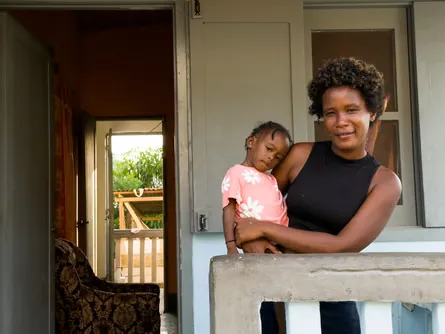
Clara Gomes, who moved into one of the new villages built by Faya, is spending her dividend on a new kitchen and carpentry training. Her neighbor Edmundo is selling cacao to the project—something he couldn't do before. "I had no one to buy it before," he said. "I'm hoping they might take vanilla next."
Not everyone is convinced. One skeptic shouted the obvious worry: "It's a monopoly. Is that good? And what if everyone buys motorbikes and chainsaws?" Fair questions. Shuttleworth's commitment totals about £87 million so far, and all of it comes from his personal fortune. This model works only as long as the money flows.
Yet something genuine is shifting. Yodiney dos Santos spent years foraging in the forest. Now he's a wildlife guide leading scientific expeditions, and he's discovered several new species—including a previously unknown owl. He understands the fragility better than most. His ancestors brought edible West African snails from Angola for food, and those snails escaped into the wild, now outcompeting the island's unique endemic snails. Conservation isn't abstract here. It's his home.
Shuttleworth knows this experiment will be scrutinized. "If it's successful," he said, "I hope other irreplaceable ecosystems might benefit from the idea at scale." That's the real test: whether paying people to protect what they live beside—rather than asking them to choose between survival and stewardship—can work elsewhere too.