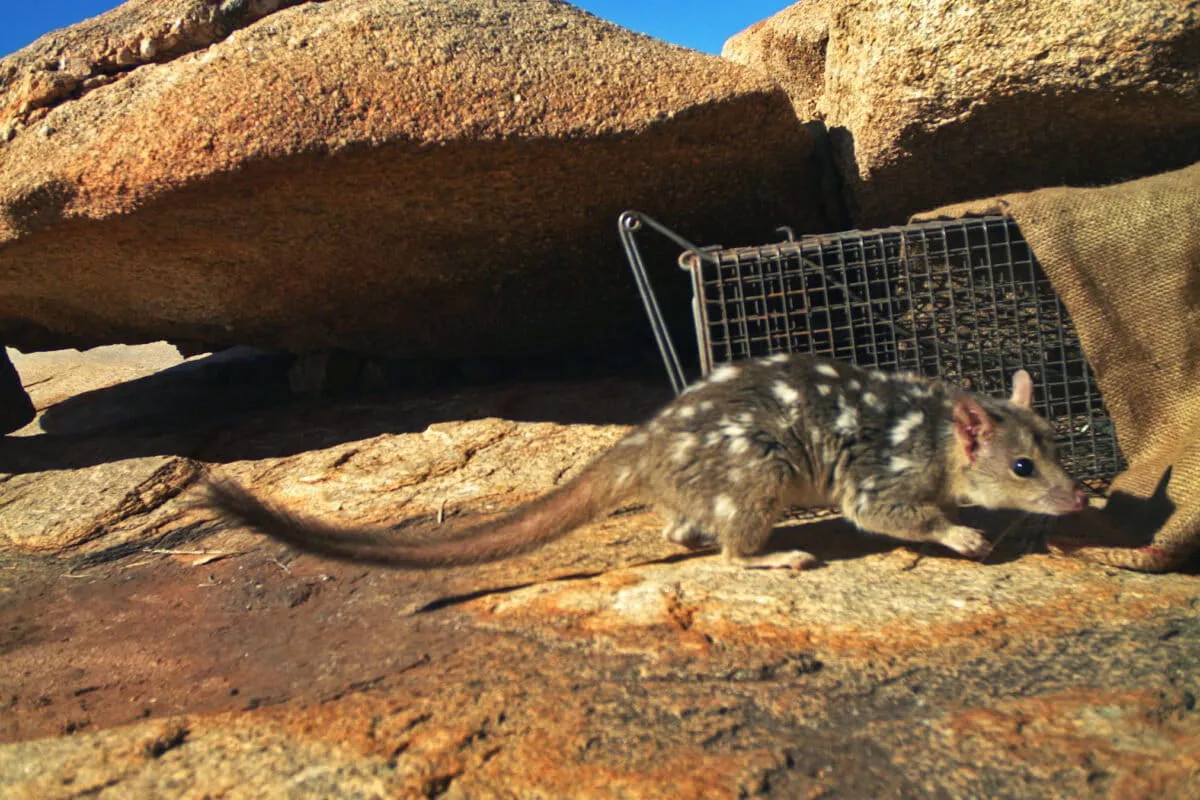
Australia has a troubling distinction: the world's highest mammalian extinction rate. Since European colonization, at least 40 land mammal species have vanished entirely, and others are sliding toward the same fate. Among them is the northern quoll, a small carnivorous marsupial that hunts through Australia's tropical regions and now carries the label of endangered.
But here's what makes this story different. Scientists in Western Australia just realized something the Martu people already knew: Indigenous knowledge might be the key to actually saving these animals.
For two centuries, Australia's First Nations have been pushed off their ancestral lands, and with that displacement came the loss of traditional practices—the careful, generations-deep understanding of local ecosystems that sustained both people and wildlife. Western science largely ignored this knowledge, treating conservation as a problem to be solved by researchers alone.
We're a new kind of news feed.
Regular news is designed to drain you. We're a non-profit built to restore you. Every story we publish is scored for impact, progress, and hope.
Start Your News DetoxA study published this January in Wildlife Research flipped that script. Researchers led by members of the Martu people combined Indigenous cultural and ecological knowledge with Western scientific methods to develop a conservation strategy for northern quolls—animals the Martu call wiminyji.
The gap between the two knowledge systems is stark. Modern science didn't officially document northern quolls in Western Australia until 2012. Martu elders had known they were there for generations. That 70-year gap illustrates something crucial: traditional ecological understanding doesn't just complement Western science—it fills holes that science alone might never find.
The Martu's deep knowledge of their landscape, built across countless generations of living alongside these animals, reveals patterns and relationships that academic research conducted over shorter timeframes might miss. Their understanding of seasonal movements, habitat preferences, and ecological relationships provides the kind of granular, place-based insight that conservation strategies desperately need.
What's happening here matters beyond the quoll. As Australia confronts one of the world's worst extinction crises, the message is becoming clearer: the people who were displaced from these lands hold some of the most valuable information for protecting them. Restoring Indigenous land management practices and centering Indigenous knowledge in conservation decisions isn't just ethically necessary—it's practically essential. The animals that survived millennia of human presence in Australia didn't do so by accident. They thrived because people understood their needs.
The Martu study suggests a path forward where that understanding isn't sidelined but central. If other conservation efforts adopt this approach, the trajectory for Australia's endangered species could shift from managed decline to genuine recovery.