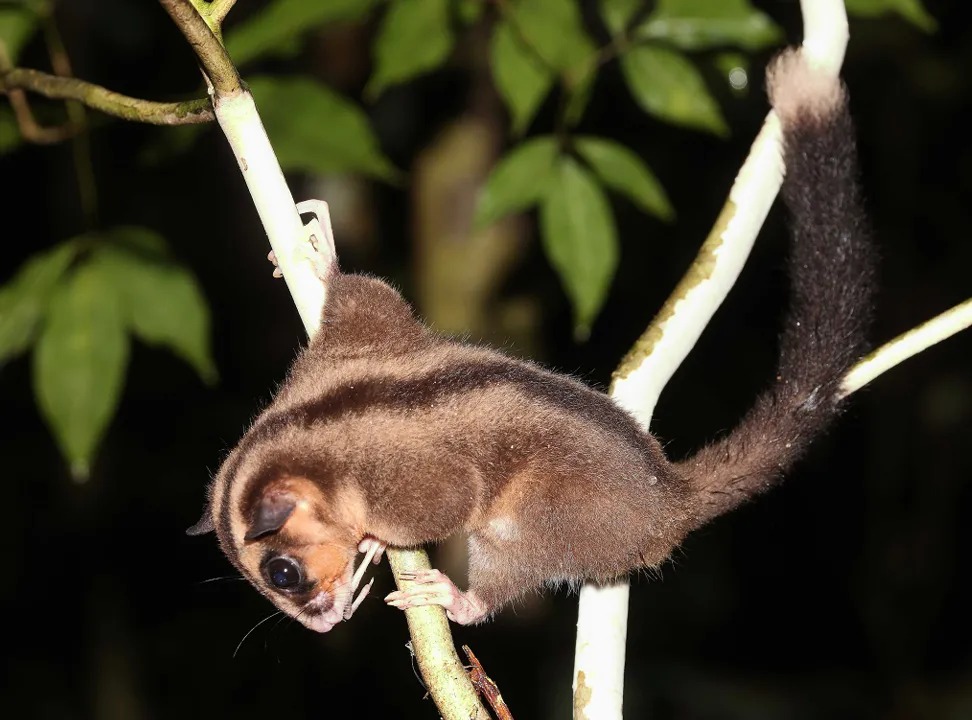
Two species of marsupials have reappeared in the forests of New Guinea's Bird's Head Peninsula after vanishing from the fossil record for more than 6,000 years. The pygmy long-fingered possum and the ring-tailed glider were rediscovered alive by researchers working alongside the Tambrauw and Maybrat Indigenous communities, who have always known these animals were there.
This matters because finding even one species return from apparent extinction is statistically almost impossible. Finding two is unprecedented. Tim Flannery, a zoologist at the Australian Museum who co-authored the research papers published in March, calls it "groundbreaking." In the language of biology, these are "Lazarus species"—animals that vanish from the fossil record only to reappear in the living world, as if resurrected.
The pygmy long-fingered possum is tiny, about 14 inches from nose to tail, with one extraordinarily long digit on each hand. It hunts by listening for the low-frequency sounds of wood-boring beetle larvae moving inside rotting wood, then uses those elongated fingers to extract the grubs. The ring-tailed glider is smaller still—about the length of two open palms—and feeds on tree sap, leaves, and invertebrates. It's nocturnal and moves through the canopy with its distinctive long tail.
We're a new kind of news feed.
Regular news is designed to drain you. We're a non-profit built to restore you. Every story we publish is scored for impact, progress, and hope.
Start Your News Detox
The ring-tailed glider turned out to be something even rarer: an entirely new genus, named Tous to honor how Indigenous peoples refer to the animal. Genetic analysis suggests it's an ancient branch of the possum family tree, millions of years old, with no other living relatives. It's the sole survivor of its kind.
Why These Species Vanished, and Why They Matter
The Bird's Head Peninsula was once part of the Australian continent before breaking off and becoming incorporated into New Guinea. Scientists suspected these animals might still exist because the region—remote, dense with forest, difficult to navigate—had never been thoroughly surveyed for small marsupials. The local Indigenous communities knew better. For the Tambrauw and Maybrat peoples, the ring-tailed glider holds spiritual significance; they believe the animals represent their ancestors' spirits and maintain deep respect for the old-growth forests where they live, describing it as "the place where all of the living things came from."
What makes this rediscovery feel both hopeful and urgent is the threat now closing in. Both species face severe pressure from logging and habitat loss across New Guinea. David Lindenmayer, an ecologist at the Australian National University, expressed being "hugely concerned" about the pace of land clearing. The animals' specialized diets—grubs in rotting wood, tree sap, specific forest invertebrates—mean they cannot adapt to fragmented or degraded habitat. They need intact old-growth forest, and that forest is disappearing.
Researchers are keeping the exact locations of these animals secret to prevent wildlife trafficking. Flannery has also warned that both species would be "incredibly difficult to keep in captivity" because of their highly specialized diets, making them poor targets for the illegal pet trade anyway. But the real protection comes from protecting the forest itself.
The rediscovery is a rare moment of genuine hope in conservation work—proof that species thought lost forever can still be found, and that the remote, difficult places we often ignore can still hold surprises. It's also a reminder that Indigenous knowledge holders have been right all along about what lives in these forests. The next chapter depends on whether the world will listen in time.