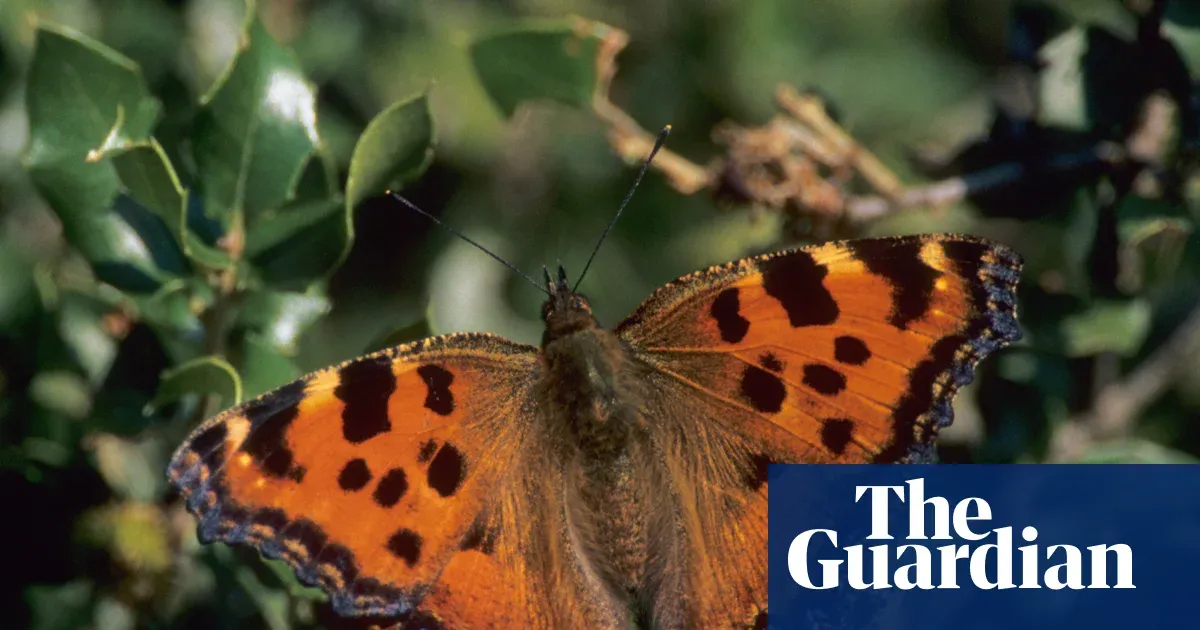
A butterfly thought lost to Britain for decades is back — and this time, it's staying. The large tortoiseshell, which vanished from UK woodlands by the 1960s, has started breeding in the wild again. Sightings across Kent, Sussex, Hampshire, Dorset, Cornwall and the Isle of Wight this spring mark a quiet milestone: Butterfly Conservation has officially declared it a resident species for the first time in their 58-year history.
The shift from "extinct" to "native" might sound like a bureaucratic reclassification, but it's the difference between a species visiting and a species coming home. Britain's native butterfly count just climbed to 60.
Why This Matters More Than It First Appears
The large tortoiseshell's return tells a story about climate, migration, and what happens when a species finds conditions finally in its favor again. Unlike its smaller cousin (the common small tortoiseshell you might spot in your garden), the large tortoiseshell is a tree-dweller. Its caterpillars feed on elm, willow, aspen and poplar — trees that were once scarce in Britain after Dutch elm disease ravaged the landscape in the mid-20th century. For decades, scientists thought this loss had sealed the butterfly's fate in Britain.
We're a new kind of news feed.
Regular news is designed to drain you. We're a non-profit built to restore you. Every story we publish is scored for impact, progress, and hope.
Start Your News DetoxThen came a plot twist. Lepidopterists realized Britain had probably always been at the northern edge of the species' natural range. The real story wasn't about Britain losing the butterfly — it was about the butterfly never quite belonging here in the first place, until now.
Warmer temperatures across Europe have shifted the entire equation. Populations in the Netherlands and France have surged, and more large tortoiseshells have migrated across the North Sea and Channel. The 1940s saw a boom in UK sightings during a run of unusually warm summers; today's climate is creating similar conditions year after year. It's one of the few cases where climate change has actively helped a species reclaim lost ground.
The decisive evidence came in 2020, when researchers found large tortoiseshell caterpillars feeding on wild trees in Dorset — proof that the butterfly wasn't just passing through but actually breeding here. Since then, caterpillars have been spotted more widely across southern England. The adult butterfly hibernates through winter and emerges in spring to mate and lay eggs; their offspring take flight in midsummer. This spring's sightings could mean a much larger population by summer.
"The signs are really positive," said Richard Fox, head of science for Butterfly Conservation. "It's not well-established enough yet to say it's definitely back for good and will be widespread across multiple landscapes — we're still in that zone of uncertainty at the moment, but there are exciting signs."
There's a cautionary note in the story: between 2006 and the 2020 breakthrough, many sightings were attributed to unauthorized releases by butterfly breeders trying to force the species' return. That well-intentioned meddling complicated the picture. What makes the recent sightings different is that the caterpillars are doing the work themselves — breeding, feeding, surviving without human intervention.
This resurrection also hints at a broader pattern. Other continental species — the spectacular Clifden nonpareil moth among them — have been moving into Britain as temperatures rise. Some see a worrying sign of ecological disruption; others note that it's one of the few ways climate change has benefited British wildlife. The large tortoiseshell's return is real progress, even if it's tangled up in the very forces that created the climate crisis.
Butterfly Conservation is asking people to log sightings on iRecord, a free citizen science app. If you spot one — larger than a small tortoiseshell, lacking white markings, warming its wings in a sunny woodland — it's worth recording. The data will help map whether this spring's emergence becomes summer's population boom.