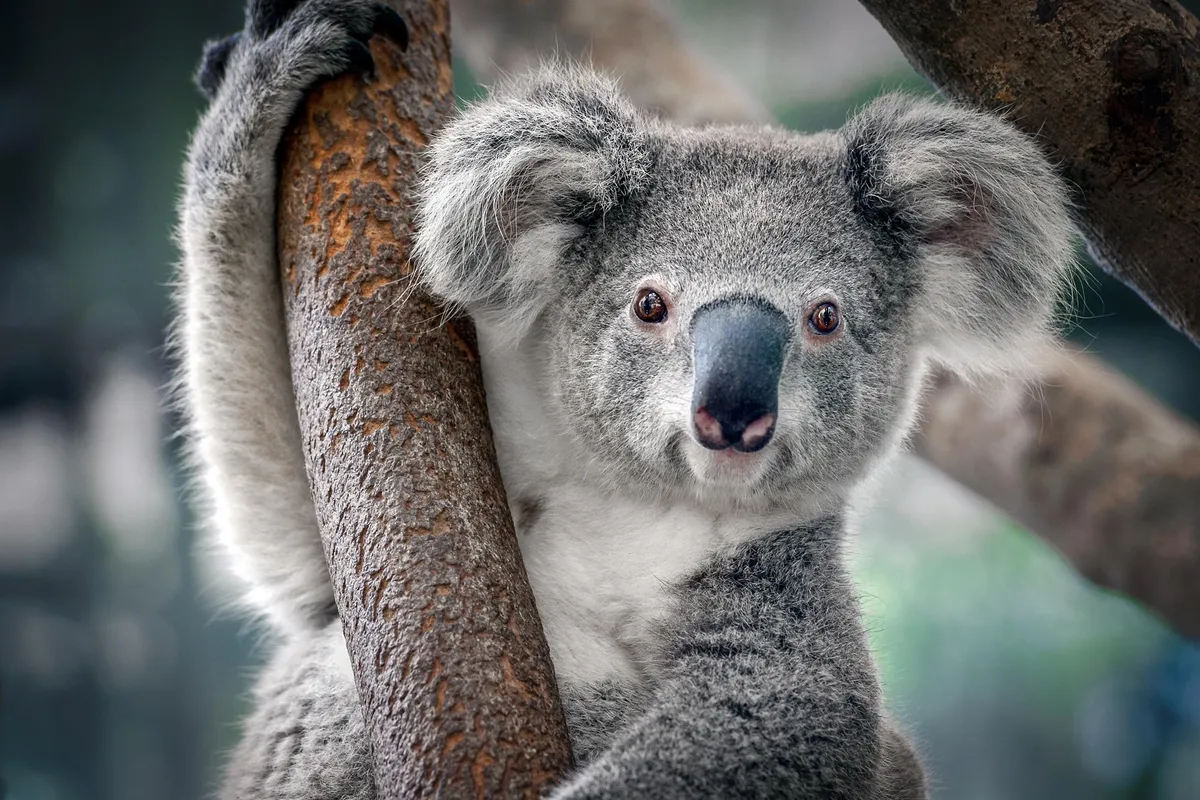
A handful of koalas rescued from the brink of extinction a century ago are now teaching scientists something unexpected: genetic damage from population collapse isn't necessarily permanent.
In the early 1900s, Victoria's koalas were hunted nearly to oblivion for fur and meat. Around 1920, conservationists moved fewer than six surviving individuals to French Island as a last-ditch refuge. The population exploded there. Those few animals became the ancestors of virtually all koalas living in Victoria today—a textbook genetic bottleneck, the kind of population crash that usually condemns a species to inbreeding and declining health.
Scientists expected exactly that. But a genome analysis of over 400 koalas across Australia, published in Science, revealed something different: southern koalas are actually gaining genetic diversity as their population expands, while northern populations with historically high genetic variation are declining. The paradox suggests recovery is possible even after the worst has happened.
We're a new kind of news feed.
Regular news is designed to drain you. We're a non-profit built to restore you. Every story we publish is scored for impact, progress, and hope.
Start Your News DetoxHow a Small Population Bounces Back
The mechanism is simple but powerful. Every time animals reproduce, their genes shuffle through a process called recombination. A population of six individuals can't generate much variation. But as those six become dozens, then hundreds, then thousands, the sheer number of reproduction events creates exponentially more opportunities for genetic reshuffling. With each generation, new combinations emerge from the old genetic deck. Over time—roughly a century in the koalas' case—this constant recombination pulls the population out of the genetic hole it fell into.
This matters far beyond koalas. Conservation biology has long operated under a grim assumption: once a species crashes hard enough, genetic recovery is impossible, and the best you can do is prevent further decline. The koala data suggests that's not quite true. If endangered populations can grow large enough, there's a biological pathway back to health that didn't previously appear on the map.
It's not a license to let species collapse and hope they recover. Preventing bottlenecks remains infinitely preferable to surviving them. But for species already through the worst—like the Arabian oryx, California condor, or black-footed ferret, all of which descended from tiny founding populations—this finding reframes what's possible. Genetic recovery isn't guaranteed, and it takes generations. But it's not inevitable doom either.
The next question for scientists is whether other species show the same pattern, and which conditions make recovery most likely. For now, a small group of koalas pulled from the edge a century ago is quietly proving that survival, given enough time and space to grow, can heal even profound genetic wounds.