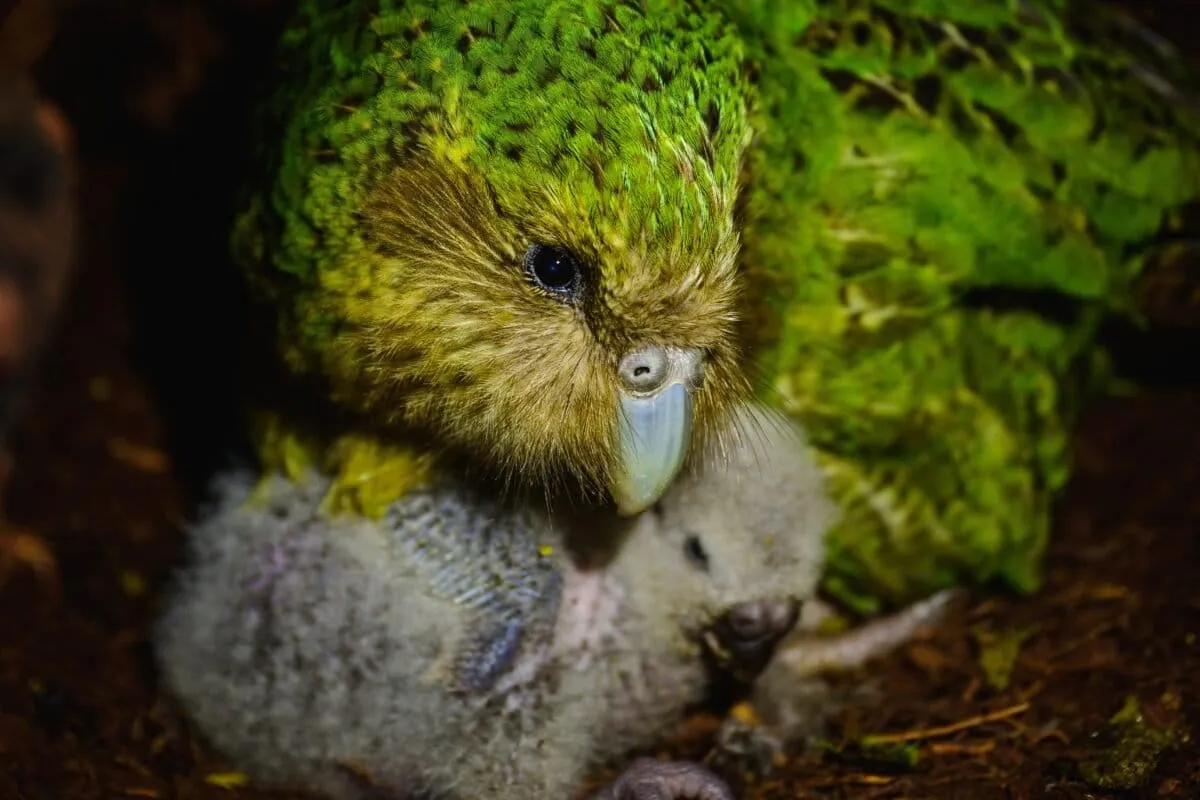
Fifty-nine kākāpō chicks have hatched in recent weeks—the most successful breeding season in years for this flightless New Zealand parrot, and proof that even species on the edge of extinction can bounce back when the conditions align.
The kākāpō, a stocky, moss-green parrot found nowhere else on Earth, nearly vanished entirely. By the 1990s, only 51 remained alive. Today, after decades of intensive conservation work, the population has climbed to 236 adults. But numbers alone don't tell the story—what matters is that these birds are finally reproducing at meaningful scale.
The breakthrough hinges on something the kākāpō cannot control: the rimu tree. This native New Zealand plant produces heavy fruit crops only once every two to four years, and the kākāpō breed only when food is abundant. This year, the rimu fruited heavily. The Department of Conservation detected 140 fertile eggs, and so far 52 healthy chicks have hatched, with another seven confirmed via remote monitoring. The first chick of the season, named Tīwhiri-A1-2026, arrived on Valentine's Day.
We're a new kind of news feed.
Regular news is designed to drain you. We're a non-profit built to restore you. Every story we publish is scored for impact, progress, and hope.
Start Your News DetoxWhat makes this moment significant is the four-year gap since the last breeding season. In species this close to extinction, even one failed breeding window can feel like a setback. "Every new chick brings the species further from the brink," said Deidre Vercoe, the Department of Conservation's operations manager for kākāpō.
The recovery itself is a lesson in patience and precision. Surviving kākāpō were relocated to three predator-free islands—Whenua Hou, Pukenui, and Te Kākahu-o-Tamatea—where they could be monitored and protected. But breeding rates stayed stubbornly low for years. This season suggests that the population may have finally reached a tipping point where natural reproduction can sustain the species' growth.
There's also something quietly powerful in how the Department of Conservation shares this progress: every Friday, they release a photo of the week's chick count, written in marker on the department's refrigerator. It's a small gesture, but it transforms abstract conservation work into something tangible and human. The public watches the numbers climb, week by week.
The kākāpō's recovery isn't inevitable. The species still depends on the rimu's unpredictable fruiting cycles and the continued protection of its island sanctuaries. But 59 new chicks represent something that seemed impossible thirty years ago: a future where this bird doesn't just survive in captive breeding programs, but actually breeds and thrives on its own terms.