

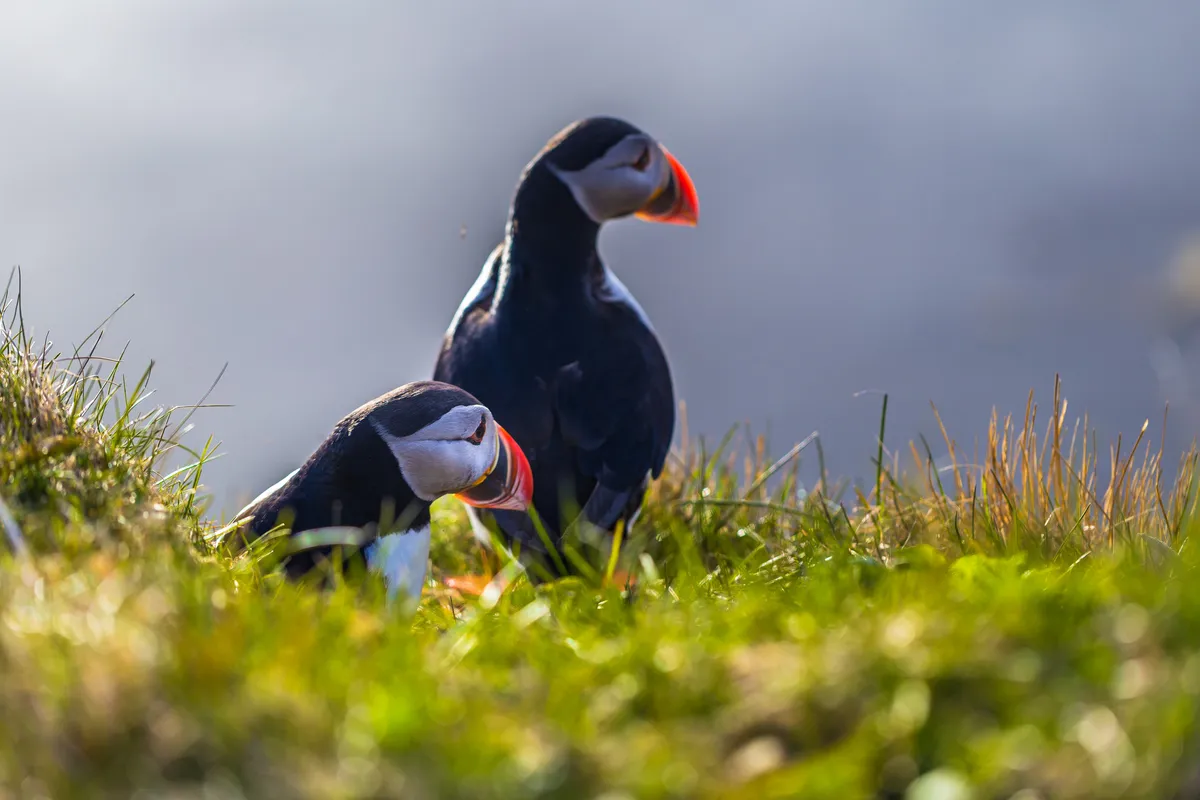
For the first time in at least a quarter century, puffins have returned to the Isle of Muck in County Antrim, Scotland—and they're not just visiting. Camera footage captured two birds repeatedly entering a nesting burrow on the cliff ledges this spring, bringing food back inside. If they've successfully raised a chick, it would mark the first puffling born on the island since conservationists began managing it as a seabird sanctuary 25 years ago.
The return didn't happen by accident. Ulster Wildlife spent years methodically removing the conditions that had made the island uninhabitable for puffins. In 2017, they launched a rat eradication program—brown rats are voracious predators of seabird eggs and chicks. They also introduced winter grazing to keep vegetation low, which removes cover where predators hide. The work was patient, unglamorous, and it worked.
Andy Crory, Ulster Wildlife's nature reserves manager, describes the significance plainly: "Seabird restoration works." For him, watching puffins return from local folklore into reality represents something larger. "Tales of puffins once breeding on the Isle of Muck felt more like folklore," he said. "So, while a handful of puffins on a tiny island may seem small, this moment is huge."
We're a new kind of news feed.
Regular news is designed to drain you. We're a non-profit built to restore you. Every story we publish is scored for impact, progress, and hope.
Start Your News DetoxThe Wider Recovery
The puffins aren't alone in their comeback. Annual surveys show increases across multiple seabird species on and around the island—eider ducks, guillemots, herring gulls, and lesser black-backed gulls are all returning. This mirrors restoration efforts across the UK, where rat removal programs have consistently boosted seabird populations. On nearby Rathlin Island, the LIFE Raft project is wrapping up work that also removed ferrets—a world-first achievement in invasive species management.
Puffins themselves face particular pressures. They're red-listed in the UK, the highest conservation concern category, and they're a priority species in Northern Ireland. Unlike many seabirds, they spend most of their lives at sea, returning to land only to nest in spring and summer. They're fiercely loyal—the same pair returns to the same burrow year after year, raising just one chick per season. Every successful nest matters.
Their decline has been driven by food shortages, shifting ocean conditions linked to climate change, and predation by invasive species. The Isle of Muck is closed to the public, which gives the birds a genuine chance at an undisturbed breeding season. Crory's hope is clear: "Our hope is that the Isle of Muck will become a thriving stronghold for puffins and, in time, tempt back other lost species like the Manx shearwater."
Next summer will tell whether the first pufflings appear on the cliffs. For now, the island stands as proof that small, focused interventions can unlock large changes—even for some of the world's most vulnerable seabirds.





