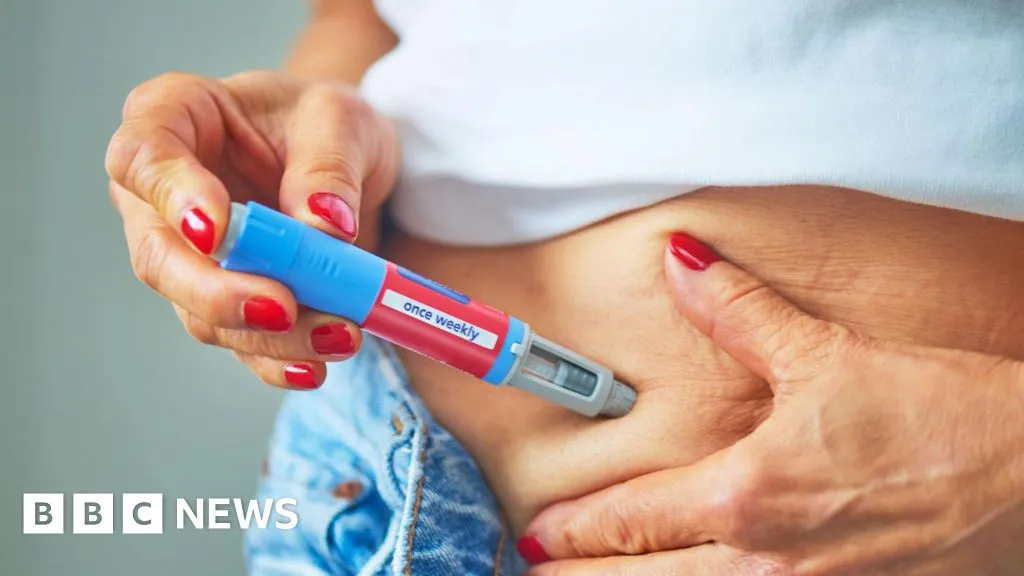
People who stop taking weight-loss injections like Wegovy and Mounjaro regain weight four times faster than those who quit traditional dieting—about 0.8 kg per month, returning to their starting weight within 18 months. Research published in the British Medical Journal analyzed 37 studies involving over 9,000 patients and found a stark difference: those who lose weight through diet and exercise see it creep back at roughly 0.1 kg per month.
The injections work by mimicking GLP-1, a natural hormone that regulates hunger. They're effective—people shed around a fifth of their body weight while taking them. But the mechanism that makes them powerful also explains the rebound. Dr. Adam Collins from the University of Surrey notes that artificially flooding the body with GLP-1 at levels several times higher than normal may actually suppress your own natural production of the hormone. "If someone has relied solely on the jab to suppress appetite without establishing any dietary or behavioural changes, stopping the medication leaves them without those underlying habits to fall back on," he explains.
Users describe the experience vividly. When they stop taking the injections, the appetite-suppressing effect vanishes almost instantly—like a switch flipping. One person called it "you're instantly starving." This isn't a failure of willpower. It's biology reasserting itself after months of artificial suppression.
We're a new kind of news feed.
Regular news is designed to drain you. We're a non-profit built to restore you. Every story we publish is scored for impact, progress, and hope.
Start Your News DetoxThe Chronic Condition Question
About 1.6 million UK adults have used these injections in the past year, mostly through private prescriptions. Another 3.3 million say they'd like to try them—meaning roughly one in ten adults has either used or wants to use them. The NHS prescribes them only to people with obesity-related health complications, not for cosmetic weight loss, and recommends pairing them with lifestyle changes.
The real question emerging from the data is whether these injections should be treated like other chronic conditions—diabetes or high blood pressure—where ongoing medication is simply part of long-term management. Prof. Naveed Sattar from Glasgow University suggests there might be hidden benefits even in short-term use: being lighter for two or three years could reduce stress on joints, hearts, and kidneys. But proving that requires larger, longer studies than currently exist.
Dr. Susan Jebb from Oxford, who led the research, emphasizes that people considering these injections need realistic expectations. The findings come from clinical trials with maximum follow-up periods of one year after stopping—so the 18-month regain timeline is an estimate based on the rate observed so far. "More studies of longer-term effects are needed," she notes.
Both Novo Nordisk (Wegovy) and Eli Lilly (Mounjaro) frame this not as a flaw but as a reflection of obesity's chronic nature. The implication is clear: for many people, these injections may work best as a long-term tool, not a temporary fix. That changes the conversation around who should use them and how.