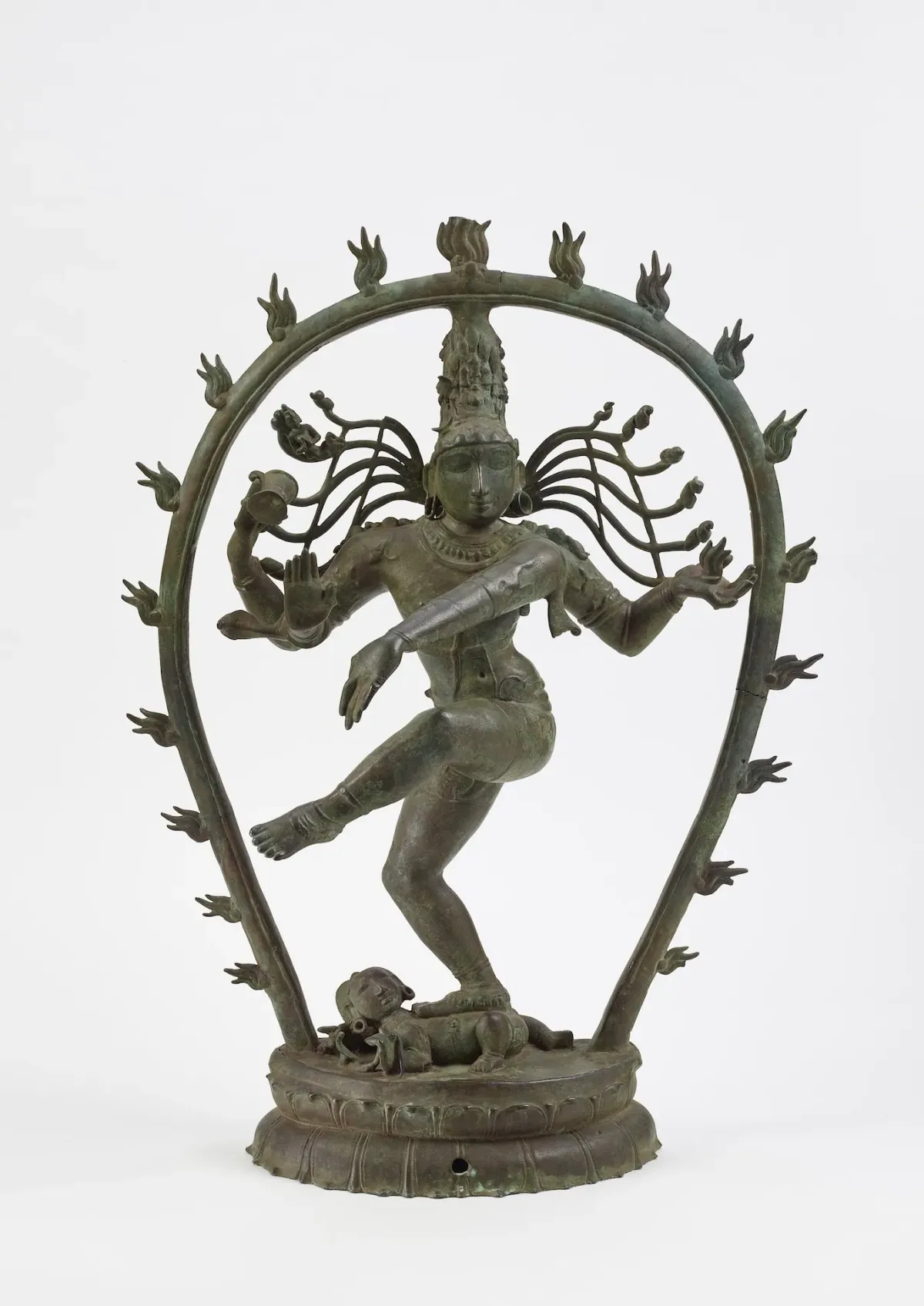
The Smithsonian's National Museum of Asian Art is sending three sacred bronze sculptures back to India after tracing them to temples in Tamil Nadu, where they were photographed in the 1950s before being stolen.
The three works — a 10th-century "Shiva Nataraja," a 12th-century "Somaskanda," and "Saint Sundarar with Paravai" — were originally carried in temple processions as living objects of devotion. Museum researchers found they'd been removed in violation of Indian law and linked to dealers known for trafficking looted antiquities.
The return marks a shift in how major institutions think about their holdings. Chase F. Robinson, the museum's director, framed it plainly: "We aim to understand the objects in our collection in their full complexity." That means not just documenting how they arrived at the museum, but reckoning with where they came from and how they were taken.
We're a new kind of news feed.
Regular news is designed to drain you. We're a non-profit built to restore you. Every story we publish is scored for impact, progress, and hope.
Start Your News DetoxThis isn't the Smithsonian's first restitution. Earlier this year, it returned three Khmer-period sculptures to Cambodia — works from the 10th and 12th centuries that had been looted during Cambodia's civil war. The pattern is deliberate. The institution has stated that while it holds legal title to its collections, "continued retention or sole stewardship may cause harm to descendants or communities and be fundamentally inconsistent with the Smithsonian's ethical standards and values."
What's significant here is the scale of the shift. For decades, Western museums treated looted objects as acquisitions to be kept and displayed. Now, major institutions are investing in provenance research — the painstaking work of tracing an object's history — specifically to identify what shouldn't stay. It's slow work. It requires admitting past mistakes. But it's happening.
These three sculptures will return to India, where they belong to the communities and temples they were taken from. The restitution doesn't erase the theft, but it does acknowledge that some objects were never the museum's to keep.