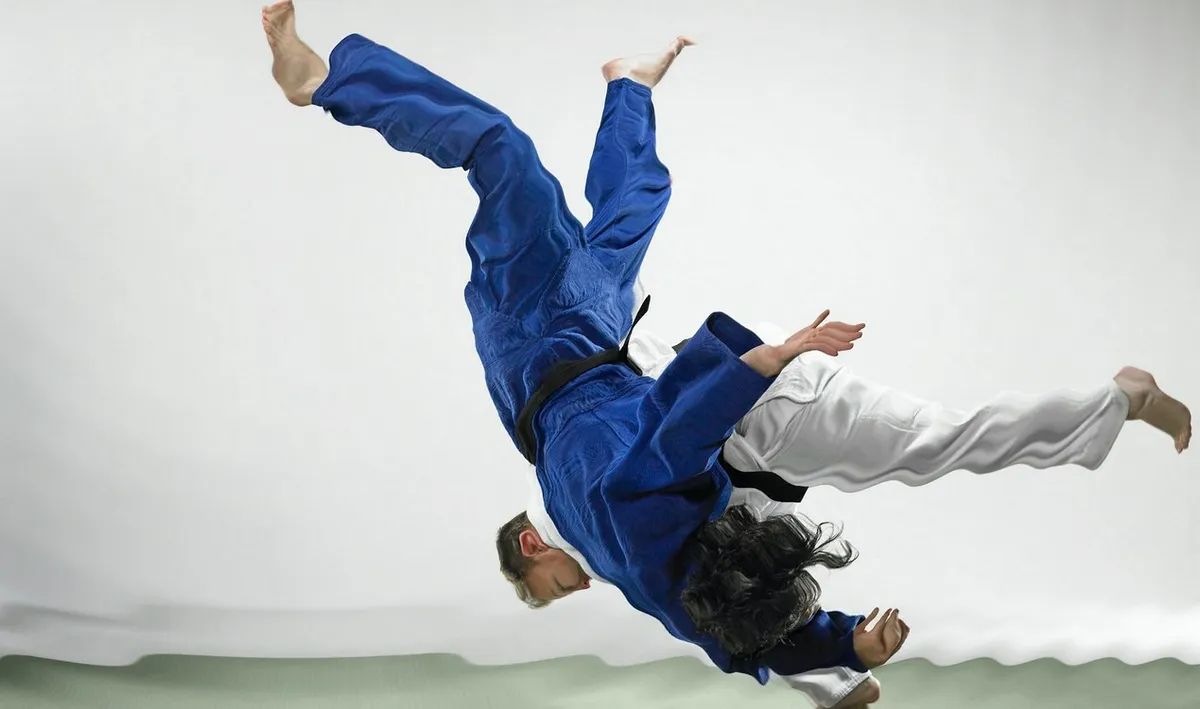
Last summer in Tokyo, organizers faced a specific challenge: how do you let deaf spectators experience the visceral thrill of judo—a sport built on the crack of bodies hitting the mat—when the traditional sensory entry point is sound.
Their answer was tactile. Spectators at the Deaflympics judo events were given haptic feedback devices worn around the neck. Sensors and microphones embedded in the venue captured strike data, foot movement, and impact in real-time, then translated that information into vibrations felt directly against the skin.
The technology wasn't invented for sports. It originally emerged from concert production, where engineers developed ways to let deaf audiences feel the bass and rhythm of live music through their bodies rather than their ears. Applying it to judo—a sport of explosive throws and the distinctive thud of a competitor slamming onto the tatami mat—turned out to be a natural fit.
We're a new kind of news feed.
Regular news is designed to drain you. We're a non-profit built to restore you. Every story we publish is scored for impact, progress, and hope.
Start Your News Detox"The device really conveys the atmosphere of the venue," said Nana Watanabe, a judo fan who experienced it firsthand. "It feels like we can share the intensity together." Even hearing spectators found the vests added something. Rather than passively listening to distant commentary, they could feel the force of each throw as it happened.
What makes this work isn't just the hardware. The system required careful human tuning to capture the actual nuance of live judo—distinguishing between a controlled throw and a powerful slam, translating those distinctions into meaningful vibrations. The result is something closer to translation than simulation: deaf and hearing spectators experiencing the same event through different sensory channels, but with equal access to its intensity.
This was a limited deployment at one event, but it hints at a broader shift. As venues and broadcasters think harder about access, they're discovering that inclusive design often creates better experiences for everyone. The haptic vests didn't just solve a problem for deaf fans. They gave all spectators a more immediate, physical connection to the action.