Flexible, transparent electronics are getting closer to real-world use. These materials can bend and roll, much like human skin. Researchers at the University of Turku, Finland, found a new way to make these materials. They took inspiration from natural structures like tree leaves. This work could change how future devices, from smartphones to medical prosthetics, are built.
Assistant Professor Vipul Sharma leads the team. They focused on making electronics that are both flexible and good for the environment. Instead of using stiff, traditional materials, they looked at how nature builds light but strong structures. Then, they copied these patterns in their engineered materials.
"We want high efficiency but only use eco-friendly materials," Sharma said. "We've made flexible electronic materials that stretch, breathe, conduct electricity, and are transparent. This makes them better than other similar materials."
We're a new kind of news feed.
Regular news is designed to drain you. We're a non-profit built to restore you. Every story we publish is scored for impact, progress, and hope.
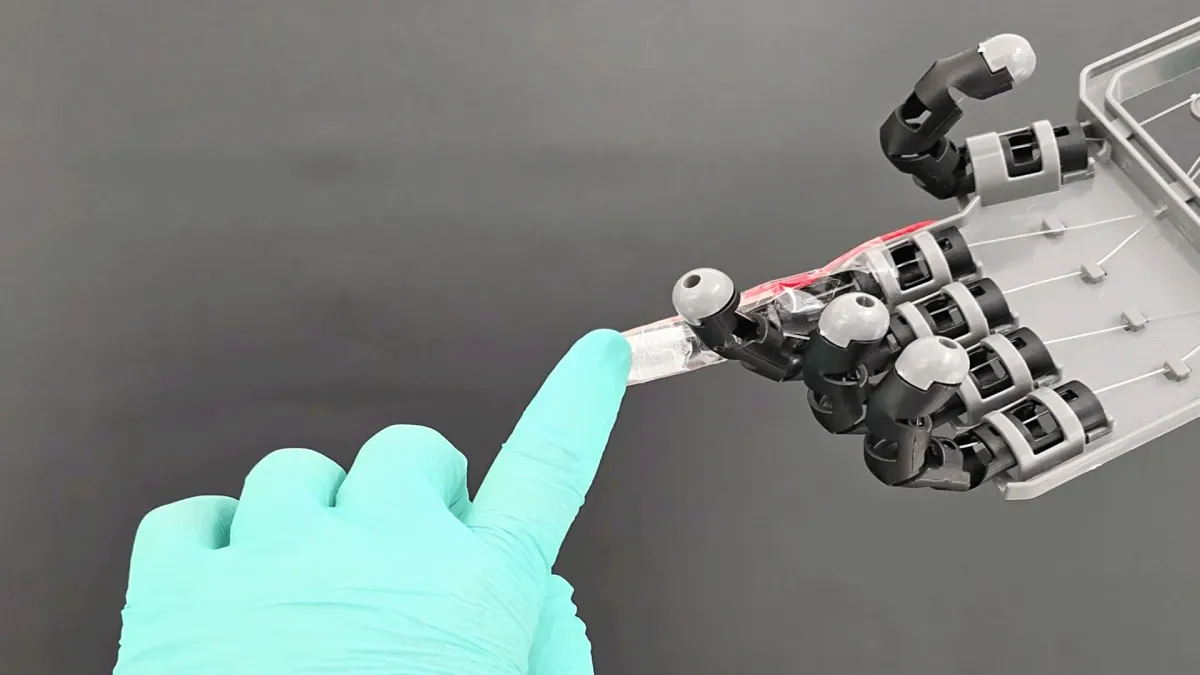
Start Your News DetoxTo test their new material, the researchers created an electronic skin. They attached it to a robotic hand. The system worked well. Pressure sensors in the skin responded to touch, giving the robot a sense of feel.
Giving Robots a Sense of Touch
This is an early step toward better prosthetics and ways for humans to interact with machines. In the future, this electronic skin could let people with prosthetics feel pressure, temperature, and humidity. This would make artificial limbs feel more like natural ones.
Flexible electronics are also being used in soft robotics. This field creates machines that can safely work with humans and adapt to tricky environments. These robots are being explored for use in healthcare, factories, and rescue missions.
A soft robot could help with tough tasks in hospitals, like lifting patients. In factories, it could move delicate items without breaking them. Its flexible design also lets it work in tight spaces. This makes it useful for underground rescue missions and even space travel.
Soft Robots for Safety and Sustainability
"My team and I have built soft equipment that could help patients with limb rehabilitation," said Anastasia Koivikko. She is an Assistant Professor of Automation Engineering at the University of Turku. "It's important that robots helping patients are soft. This makes them comfortable and safe."
Researchers are also trying to replace common silicone parts with more eco-friendly options. The goal is to make robots better for the environment without losing performance. Today, soft robots can move by using compressed air, electricity, light, or fluids. They can expand, bend, or even jump out of tight spots.
"Soft robots are good for many jobs, but they aren't widely used yet," Koivikko noted. "An smart robot could, for example, tell when fruits and berries are ripe and pick them. A soft robot can also work in dangerous places for humans, like a nuclear power plant with high radiation."
The research group is also making sustainable electronics from Finnish wood. They want to use local, renewable materials instead of ones that use a lot of resources. This also reduces the need for imported parts.
"Forests are Finland's oil," Sharma said. "No other European country has as much timber. Right now, many electronic materials come from China. Finnish biomass has great potential in the global market."