Every second of every day, someone ends a pregnancy using an unsafe method. That's 35 million unsafe abortions annually—a preventable crisis that kills thousands and leaves millions more with lasting injuries.
Last week, The Audacious Project (TED's funding initiative) announced it would invest $1.03 billion across 13 organizations tackling humanity's hardest problems. Among them: Ipas, a reproductive justice organization that's been working in Africa, Asia, and the Americas for over 50 years. While the exact amount remains undisclosed, Ipas confirmed it's receiving multi-millions—marking the first time The Audacious Project has specifically funded abortion access work since launching in 2018.
The Scale and the Solution
The numbers tell the story. Globally, 121 million unintended pregnancies occur each year—nearly half of all pregnancies. About 61 percent end in abortion, and nearly half of those are unsafe. The countries where this burden falls heaviest are also where access is most restricted: Côte d'Ivoire, Democratic Republic of Congo, Ethiopia, Kenya, Nigeria, Zambia, Bangladesh, India, Pakistan, and Mexico. These are Ipas's 10 target countries.
We're a new kind of news feed.
Regular news is designed to drain you. We're a non-profit built to restore you. Every story we publish is scored for impact, progress, and hope.
Start Your News DetoxWith TED's backing, Ipas has set concrete goals: prevent 16.3 million unsafe abortions and 22.6 million unintended pregnancies, avert 39,000 maternal deaths, and reduce unsafe abortion by 30 percent in these countries by 2040. What makes this different from previous funding is the explicit focus on medication abortion—pills that allow people to safely end pregnancies at home, away from legal and social scrutiny.
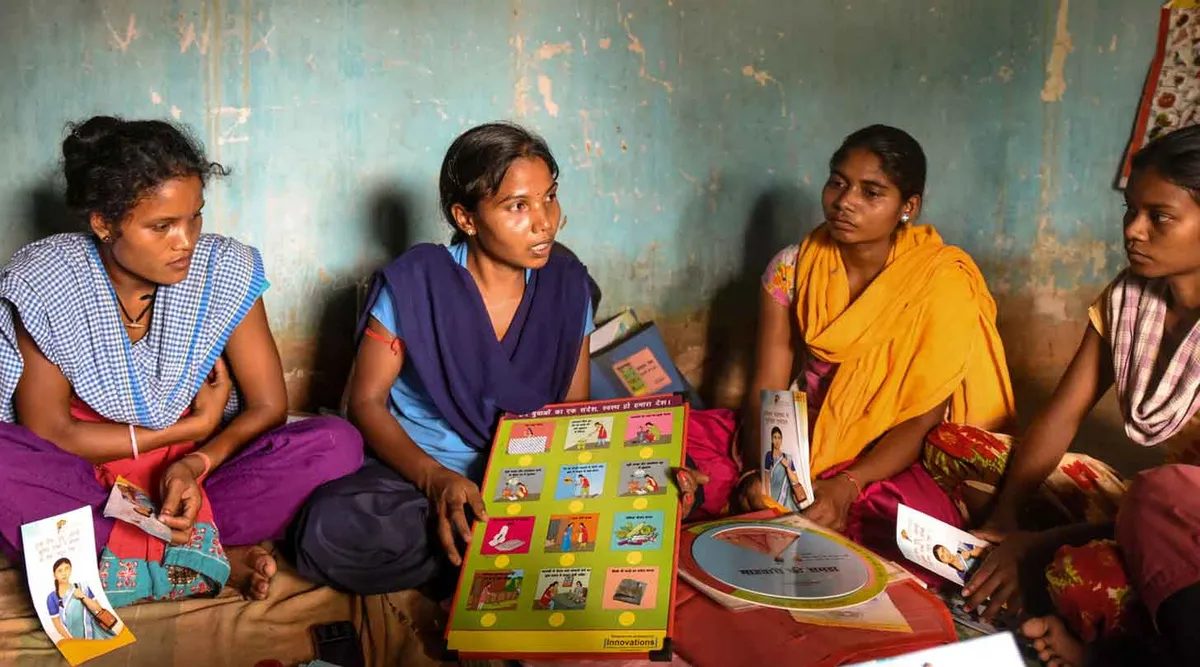
Youth leader Seema Gagrai provides information on sexual and reproductive health to women in rural Jharkhand. Photo: Arvind Jodha and Ipas
Ipas CEO Anu Kumar framed the funding as recognition of a simple fact: "These outcomes are not inevitable—we know how to prevent unsafe abortion." That knowledge matters. Access to safe abortion and contraception doesn't just prevent deaths; it changes trajectories. Women and girls can stay in school, build careers, and participate fully in economic and civic life. It's not abstract—it's the difference between a closed future and an open one.
Beyond Pills: A Systems Approach
But Ipas isn't just distributing medication. The organization works on three levels simultaneously: ensuring access to safe medical care, advocating for policy change, and shifting the cultural stigma that makes abortion a whispered crisis instead of routine healthcare. They specifically support communities facing overlapping injustices—gender-based violence, climate displacement, conflict zones—recognizing that reproductive rights can't be separated from broader justice work.
This is where the funding becomes strategically important. Government aid for global reproductive health has been volatile, especially from the United States, where political winds shift with administrations. Philanthropic investment fills gaps that public funding leaves open. It also allows organizations to work in places where governments are hostile to abortion access, building capacity and shifting norms from within communities.
The timing matters too. Globally, access to safe abortion has been contracting in recent years. This investment signals that major institutions are doubling down on expanding it—not as a fringe issue, but as fundamental to health, equality, and human dignity.
Ipas now has the resources to scale what works locally across a network of countries. That means more rural health workers trained, more pills distributed safely, more policy doors opened. By 2032, the organization aims to prevent 16.3 million unsafe abortions. That's not theoretical impact—that's 16.3 million people whose lives won't be derailed by a preventable crisis.