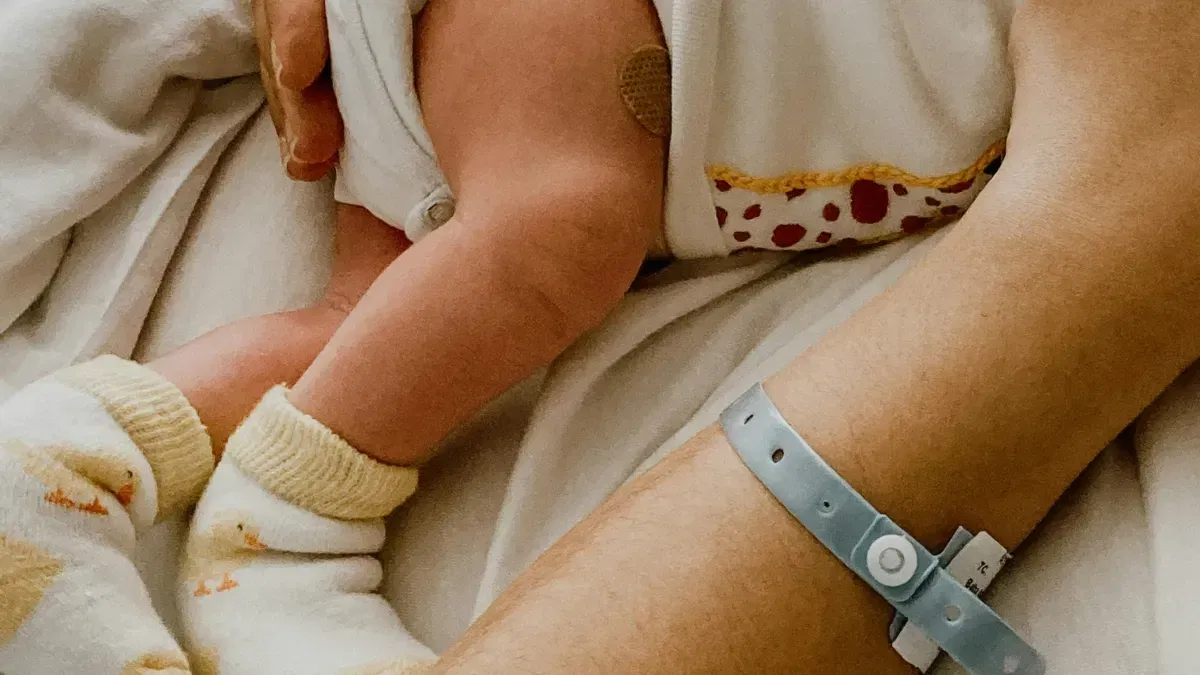
Grace Bell's son Hugo arrived in December 2025 with a story woven into his birth: his mother was born without a womb, received one from a deceased donor, and became the first woman in the UK to deliver a baby through this particular NHS programme.
Grace has Mayer-Rokitansky-Küster-Hauser syndrome, a condition affecting around 1 in 4,500 women that means the womb doesn't develop. For most of her life, biological motherhood seemed impossible. Then came the transplant — and nine months later, Hugo.
What makes this moment significant isn't just the medical achievement, though that's real. It's the chain of decision-making behind it. The donor's family, already committed to organ donation, were asked if they'd consider donating the womb. They said yes. The NHS describes their response as typical: the great majority of families asked about womb donation have supported it, even in the raw aftermath of loss.
We're a new kind of news feed.
Regular news is designed to drain you. We're a non-profit built to restore you. Every story we publish is scored for impact, progress, and hope.
Start Your News Detox"There are no words to say thank you enough to my donor and her family," Grace said. "Their kindness and selflessness to a complete stranger is the reason I have been able to fulfil my lifelong dream of being a mum." She thinks of them daily, she added, and hopes they find peace knowing their daughter gave her "the biggest gift, the gift of life."
What this reveals about transplant medicine
Womb transplantation sits at an unusual intersection: it's not life-saving in the traditional sense, but it restores something many people consider essential to their sense of self. That distinction matters. It's why Hugo's birth matters beyond the medical journals. It represents a quiet expansion of what transplant medicine can do — moving from preserving life to enabling the specific futures people want to live.
The first womb transplant in the world happened in Sweden in 2013, but that recipient didn't carry a pregnancy to term. Since then, there have been successful births in other countries, but each programme operates independently. Hugo's arrival marks the first success under this particular NHS initiative, which launched with careful research protocols and donor family support built in from the start.
Grace's hope now is that womb transplantation becomes more accessible. Right now it's rare, expensive, and requires immunosuppression (lifelong medication to prevent rejection). But the fact that families are willing to donate, that surgeons can perform these operations, and that recipients can carry pregnancies safely — these pieces are in place. What remains is scaling, which typically follows the same pattern: more programmes attempt it, success rates improve, costs decrease, and what seems impossible becomes routine.
Hugo's first breath marks the beginning of something larger than one family's joy.