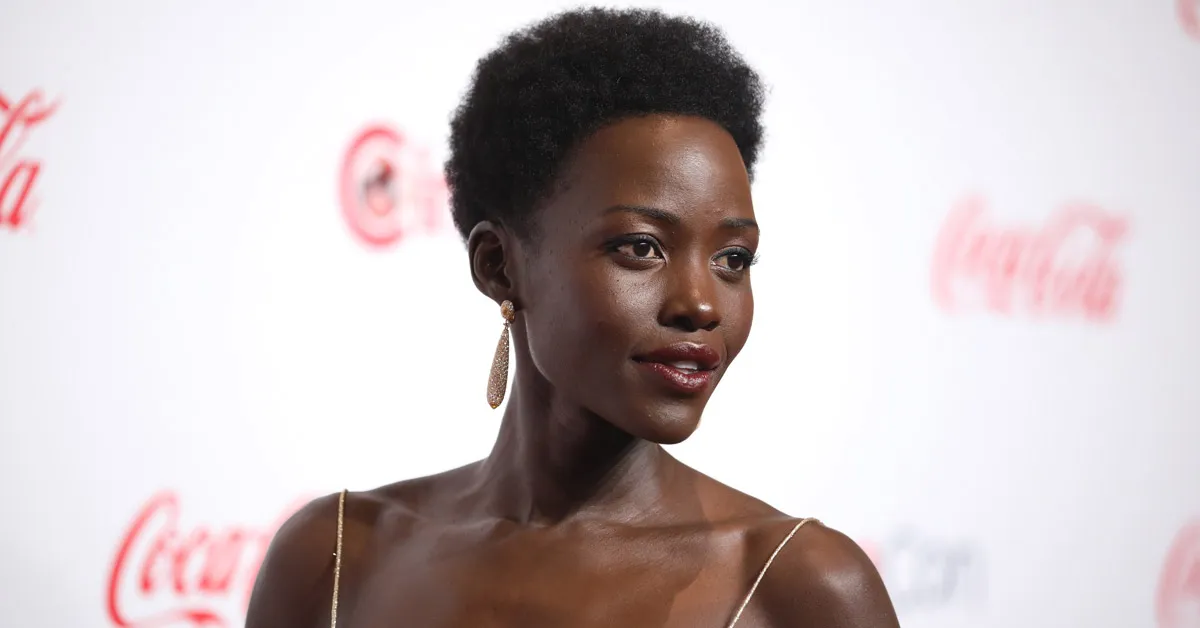
Lupita Nyong'o won an Academy Award in 2014. That same year, she was in debilitating pelvic pain, regularly fatigued, pre-anemic, and bleeding so heavily during her periods that she was borderline anemic. She didn't know why. Neither did her doctors.
For years, she'd accepted the pain as normal. Her upbringing had taught her that periods meant discomfort — that cramping and clotting were simply the price of being a woman. When her periods doubled in length in her twenties. When severe clotting began. She didn't question it. It took insisting her doctor actually listen to her complaints before she finally got an ultrasound. The diagnosis came 12 years ago: more than 30 uterine fibroids, noncancerous growths lining the walls of the uterus that can cause heavy bleeding, back pain, pelvic pain, and profound fatigue.
What shocked her most wasn't the diagnosis itself — it was how common it is. Uterine fibroids affect up to 80% of women by age 50, yet they're routinely missed, normalized, or treated as inevitable. Black women are hit harder, experiencing fibroids earlier and with more severe symptoms. In the US, fibroids are the leading cause of hysterectomies — complete uterus removal — a procedure with what Nyong'o calls "profound consequences for a woman's body, identity, and reproductive future."
We're a new kind of news feed.
Regular news is designed to drain you. We're a non-profit built to restore you. Every story we publish is scored for impact, progress, and hope.
Start Your News DetoxAfter her initial surgery, Nyong'o asked her doctor the obvious question: how do I prevent this from happening again. "Her response was devastating," she recalled. "You can't. It's only a matter of time until they grow again." She was right. The fibroids returned. Nyong'o now has more than 50 of them, the largest the size of an orange.
From Pain to Power
Rather than accept the binary of surgery or suffering, Nyong'o channeled her experience into action. She partnered with the Foundation for Women's Health and GoFundMe to launch #MakeFibroidsCount, a fundraiser supporting research into minimally invasive and non-invasive fibroid treatments. The campaign features Renaissance-style portraits of Nyong'o holding baskets of fruit — a deliberate reclamation of the medical shorthand doctors use to describe fibroid sizes.
"The comparison is convenient but the consequences of these growths can be very severe," the campaign states. "These aren't fruits we chose to harvest; they're unwanted growths that can cause debilitating pain, heavy bleeding, infertility, and a profound loss of control over our own bodies."
In her campaign statement, Nyong'o articulated the systemic nature of the problem: "When something affects 8 out of 10 women and we're still caught off guard by it, that's not individual bad luck — that is systemic failure. There's something deeply wrong when a serious health problem is so common that it's treated as casual, as inevitable. We must reject the normalization of female pain."
The fundraiser has raised over $35,000 of its $200,000 goal, with Nyong'o contributing over $22,000 herself. Katy Brodsky Falco, founder of the Foundation for Women's Health, said the organization plans to fund "innovative proposals" for minimally invasive treatments. "If we look forward to the next generation of women, doctors will not be uneducated about the symptoms of fibroids and then provide organ removal as a line of first offense," she told TODAY.
In July 2025, Nyong'o joined four Congresswomen and two Senators in Washington to introduce a package of uterine fibroid bills designed to expand research funding, increase early detection, and raise public awareness. "I'm speaking up because silence serves no one," she wrote. "The presence of pain is a signal that something must change. Let's hear that signal. Let's amplify it. And let's work together to eradicate the pain."