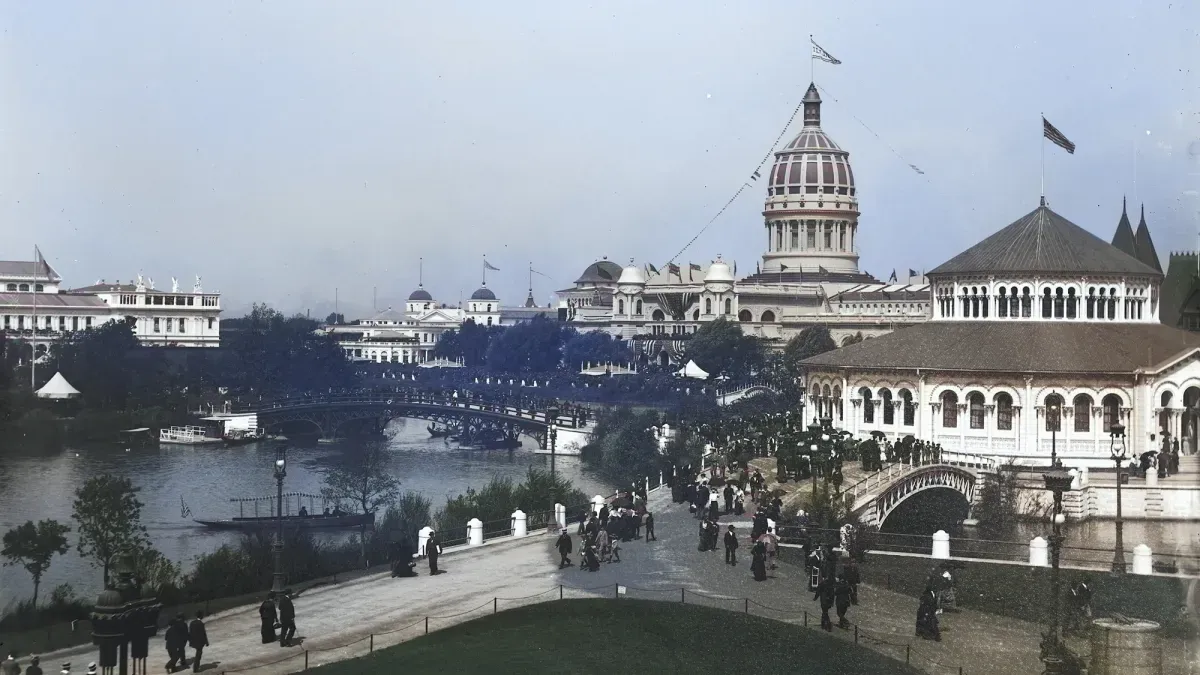
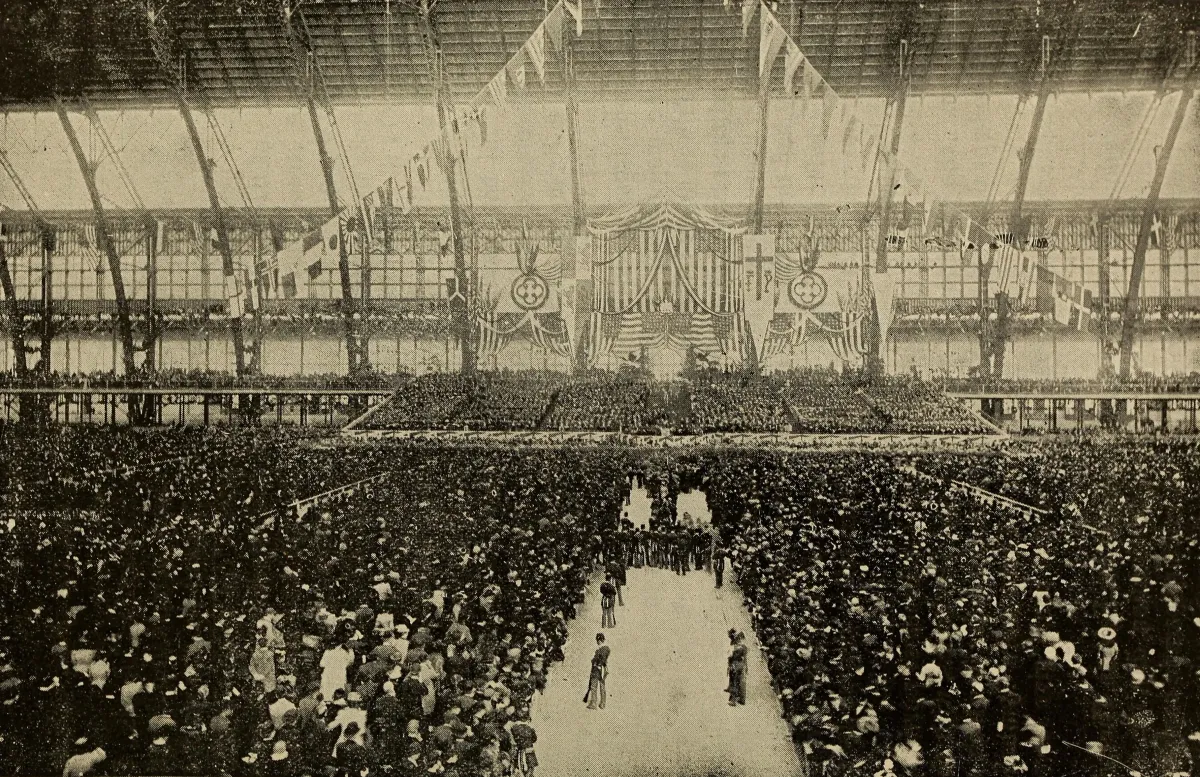
On May 1, 1893, Chicago wasn't just a city; it was a spectacle. Two hundred thousand people descended upon the "White City" — a brand-new metropolis built inside Chicago itself. President Grover Cleveland, along with a who's-who of the era, was there to kick things off.
At precisely 12:08 p.m., after a speech about American progress (naturally), President Cleveland pressed a golden telegraph key. Just like that, according to The Salt Lake Herald, the "electric age" officially began. Machinery whirred, water flowed, and wheels turned across a sprawling 630-acre complex. The 1893 World’s Columbian Exposition was open for business.
A Fair of Firsts and Lasts
This wasn't just any fair; it was a glimpse into tomorrow. The first Ferris wheel made its debut, giving people an entirely new way to experience vertigo. The first commercial movie theater flickered to life, offering moving pictures before anyone knew what to call them. Electric lights, once a novelty, were suddenly everywhere. Visitors also ogled the first automatic dishwasher and, perhaps most importantly, tasted the very first brownies. Because what's progress without chocolate?
We're a new kind of news feed.
Regular news is designed to drain you. We're a non-profit built to restore you. Every story we publish is scored for impact, progress, and hope.
Start Your News DetoxToday, you'd be hard-pressed to find much of it. The Art Institute of Chicago is the lone original survivor. Some buildings, like the Palace of Fine Arts, were rebuilt and now house the Museum of Science and Industry. In Jackson Park, where the magic happened, only a small wooded island and a replica of the Statue of the Republic quietly remain. Most folks pass them by, completely unaware they're treading on history.
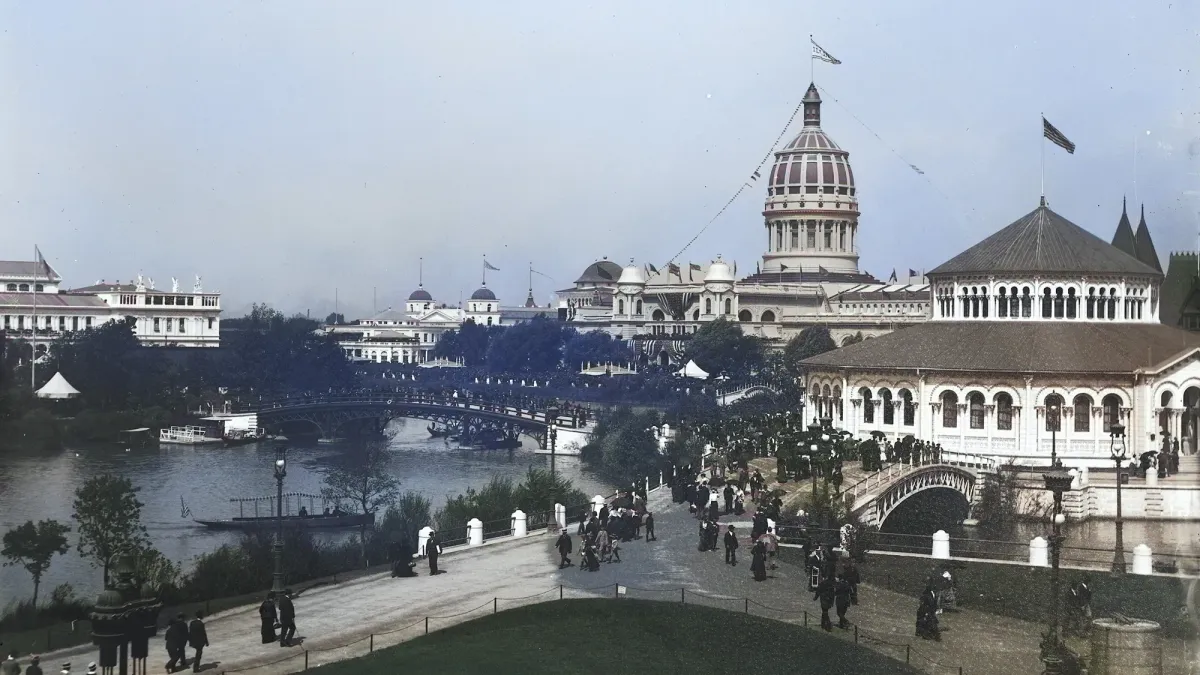
Yet, the fair's ghost is everywhere. Every time you flip a light switch, zip up your jacket, or pop a piece of Juicy Fruit gum, you're interacting with its legacy. These rare, colorized images help bridge that gap, letting us peek into the sheer scale of this historic, slightly bonkers, event.
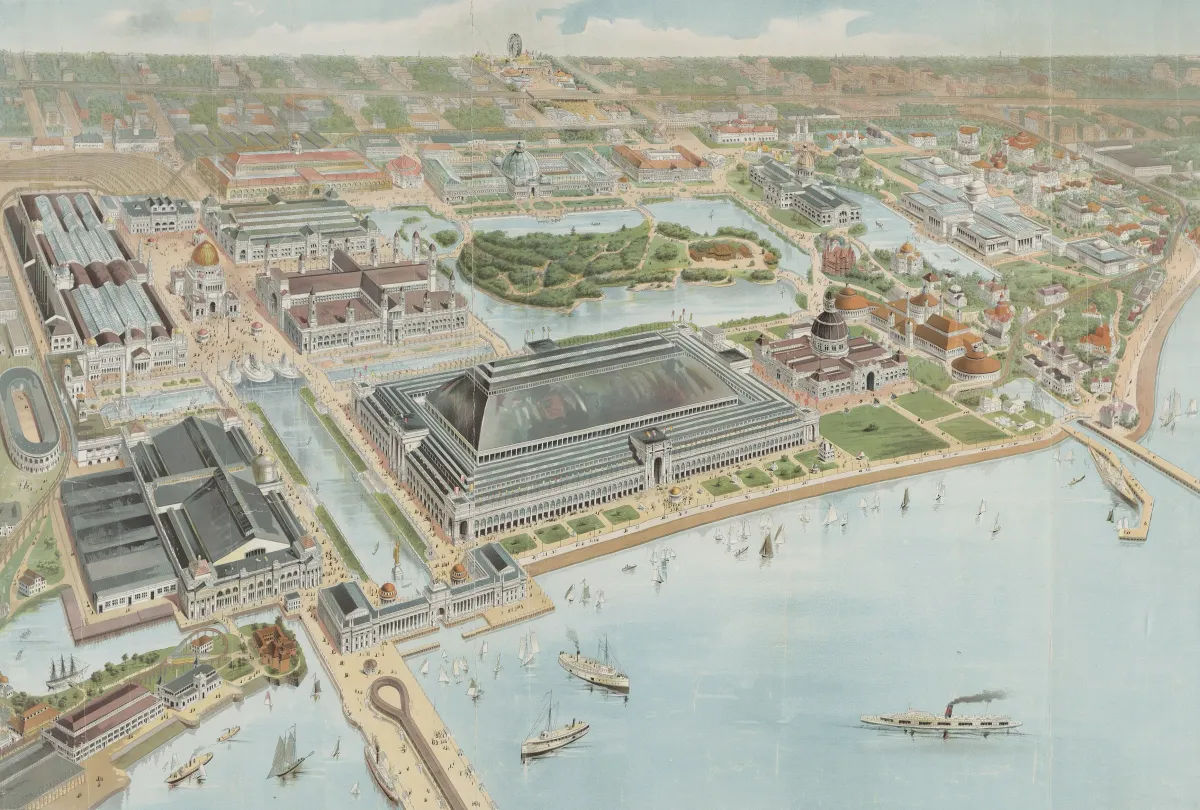
Architect Daniel Burnham was the mastermind behind the "White City." He envisioned Neoclassical, Beaux Arts, and classical Renaissance styles, hoping to inspire a return to the "pure ideal of the ancients." Which, if you've seen the scale models, meant a lot of columns.
They originally planned to open in 1892 to mark 400 years since Columbus’s voyage, but construction delays pushed it to '93. Turns out, building a temporary city four times the size of the Roman Colosseum (that's the Manufactures and Liberal Arts Building for you) takes a bit of time.
Inside that behemoth, and other structures like the Horticulture Building — the largest hothouse ever built at the time, boasting a 184-foot-tall dome brimming with global flora — wonders awaited.
Visitors could stroll through the Grand Court, or Court of Honor, where white palaces framed the Grand Basin. Fountains and bridges added to the grandeur, making it the fair's dazzling centerpiece.
And then there was the "General Noble" giant sequoia section, a piece of a 300-foot-tall tree (about the height of the Statue of Liberty) brought all the way from what's now Sequoia National Park. Because apparently, displaying giant tree slices was peak entertainment in 1893.
They also had an India Pavilion, designed by Chicago architect Henry Ives Cobb to mimic Mughal architecture. It was brightly painted, a "striking object among the cosmopolitan specimens of architecture," according to one journalist. It seems even back then, you needed something to stand out in a crowd this impressive. And it probably smelled better than the sequoia.