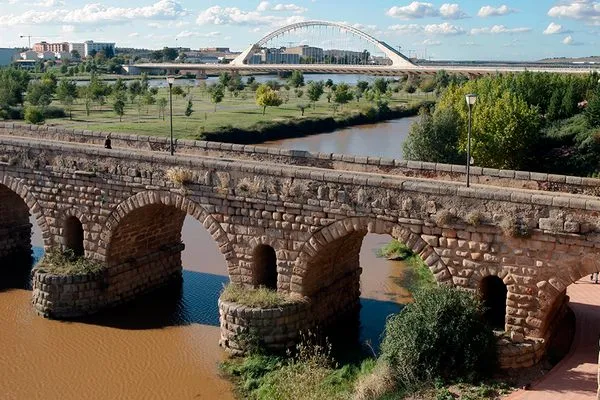
Walk across the Puente Romano in Mérida, Spain, and you're treading on stones laid down nearly two millennia ago. The bridge stretches over 700 metres across the Guadiana River, built in the 1st century AD when Rome's empire still felt permanent. It wasn't. The Romans left. The Visigoths came. The Moors arrived. Empires dissolved and reformed. The bridge stayed.
Today it's a quiet pedestrian crossing, connecting the Alcazaba fortress to the far riverbank. Locals walk it without thinking much about it, the way you might cross any ordinary bridge. But there's something worth noticing in that ordinariness: a structure designed 2,000 years ago still does exactly what it was built to do.
The bridge has been repaired, of course. Major restoration work happened in the 7th century and again in the 17th century. Those repairs are part of the story too — they're evidence that people cared enough to maintain it, to keep it functional through centuries when it would have been easier to build something new. Each generation chose to preserve what the last one left behind.
We're a new kind of news feed.
Regular news is designed to drain you. We're a non-profit built to restore you. Every story we publish is scored for impact, progress, and hope.
Start Your News DetoxMérida itself is layered with this kind of persistence. The city was founded by the Romans as Emerita Augusta, and you can still walk streets that follow Roman paths. The Alcazaba fortress stands nearby, built by the Moors in the 9th century. These structures don't exist in museums or as reconstructions. They're embedded in the living city, used daily by people going about their lives.
What makes the Puente Romano remarkable isn't that it's the oldest bridge in the world — it isn't. It's that it's still functional, still crossed, still part of a community's everyday geography. It's a reminder that some things, if they're built well and cared for, can outlast the empires that created them.