For centuries, the art world didn't really bother with drawing lines (pun intended) between prints and drawings. They were often just, you know, art. But then things got complicated. Now, the IFPDA Print Fair is stepping in to clear things up – or perhaps, delightfully muddy the waters even further.
From April 9–12, the Park Avenue Armory will host eighty exhibitors from across the globe, showcasing 500 years of artistic evolution. Think Hauser & Wirth, Pace Prints, and David Zwirner all under one very fancy roof, ready to challenge everything you thought you knew about what makes a masterpiece.
The Aura Problem
The IFPDA (now the International Fine Prints & Drawings Association, because names matter) is leaning hard into drawings this year. You'll find masterworks from long-time members like Hill-Stone and David Tunick, Inc., alongside fresh faces like Mireille Mosler and Jill Newhouse Gallery. The latter is even bringing an intimate charcoal study by Edward Hopper, High Noon (Study) from 1949 – one of only five known drawings for his iconic painting.
We're a new kind of news feed.
Regular news is designed to drain you. We're a non-profit built to restore you. Every story we publish is scored for impact, progress, and hope.
Start Your News DetoxThen came the 19th century, and with it, the printing press. Suddenly, images were everywhere. Illustrated newspapers made art accessible, but they also inadvertently kicked off an existential crisis for collectors. If you could copy an image endlessly, what made the "original" special? The art world, being the art world, decided that the unique, un-copiable touch of the artist was paramount.
Philosopher Walter Benjamin later dubbed this the "aura" of an artwork. He argued that as mechanical reproduction made copies ubiquitous, the single, unique object gained almost mystical importance. Because, apparently, if it's easy to make, it's less special. Which, if you think about it, is both impressive and slightly terrifying.
But printmaking, ever the rebel, complicates this neat little theory. Prints can be multiples, sure, but they can also be one-of-a-kind. SOLO Impression, for instance, will feature a unique lithograph, Opera (Red), by French painter Françoise Gilot. Many works are also glorious hybrids, daring to combine drawing and print and effectively sticking a thumb in the eye of the whole "aura" debate.
The Beautiful Mess of Hybrids
Enter the monotype: basically, a drawing that's been printed, usually just once. They're the ultimate proof that the line between these mediums is less a line and more a squiggly mess. Take Edgar Degas's monotype Dancers in Rehearsal (c. 1874–76) from Galerie Martinez D. Degas would draw with ink directly on a metal plate, then press it to create a single, painterly image. His friend Marcellin Desboutin noted Degas's complete absorption in this delightfully messy process.
Then there's The Gatteaux Family (1850) by Jean Auguste Dominique Ingres, which Mireille Mosler will present. This was Ingres's last and largest work on paper, a composition that literally collaged engravings from earlier drawings onto a larger sheet, then reworked them by hand with graphite. He brought back the long-dead Gatteaux parents to sit alongside their living granddaughter and cousin. Because, why not?
It’s a museum-worthy piece, joining only three other large multi-figure portrait drawings by Ingres. No big deal.
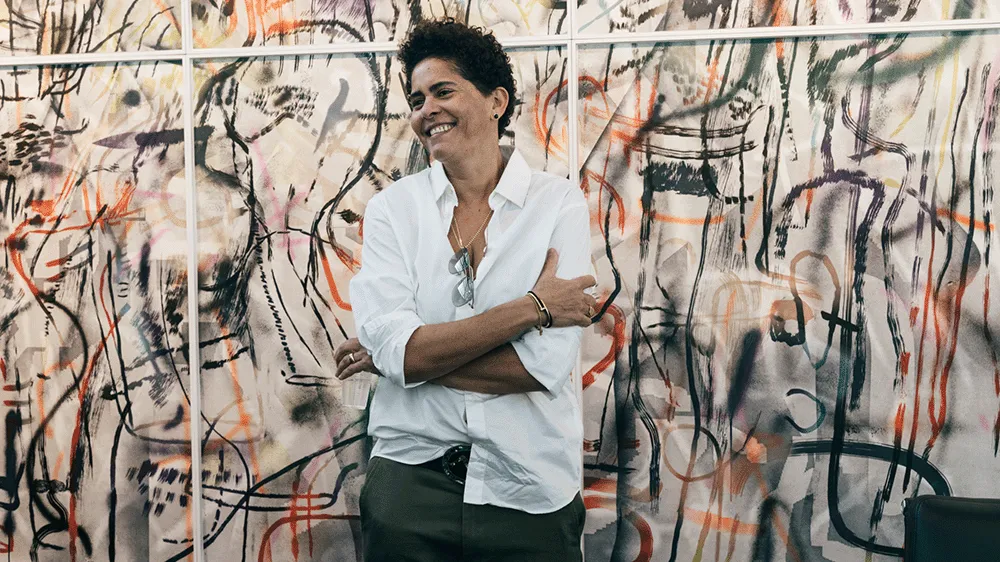
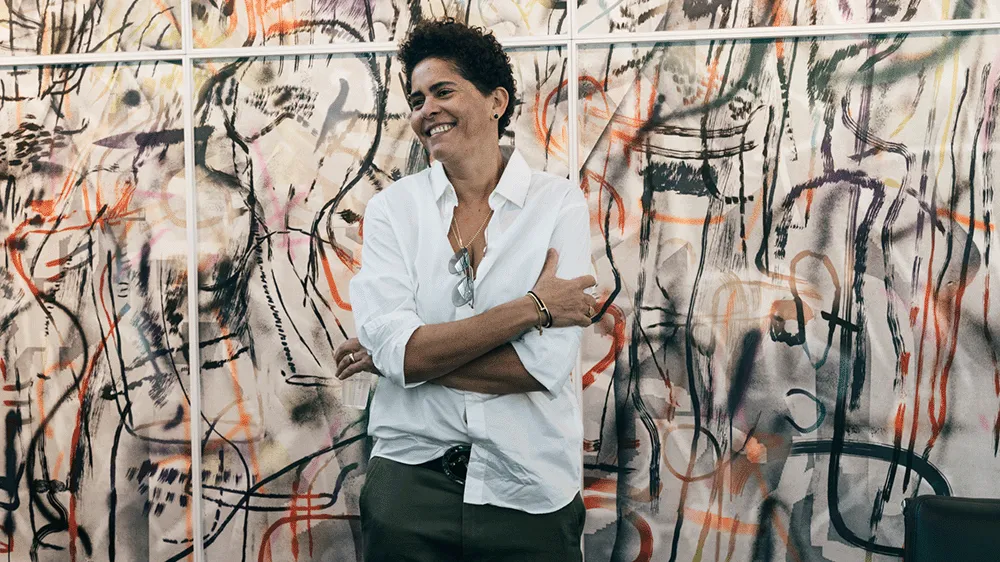
Artist Julie Mehretu, whose work will be at the Gemini G.E.L booth, knows this connection well. She says new inventions in printmaking often find their way into her paintings and drawings, creating layers of blurred and transformed images. She’ll even be speaking with curator Susan Dackerman on Saturday, April 11th.
And if you're still clinging to the idea that drawings are somehow superior, authors Edina Adam and Jamie Gabbarelli will be on hand Sunday, April 12th, to dismantle that notion. Their book, Lines of Connection: Drawing and Printmaking, 1400-1850, won the 2026 IFPDA Book Award, so they probably know a thing or two. Prepare for your mind to be expanded, one glorious hybrid at a time.