

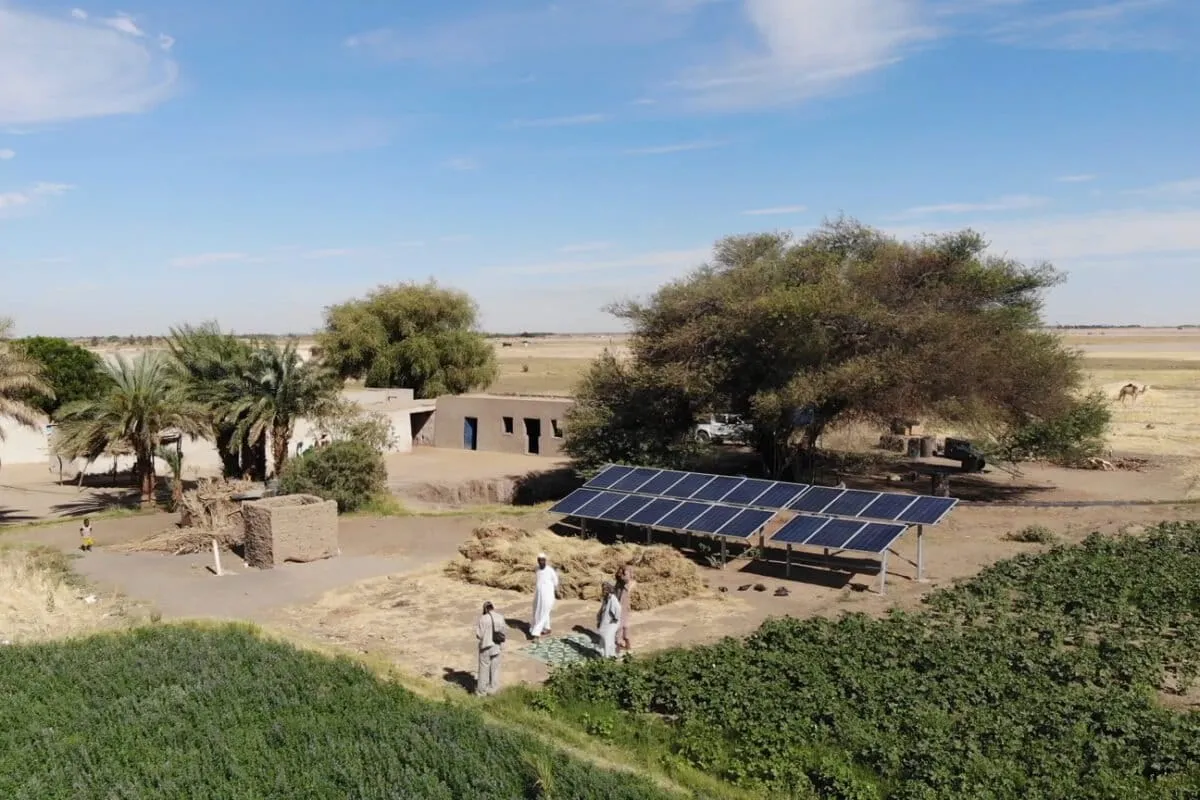
Right now, 600 million Africans can't flip a light switch. They can't charge a phone or run a hospital. They can't pump water or power a school. This isn't a minor inconvenience — it's the reason a child might study by candlelight instead of doing homework, why a vaccine might spoil before it reaches a clinic, why a community stays economically isolated.
The irony is sharp: Africa has barely contributed to climate change, yet its people face the worst of its impacts — droughts, floods, rising seas. And without electricity, they're locked out of the tools that could help them adapt.
But there's a genuine opportunity emerging. Africa sits on world-class renewable resources: solar that rivals anywhere on Earth, wind corridors, geothermal fields, rivers for hydropower. The technology costs have collapsed. And unlike wealthy nations that built their prosperity on coal and oil, Africa can leapfrog that entire phase.
We're a new kind of news feed.
Regular news is designed to drain you. We're a non-profit built to restore you. Every story we publish is scored for impact, progress, and hope.
Start Your News Detox"Africa has the perfect ingredients for a renewable energy transition," says Rebekah Shirley, deputy director for Africa at the World Resources Institute. "We have some of the best solar, wind and geothermal resources in the world, and the costs of these technologies have dropped dramatically."
The puzzle is more complex than just installing panels, though. More than half of Africa's current renewable energy comes from large hydropower dams — which bring their own environmental and social costs. The real work is scaling distributed systems: rooftop solar in villages, mini-grids for rural towns, wind farms that feed into growing cities.
What's actually blocking progress
The barriers are real but addressable. Upfront capital costs bite hard, especially for smaller projects. Infrastructure gaps mean solar panels might arrive in a region with no transmission lines to carry the power. Financing is tight. Policy frameworks shift unpredictably.
Yet solutions are already moving. Pay-as-you-go solar systems let families pay incrementally instead of upfront. Community-owned mini-grids keep money and control local. Agricultural cooperatives are powering irrigation and processing equipment with renewable energy, which turns energy access into economic opportunity.
The difference between a failed energy transition and a successful one isn't the technology — it's whether the people who actually live in these communities shape what happens next. "It's not enough to just install renewable energy systems," Shirley notes. "We need to make sure the transition creates jobs, improves access to energy for the most vulnerable, and strengthens local economies."
This means involving governments, private companies, nonprofits, and local communities in the planning. It means training local technicians to maintain systems. It means designing projects that serve a farmer's irrigation needs, not just meet a megawatt target.
When energy access works this way — locally rooted, economically connected, environmentally sound — it becomes a multiplier. A student with reliable light studies longer. A clinic with refrigeration saves lives. A small business with power can grow. A community with control over its energy future builds resilience.
Africa's renewable transition isn't inevitable. It requires sustained investment, policy clarity, and genuine partnership with communities. But the ingredients are there. The cost curves are moving the right direction. And unlike the energy choices that locked in wealthy nations' carbon emissions a century ago, Africa's path forward can be different.





