In the winter of 1892, Edvard Munch stood on a slope overlooking Oslo and felt something break open inside him. He wrote it down that night, raw and immediate: "I walked along the road with two companions — then the sun went down. The sky was suddenly turned to blood-red... and I felt as though a great, boundless scream passed through Nature."
That moment, on the slopes of Ekeberg overlooking the fjord, would become one of the most recognized images in art history. But before Munch painted "The Scream," he lived it.
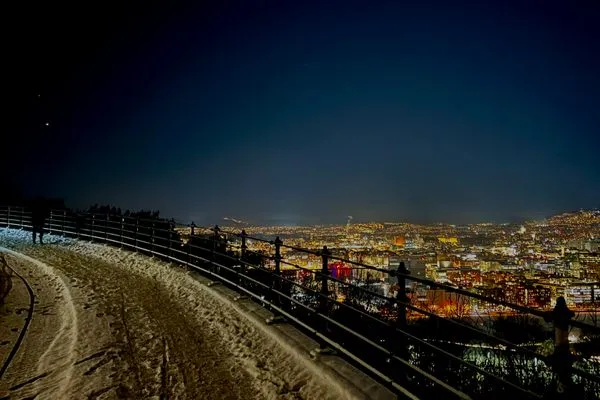
The view hasn't changed much since 1892. From Ekebergskrenten, the hillside still drops away toward Oslo's sprawl and the dark water of the fjord beyond. On certain winter evenings, when the light turns the sky a particular shade of red-orange, you can almost feel what stopped him in his tracks — that collision between beauty and something darker, more unsettling.
We're a new kind of news feed.
Regular news is designed to drain you. We're a non-profit built to restore you. Every story we publish is scored for impact, progress, and hope.
Start Your News DetoxMunch returned to this landscape again and again, both in his notebooks and on canvas. He was drawn to the place itself, but also to what it meant. His sister Laura was struggling with severe mental illness during these years, cycling through psychiatric institutions including one located just below this viewpoint. Munch's own lifelong anxiety ran deep. The landscape became a mirror for an interior life that couldn't quite be spoken aloud — until it poured out as paint and line.
A place still worth the walk
Today, Ekeberg is part of Oslo's suburban landscape, less dramatic than it was in Munch's time but still quietly powerful. The walk takes about 15 minutes from downtown on public transport — two bus lines serve the area, with stops just 200 meters from the viewpoint. Locals and tourists climb here regularly, though most probably don't know they're standing in the exact spot where one of the world's most famous paintings began as a private moment of dread.
What makes this place worth visiting isn't nostalgia or art-pilgrimage obligation. It's the strange experience of standing where someone else stood and feeling, even faintly, the same pull. The same light on the water. The same sense that something enormous is happening in a moment that should be ordinary.