In 1816, Indiana became a state with a promise. It abolished slavery almost immediately. By 1830, that promise was already broken. The state imposed a $500 fee on Black settlers—roughly $16,000 in today's money. Thirteen years later, interracial marriage was outlawed. Then came 1851: Indiana's constitution explicitly prohibited Black people from living there at all. Violators faced fines. So did anyone who helped them.
Yet in the 1840s, a community called Weaver formed anyway.
Weaver was small but complete. At its peak, it had a grocery store, a blacksmith, a post office, a school, two churches, a racetrack, and a Masonic home for the elderly and poor. Most residents were free Black people, though others were runaway slaves who found their way north via the Underground Railroad. The Weaver community became a crucial stop on that network—partly because of the African Methodist Episcopal (AME) Church circuit that connected Black settlements across the region, partly because organizations like the Masons and the Order of the Eastern Star created bonds of mutual aid, and partly because nearby white abolitionists were willing to risk their own safety to help.
For four decades, Weaver persisted in defiance of a state constitution written to erase it.
We're a new kind of news feed.
Regular news is designed to drain you. We're a non-profit built to restore you. Every story we publish is scored for impact, progress, and hope.
Start Your News DetoxThen came the natural gas boom. In the 1880s, energy companies discovered reserves beneath Grant County, and the jobs were too good to pass up. Weaver's residents began moving to nearby Marion and Gas City, where wages were higher and futures seemed brighter. The community didn't collapse overnight—about 100 Black families still lived there in the 1920s—but the gravitational pull of industrial work was stronger than the ties that had held Weaver together.
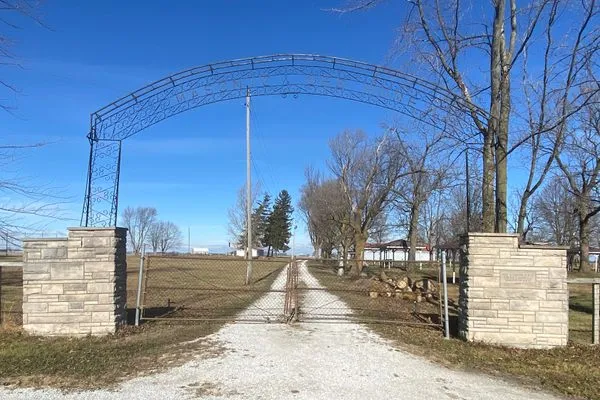
What remains today is spare but significant. Hill's AME Chapel still stands, rebuilt after a fire destroyed it in 1957. The Weaver Cemetery holds 224 graves, including more than a dozen Black Civil War veterans. There's also the Masonic Order of the Eastern Star Home, a reminder of the mutual aid societies that kept the community functioning.
Weaver itself faded, but its legacy didn't. Marion, the nearest town, is home to two AME churches and a Prince Hall Masonic Lodge—both named after figures from Weaver's history, including a man who had been enslaved and escaped to freedom. The institutions that once held a community together in the face of state-mandated erasure became the foundations of something larger.
Today, a drive through the flat farmland reveals little. But the cemetery is accessible from the road, and the chapel still stands. They're quiet monuments to people who built something real in a place that had legally declared them unwelcome.