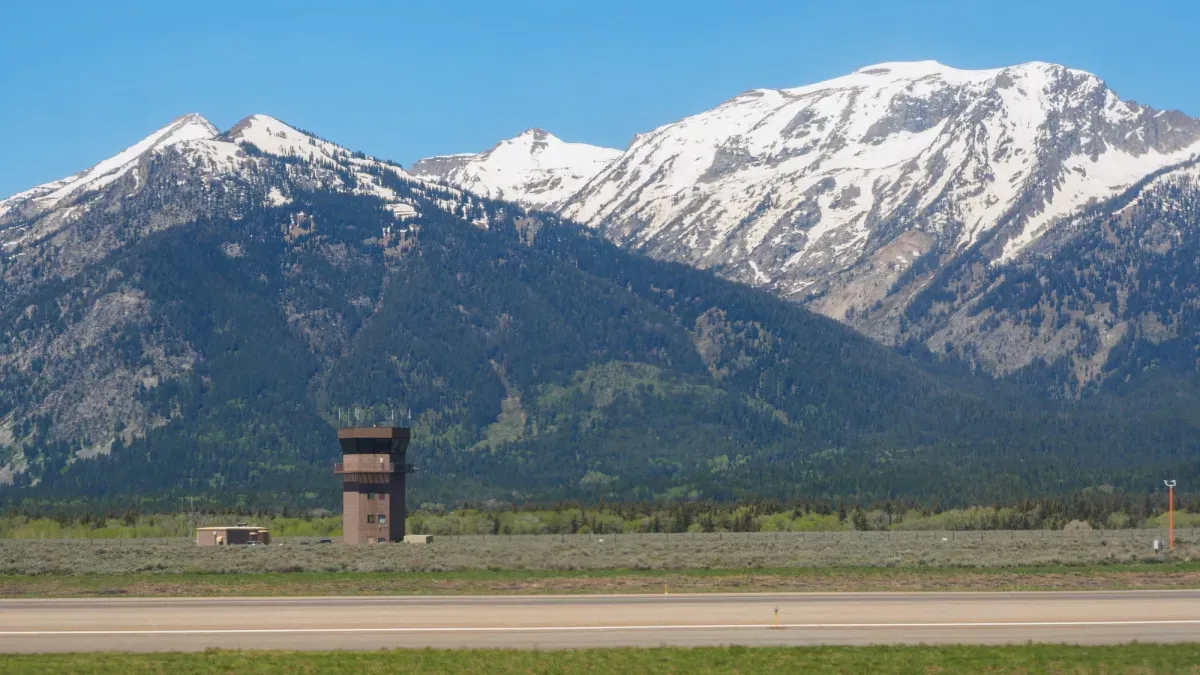
Jackson Hole Airport in Wyoming just did something no other airport has managed: it got certified as an International Dark Sky Place. That means you can actually see the stars when you land there—genuinely see them, the way humans did before electric light rewrote the night.
The airport sits inside Grand Teton National Park, surrounded by relatively undeveloped landscape. But proximity to pristine skies wasn't enough. To earn the certification from DarkSky International, the airport had to fundamentally rethink how it uses light.
Making an Airport Dark
You might think an airport and dark skies are incompatible. Runways need light. Taxiways need light. But Jackson Hole's team realized that most of the light pollution came from places travelers never think about: parking lots, fuel facilities, employee areas, rental car lots.
We're a new kind of news feed.
Regular news is designed to drain you. We're a non-profit built to restore you. Every story we publish is scored for impact, progress, and hope.
Start Your News DetoxSo they replaced around 300 light fixtures with warmer-colored LEDs that scatter less into the sky. They added shields to parking lot lights to stop upward spill. They dimmed those lots to 30% between midnight and 4am, with motion sensors that bump brightness to 60% only when someone's actually there. In non-customer areas like the fuel facility, they just turned the lights off.
The Federal Aviation Administration mandates runway and airside lighting for safety—that stayed untouched. But everything else became negotiable. The airport even added timed shades and dimmers inside the terminal.
It's a small thing that required obsessive attention to detail. It's also proof that infrastructure and natural systems don't have to be enemies.
Jackson Hole isn't alone in this commitment. Teton County—which includes the airport, the town of Jackson, and Grand Teton National Park—earned Dark Sky Community status in 2025, joining places like Flagstaff, Arizona (the first certified dark sky community in the U.S.) in prioritizing night sky preservation across both public and private lighting. Over 260 cities, parks, preserves, and counties across six continents now hold some form of Dark Sky Places certification.
For a region that depends on visitors coming to experience landscape and solitude, dark skies are part of the product. But there's something deeper here too. The night sky used to be universal. Now it's becoming rare enough that it needs protection and certification. Jackson Hole's airport suggests that protecting it doesn't require choosing between modern infrastructure and the cosmos—just choosing to think differently about light.