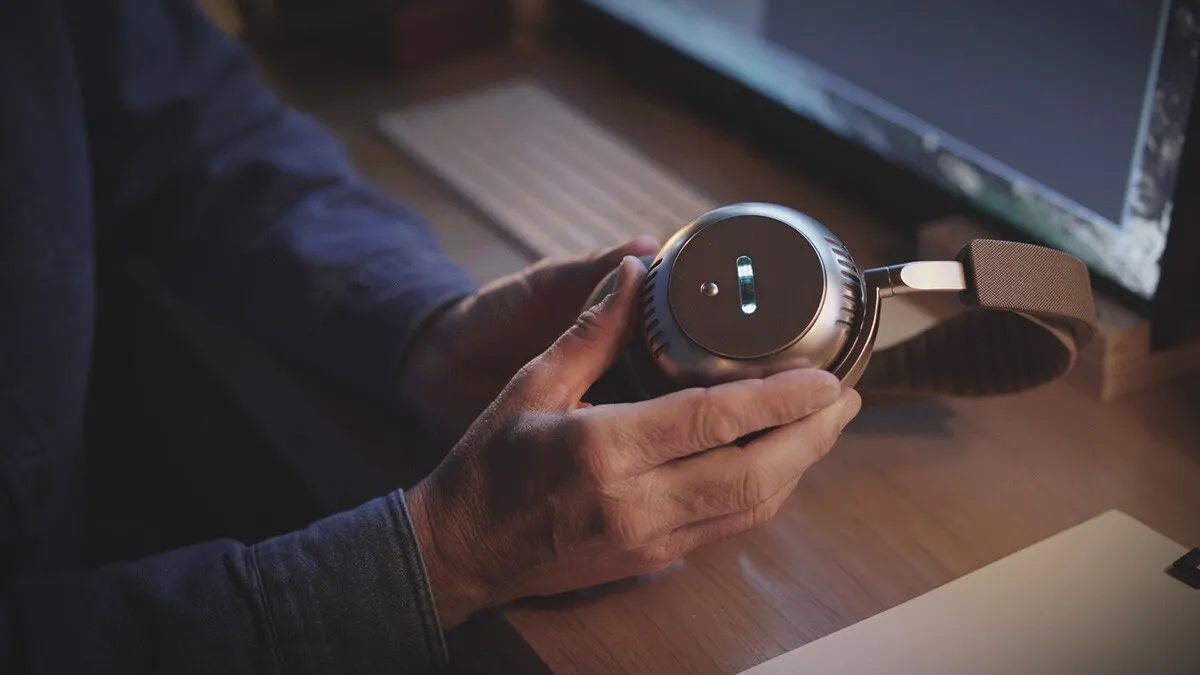
A small Texas audio company is betting that people will pay for headphones that sound like a professional recording studio. Ecoute Audio's new TH2 headphones pack a vacuum tube preamp—the kind of component usually found in $5,000 home stereo systems—into a pair of over-ear cans.
The idea isn't entirely new. Ecoute launched the TH1 in 2023 to modest but genuine enthusiasm from audiophiles tired of the thin, digital sound of typical wireless headphones. The TH2 refines that formula with better materials, improved noise cancellation, and a more refined audio architecture.
What's Inside
The TH2 uses a Korg Nutube 6P1 vacuum tube as its preamp stage, which adds what audio engineers call "analog warmth"—a subtle coloration that makes digital music feel less sterile. Paired with that is a dual-mono amplifier setup (one amp per ear) and a high-resolution digital-to-analog converter capable of handling studio-quality audio files at 32-bit/384-kHz. In plain English: the signal path from your phone to your ear mimics what you'd find in a professional mastering suite.
We're a new kind of news feed.
Regular news is designed to drain you. We're a non-profit built to restore you. Every story we publish is scored for impact, progress, and hope.
Start Your News DetoxUsers can adjust the sound signature through an 8-band equalizer in a companion app, and the headphones accept wired, USB, and Bluetooth connections. The design itself leans into the vintage aesthetic—there's even a window so you can see the glowing tube preamp at work.
The Comfort Question
One thing that matters as much as sound quality: whether you can actually wear them for more than an hour. Ecoute addressed this by redesigning the headband, improving weight distribution, and making the ear pads replaceable. The noise cancellation has also been upgraded from the first generation.
At $999 retail, these aren't casual purchases. But the Kickstarter campaign—already funded at nearly $400,000 with over 500 backers—suggests there's an audience willing to pay for this kind of audio fidelity. Early backers can grab them for $749, with shipping expected in September 2026.
What's notable here isn't the technology itself; vacuum tubes in audio equipment have been around for decades. It's that someone figured out how to miniaturize it, power it efficiently, and make it actually portable. That's the engineering challenge that makes this interesting.