For years, physicists have known that Majorana qubits could be the key to building quantum computers that actually work—machines that don't lose their calculations the moment you look at them. The problem was that nobody could figure out how to read what these qubits were actually storing. The information was too well hidden, spread across quantum states that didn't exist in any one place. Now researchers have finally solved that puzzle.
A team spanning Delft University and Spain's Institute of Materials Science has developed a technique to read Majorana qubits without destroying them. Using a method called quantum capacitance—essentially a global probe that measures the whole system rather than any single point—they've confirmed what theorists suspected: these qubits really are protected from the noise and interference that usually ruins quantum calculations.
"This is a crucial advance," says Ramón Aguado, a researcher at Madrid's ICMM. "We've successfully retrieved information stored in Majorana qubits by applying a technique that functions as a global probe sensitive to the overall state of the system." The elegance of the approach matters: while traditional measurements can't detect the information these qubits carry, this new probe reads it clearly.
We're a new kind of news feed.
Regular news is designed to drain you. We're a non-profit built to restore you. Every story we publish is scored for impact, progress, and hope.
Start Your News DetoxHow they built it
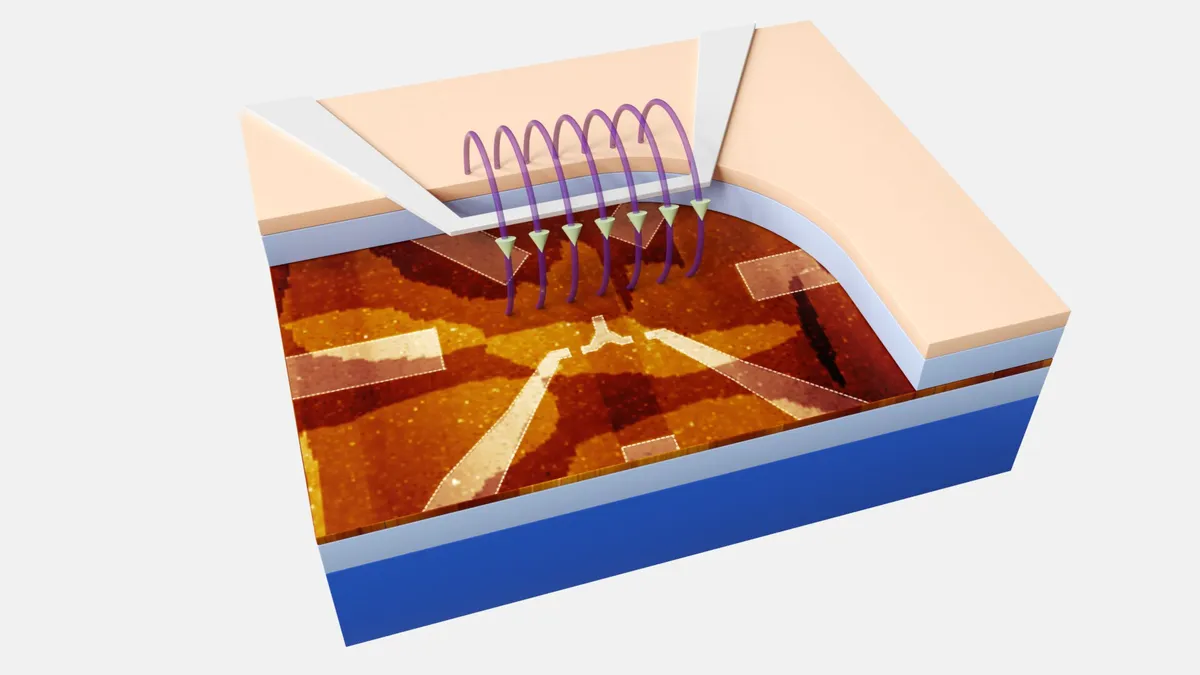
The team engineered a tiny structure called a Kitaev minimal chain—two semiconductor quantum dots linked through a superconductor. This setup let them generate Majorana modes in a controlled way, then watch what happened when they applied their probe. In real-time, they could tell whether the combined quantum state was even or odd, revealing whether the qubit was storing information or not.
The results go beyond just proving the concept works. The researchers measured something called parity coherence—how long the qubit holds its information without being disturbed—and found it exceeded one millisecond. For quantum systems, that's a meaningful duration. It's long enough that actual quantum computers might be able to perform useful calculations before the system decoheres.
They also observed what's called "random parity jumps," which tells them something important about how these qubits behave in the real world. The protected nature of Majorana qubits means they're naturally resistant to the environmental noise that usually scrambles quantum information within nanoseconds. This experiment shows that protection isn't just theoretical—it's real, measurable, and reproducible.
This kind of stability is what separates a quantum computer that works in theory from one that might actually solve problems. Most quantum systems today are fragile: you build a calculation, and before you can read the result, thermal noise or stray electromagnetic fields have corrupted it. Majorana qubits, by spreading their information across paired quantum modes, sidestep that problem. Now that we know how to read them without breaking them, the path toward practical topological quantum computers just got clearer.