Quantum computers are temperamental machines. They rely on quantum entanglement—a state where particles become mysteriously linked—to process information in ways classical computers can't. But the slightest environmental disturbance can shatter that entanglement and corrupt the calculation. Now researchers have demonstrated a way to catch these errors before they break everything.
The challenge isn't new. For decades, quantum engineers have been hunting for ways to make quantum processors reliable enough to actually work. The breakthrough here is elegantly simple: detect errors without destroying the quantum state you're trying to protect.
Here's how it works. Imagine you have a rule that describes what a correct quantum state should look like. Researchers call these rules "stabilizers"—mathematical constraints that a healthy quantum system should satisfy. If your processor is running cleanly, stabilizer measurements will match predictions. If an error has crept in, the measurements will diverge. It's like a smoke detector that tells you something's wrong without setting off a false alarm.
We're a new kind of news feed.
Regular news is designed to drain you. We're a non-profit built to restore you. Every story we publish is scored for impact, progress, and hope.
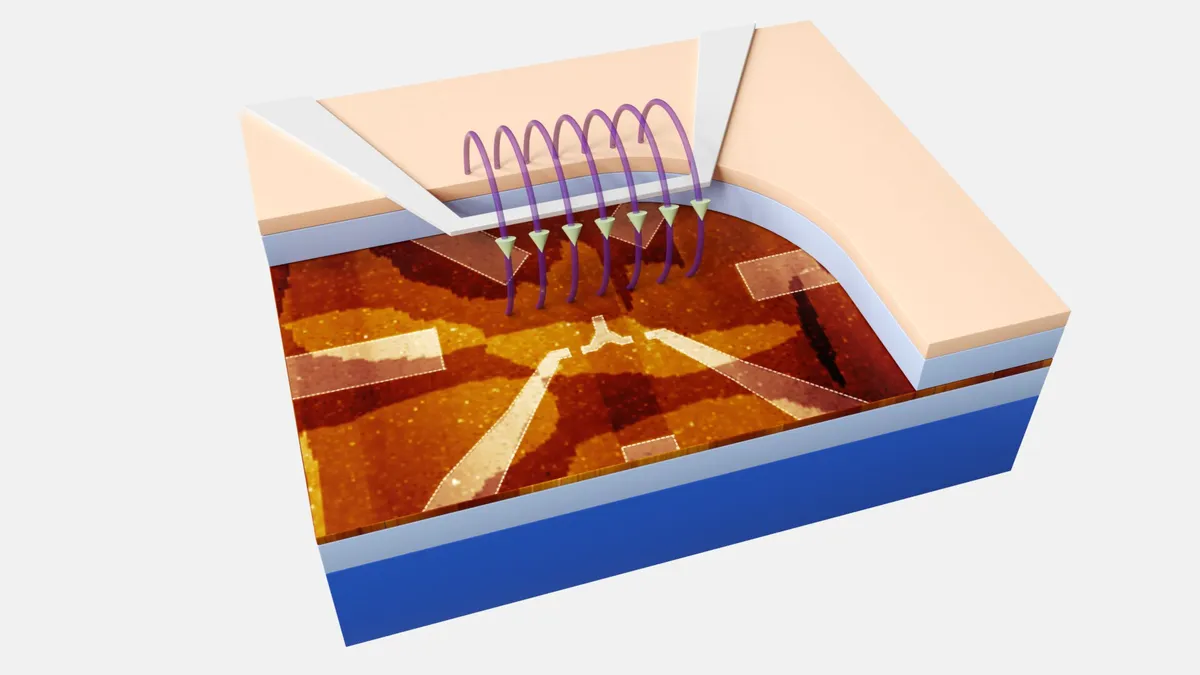
Start Your News DetoxThe team built a small silicon-based processor with five qubits: two that hold the actual quantum information, and three others that act as sentries, monitoring for errors. The design is deliberately lean. Rather than flooding the system with redundant checks (which would require many more qubits), they used nuclear spins to perform ultra-sensitive measurements that catch single-qubit errors with high fidelity. The nuclear spins also enabled what's called quantum-nondemolition readout—basically, they can peek at the system without collapsing it.
When the researchers tested their approach, it worked. The error detection successfully identified problems at the single-qubit level without causing decoherence, the process where quantum information leaks away into the environment. That's the key win: you catch the error and keep the entanglement intact.
What makes this practically significant is that the system can exploit what's called "biased noise"—the fact that certain types of errors are more likely than others. This relaxes the threshold requirements for quantum error correction, meaning you need fewer resources to build a fault-tolerant quantum computer. It's a small shift in the math, but it moves the goalpost closer.
The researchers are now working toward a minimal logical quantum processor—one that can prepare logical quantum states, run universal quantum gates, and execute simple algorithms. That's the next rung on the ladder toward quantum computers that actually work at scale.