A new UK government study has mapped out how to capture sunlight in orbit and send it back to Earth as electricity — and the plan is simpler than it sounds.
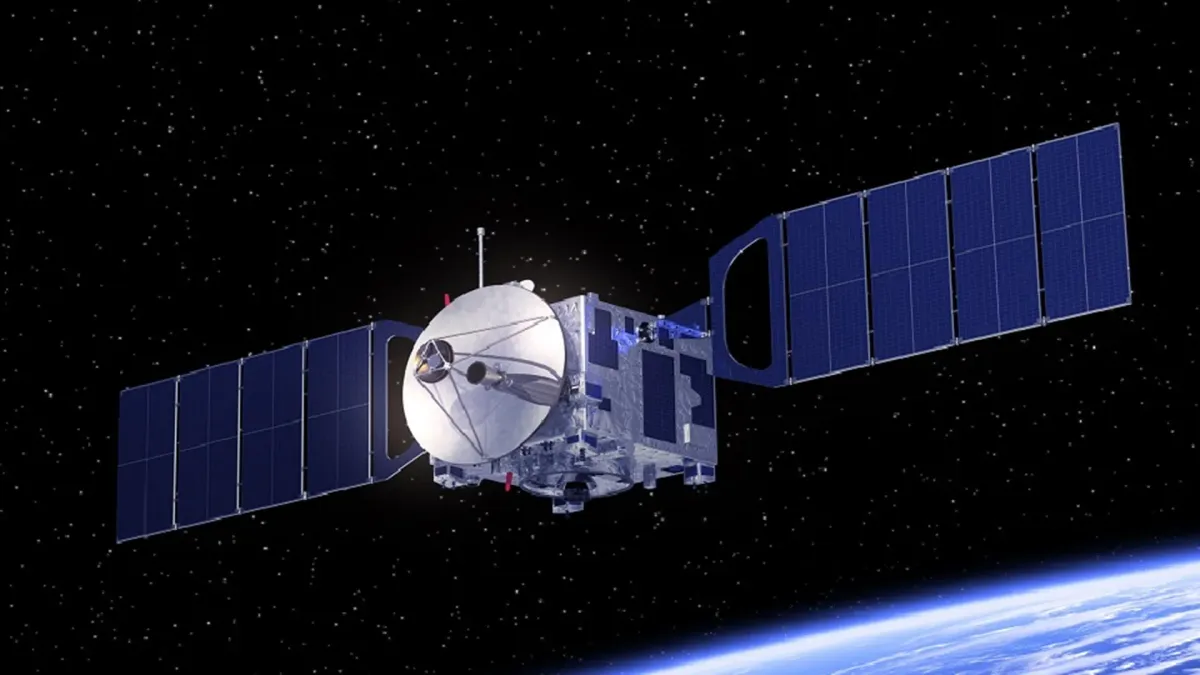
Researchers at Frazer-Nash Consultancy found that the best place to receive this space-based solar power isn't a new facility built from scratch. It's existing offshore wind farms, which already have the grid connections and infrastructure in place. Satellites in orbit would beam microwave energy down to ground receivers called rectennas, which convert it straight into electricity ready for the national grid.
Why space changes the game
Space-based solar power sounds like science fiction, but the physics is straightforward. Up there, satellites never face clouds, never experience atmospheric interference, and catch sunlight nearly 24 hours a day. The result: a single space-based platform could generate up to 13 times more energy than an identical solar panel on Earth. One platform could produce two gigawatts of power — roughly what a large nuclear reactor generates, but without the fuel, waste, or construction time.
We're a new kind of news feed.
Regular news is designed to drain you. We're a non-profit built to restore you. Every story we publish is scored for impact, progress, and hope.
Start Your News DetoxFor a country trying to meet net-zero targets while managing the intermittency problem that even wind and solar farms can't fully solve, this matters. Space-based solar doesn't have an off switch when clouds roll in or the sun sets. It's continuous, predictable power.
The Department for Energy Security and Net Zero released this study in February 2026 as part of exploring how Britain could move beyond traditional renewables. The research doesn't propose launching satellites tomorrow. Instead, it suggests starting small — demonstration projects that prove the concept works and that costs come down.
The investment question
Right now, space-based solar is expensive. But the study suggests that targeted government and private investment over the next 15 years could make it cost-competitive with other power sources by 2040. That timeline matters: it's ambitious enough to be credible, realistic enough to be fundable.
The report does flag real concerns. Large rectennas would have environmental and visual impacts that need careful assessment. The upfront costs for the first full-scale system are substantial enough to scare off private investors without public backing. And there are technical barriers — how to reliably transmit power through the atmosphere, how to maintain satellites in perfect alignment, how to manage the regulatory questions that come with beaming energy from space.
None of these are showstoppers. They're the kind of problems that get solved when governments commit to R&D and industry has a clear pathway to profitability. The study suggests that small-scale projects, tested and refined over a decade, could de-risk the larger investment and prove the model works.
What comes next is both simpler and harder than the technology itself: convincing policymakers and investors that this is worth backing now, even though the payoff comes later.