Imagine a world where cleaning up the air actually creates power. Because apparently, that's where we are now. Researchers in Korea have cooked up a device that not only sucks greenhouse gases and pollutants right out of the atmosphere but also generates a trickle of electricity in the process.
Think of it as a battery, but instead of just storing energy, it's actively scrubbing the air and powering small sensors or Bluetooth gadgets while it's at it. They're calling it a "Gas Capture and Electricity Generator," which is a bit of a mouthful, but the concept is delightfully simple and scalable.
The Two-for-One Special
Now, carbon capture isn't exactly a new idea. There are facilities out there doing it, but they often require massive amounts of energy, high temperatures, and expensive catalysts to trap CO2 and then either store it or turn it into something else. Plus, most of them are laser-focused on CO2, ignoring other atmospheric nasties.
We're a new kind of news feed.
Regular news is designed to drain you. We're a non-profit built to restore you. Every story we publish is scored for impact, progress, and hope.
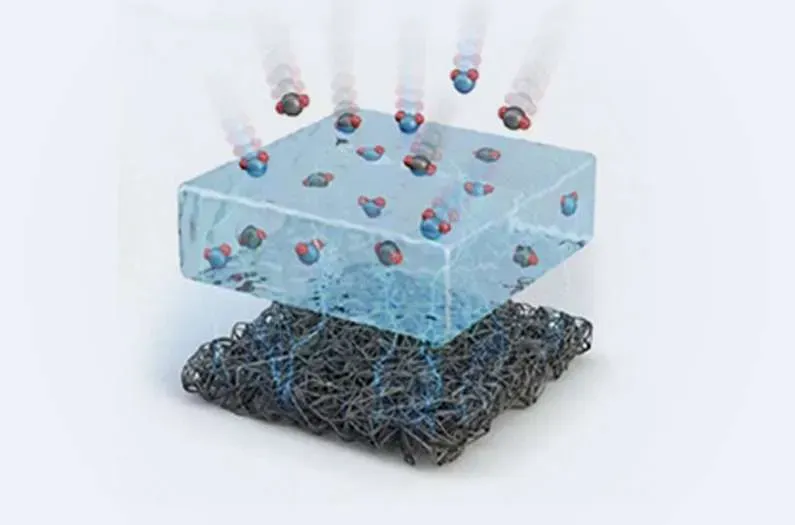
Start Your News DetoxThe Korean team, however, decided to tackle two problems at once. Their device targets both CO2 and nitrous oxide (N2O) — which, for the record, is the third most powerful greenhouse gas out there. And here's the kicker: it doesn't just capture them; it harnesses the energy released when these gases get trapped on electrode surfaces, turning it directly into electrical current.
To build this little marvel, they started with humble mulberry paper, because apparently, even paper can be high-tech these days. They coated it with carbon black powder (picture really fine soot) and then gave it a split personality. One half got a hydrogel coating, specifically designed to grab N2O. The other half was treated with an amine solution, the go-to for CO2 capture.
When N2O snuggles up to the hydrogel, it forms hydrogen bonds, causing electrons to shift around. Simultaneously, the CO2 reacts with the amine to form bicarbonate ions. This dance of charges and electron movement creates an electrical difference across the paper electrode, which, you guessed it, generates an electric current.
While this gas battery won't be powering your house anytime soon, the electricity it produces is a promising start. The researchers reckon you could easily link several of these devices together for more juice. It's a self-powered system that offers a low-energy pathway to tackle multiple greenhouse gases. Which, if you think about it, is both impressive and slightly terrifying in its elegance. Carbon neutrality, here we come, one tiny, electricity-generating paper strip at a time.