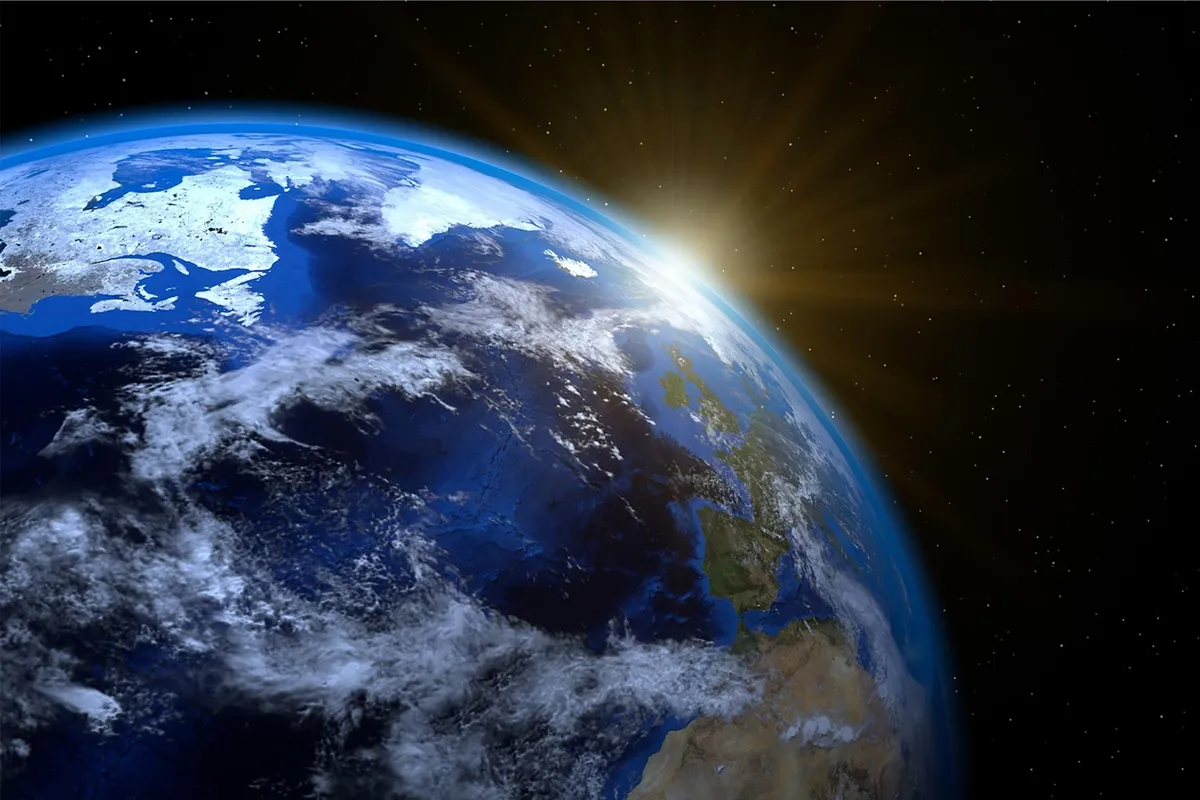
Good news first: The ozone layer, that crucial sunscreen for our planet, is on the mend. Thanks to a global pact from 1987, the chemicals that were eating away at it have largely been phased out. We were on track for a full recovery to 1980 levels by 2040.
But because apparently, we can't have nice things without a catch, there's a problem. A new study, co-authored by researchers at MIT, reveals that unexpected leaks from industrial chemicals are putting a seven-year speed bump on that recovery.
The Loophole That Keeps On Leaking
The Montreal Protocol, signed by 197 countries and the European Union, is widely considered one of humanity's greatest environmental achievements. It banned ozone-depleting substances like CFCs, which were once ubiquitous in everything from refrigerators to hairspray. The agreement worked, and the ozone hole started to shrink.
We're a new kind of news feed.
Regular news is designed to drain you. We're a non-profit built to restore you. Every story we publish is scored for impact, progress, and hope.
Start Your News DetoxHowever, the Protocol had a tiny exception: some ozone-depleting chemicals are still used as "feedstocks" – ingredients in the manufacture of other materials. Think of it as using a harmful chemical to create a less harmful one. The industry promised that only about 0.5% of these chemicals would ever escape into the atmosphere. A reasonable risk, everyone thought.
Turns out, those estimates were, shall we say, optimistic.
Recent measurements show that the leakage rates are closer to 3.6%. For some chemicals, it's even higher. That's not a small rounding error; that's a significant amount of ozone-gobbling gasses making their way into the atmosphere. Susan Solomon, an MIT professor who helped identify the original cause of the ozone hole back in the 80s, dryly called it a "bug in the system."
These feedstocks are used to make things like plastics, nonstick coatings, and newer, supposedly safer replacement chemicals. As global demand for these products grows, so does the potential for more leaks.
Seven Years is a Long Time for a Sunburn
The researchers, publishing in Nature Communications, found that if these elevated leakage rates continue, the ozone layer's full recovery will be delayed by about seven years. Instead of hitting 1980 levels by 2066 (if leaks were minimal) or 2065 (if they were eliminated), we're now looking at 2073.
Seven years might not sound like much in the grand scheme of planetary healing, but it's seven more years of increased UV radiation reaching Earth. Which, if you think about it, is seven more years of higher skin cancer risks, damaged crops, and generally less-than-ideal conditions for life on our planet.
Stefan Reimann, the study's lead author, emphasizes that these emissions are simply too high. He suggests tightening controls, finding alternative chemicals, or improving industrial processes to prevent these leaks. Solomon, ever the realist, points out that the chemical industry is notoriously innovative. If they put their minds to it, they can find solutions.
It's a classic case of global success meeting an unexpected, microscopic loophole. The good news is, we've identified the problem. Now, it's just a matter of closing that chemical escape hatch, and getting our planetary sunscreen back to full strength.