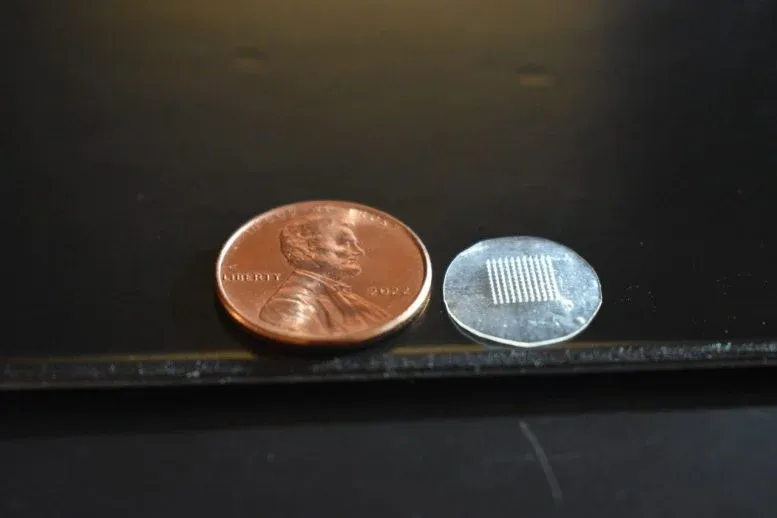
A new wearable patch, smaller than a penny, could automatically reverse fentanyl overdoses. This device detects dangerous fentanyl levels and releases naloxone, a medication that reverses opioid effects. This could help people even when no one else is around.
Researchers at Virginia Tech's Department of Biological Systems Engineering developed this microneedle device. Wujin Sun, an assistant professor, led the team. Their findings were published in Advanced Science.
"In general situations when there's an overdose, we need to have someone there to save you," Sun said. "In this case, we don't need a bystander because we're protected all the time."
We're a new kind of news feed.
Regular news is designed to drain you. We're a non-profit built to restore you. Every story we publish is scored for impact, progress, and hope.
Start Your News DetoxHow the Patch Works
The iNal patch has 121 tiny needles. These needles reach the fluid just under the skin, causing very little damage.
The patch also contains porous silica nanoparticles filled with naloxone. These particles have molecular gates that open when they detect fentanyl. When fentanyl is present, the gates open and release naloxone into the body. More naloxone is released as fentanyl levels increase.
The patch stores extra naloxone. If fentanyl exposure happens again, more pores can open to release additional medication. This is important because fentanyl can stay active longer than naloxone. Overdose symptoms might return after the first dose wears off.
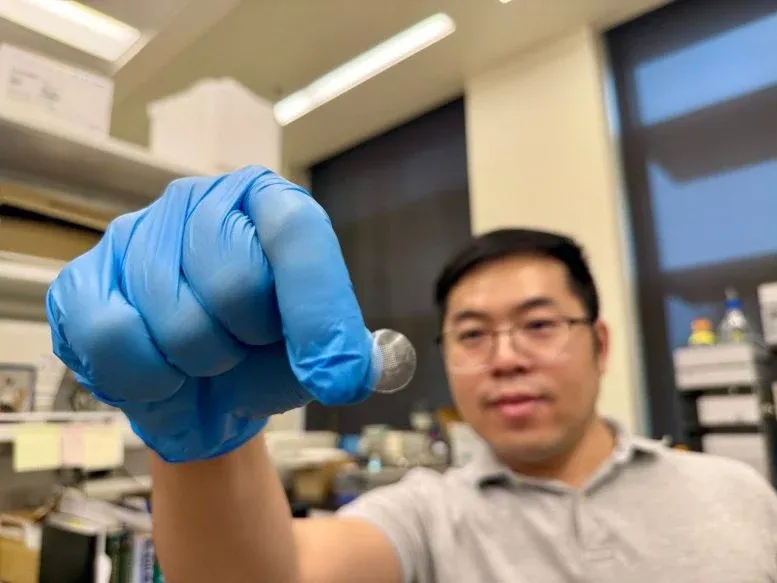
Penghui Zhao, a visiting instructor at Virginia Tech, led the patch's development and testing. "One of the greatest technical challenges was finding the right combination of biomaterials and microneedle technology to achieve reliable, on-demand drug release," Zhao said.
Sun sees the patch as a tool to reduce harm, not a replacement for pain medication. Accidental overdoses can happen if someone forgets if they've already taken a dose.
"We expect an opioid concentration in the bloodstream because you need pain relief," Sun said. "But we don't want that to be too high. We designed the sensor to monitor the opioid concentration, and once it reaches a threshold, it triggers the release of an antagonist that can prevent overdose."
The researchers used fentanyl and naloxone for this system. However, the chemistry could be changed to detect other opioids or deliver other medications.
Testing and Future Steps
The researchers first tested the patch in the lab. It released naloxone within minutes when fentanyl was present. It released more naloxone as fentanyl levels rose and continued for up to 24 hours.
Next, they tested the patch in mice. Higher fentanyl doses led to more naloxone release. The device worked even after three separate fentanyl exposures.
"The most exciting moment came from the animal studies," Zhao said. "Seeing the patch respond to fentanyl exposure and effectively reverse opioid-induced effects showed us that the technology could potentially work beyond the laboratory."
Mice with the patch showed far fewer overdose symptoms than those without it.
The researchers found no significant irritation or harm from the patch. More studies are needed to check its durability, how it works on different skin types, and its exact response to various opioids.
Sun and Zhao have applied for a patent for the technology. Sun is now looking into how to turn the patch into a product for wider use.
"This is a very general platform," Sun said. "It has a lot of opportunities."
Deep Dive & References
A Fentanyl-Responsive Microneedle Patch for Harm Reduction - Advanced Science, 2026