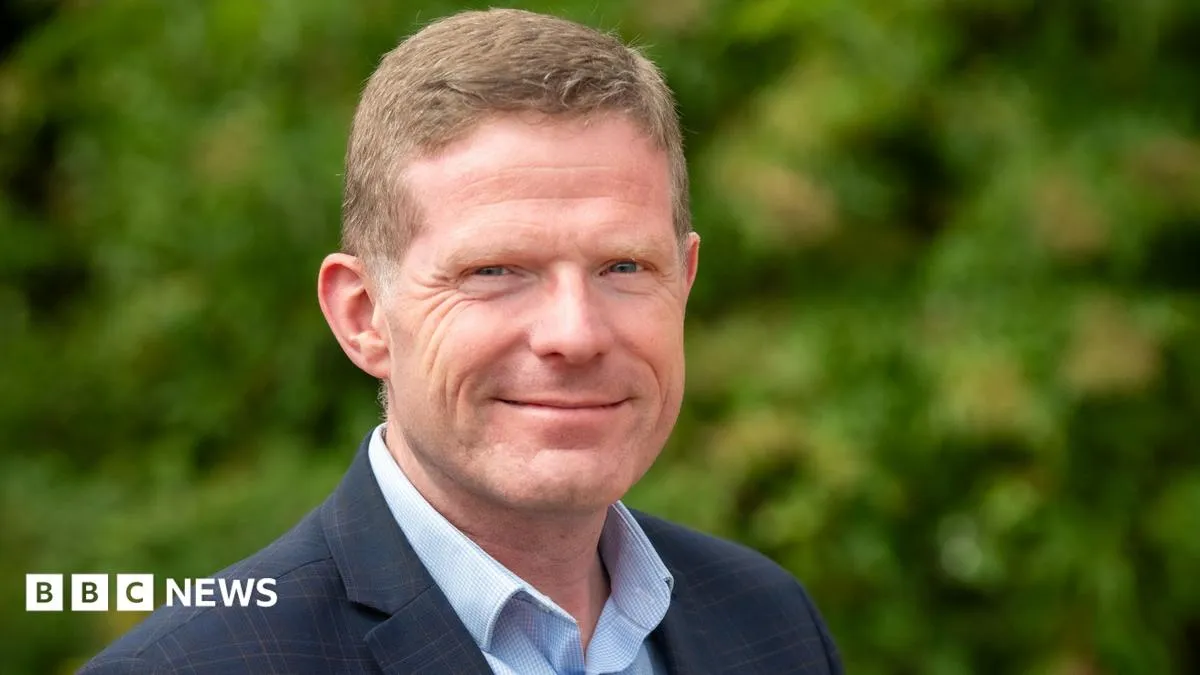
Imagine going under the knife, and your surgeon has an AI co-pilot whispering crucial directions in their ear. That's exactly what happened to Rhys Hibbert, a father of two from Bedfordshire, who just became the world's first patient to have brain surgery with real-time AI assistance.
His tumor is gone. His sight, which was fading fast, is back. And all because an algorithm was watching a video feed of his brain, pointing out hidden blood vessels and nerves like a super-smart GPS for surgeons. Hibbert, with understandable relief, put it best: "There are no road signs inside our head."
The Unexpected Detour
Just 18 months ago, 48-year-old Hibbert was living a perfectly normal life, managing customer services and enjoying his daily two-mile walks. Then, during one of those walks, he collapsed with a seizure. The culprit? An 11mm non-cancerous tumor on his pituitary gland, a tiny but mighty hormone factory at the base of the skull.
We're a new kind of news feed.
Regular news is designed to drain you. We're a non-profit built to restore you. Every story we publish is scored for impact, progress, and hope.
Start Your News DetoxThis little gland sits uncomfortably close to some very important neighbors: the carotid arteries (brain's blood supply) and the optic nerves (vision control). As the tumor grew, it started pressing on those nerves, dimming Hibbert's peripheral vision. He started tripping, felt constantly exhausted, and found himself navigating a world that was literally shrinking around him. When presented with the chance to be the pioneer for this AI-assisted surgery, he didn't hesitate. Someone has to go first, after all.
Your Brain, Now with AI Commentary
The surgery itself involved snaking a thin camera, an endoscope, through Hibbert's nose to the base of his skull. The tumor was there, but it was playing hide-and-seek behind bone and membrane. Every brain is a unique masterpiece of spaghetti and meatballs, making it notoriously tricky to find the safest path. Traditional surgery has a 25-50% chance of not getting the whole tumor, and a 0.5-2% chance of nicking a major blood vessel. Not exactly comforting odds.
This is where the AI stepped in. Trained on hundreds of previous pituitary tumor removals – essentially more operations than most surgeons will see in a lifetime – it watched the live video feed on a second screen. Like a high-tech facial recognition system, it identified and highlighted the important anatomical structures, showing the surgeons exactly where the vessels and nerves were most likely to be. Professor Hani Marcus, part of the surgical team, described it as an "expert second pair of eyes."
Crucially, this AI isn't taking over. It's an assistant, a real-time advisor that surgeons can choose to heed or ignore. Think of it as a "surgical ChatGPT" – offering expert advice in the operating room. The technology, funded by the National Institute for Health and Care Research and Google, is now heading for a larger trial.
For Hibbert, the results are nothing short of miraculous. "When I opened my eyes after the operation it felt like I had got 360-degree vision – I hadn't seen that clearly for a year," he recounted. His sight continues to improve, his energy is back, and all those debilitating side effects are gone. "It's given me my life back," he said. And if that's not a glowing review for a brain-surgery AI, what is?