Ever wonder why sometimes a cup of coffee makes you a genius, and other times it just makes you… jittery? Turns out, your brain's mood before any kind of input might dictate the outcome. Scientists are now finding that the brain's state just before stimulation is a massive clue to making treatments for things like depression and Parkinson's a whole lot more reliable.
Brain stimulation, whether electrical or magnetic, is already a vital tool. It helps researchers understand the grey matter and offers relief for conditions from epilepsy to severe depression. The catch? Even with the same settings, the same area, and the same person, the results can be a cosmic coin flip. One day, a zap might calm tremors; the next, it might do precisely nothing. Which, for patients, is less than ideal.
The Brain's Pre-Game Warm-Up Act
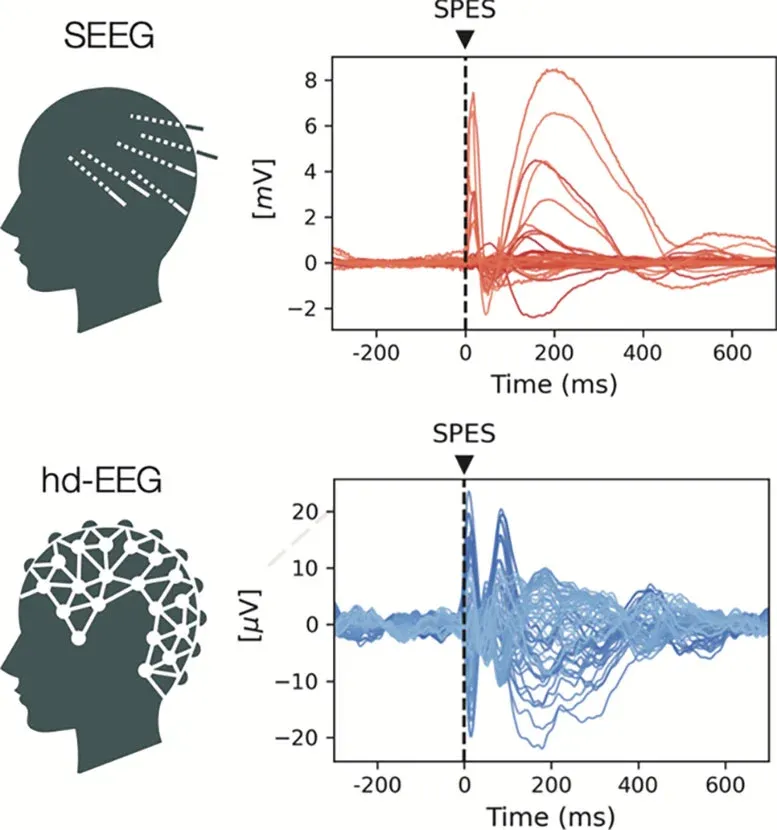
A new study dove deep into the electrical chatter of 36 epilepsy patients. These folks had already received over 10,000 individual stimulations across roughly 320 sessions as part of their seizure mapping. The researchers weren't just looking at the zaps; they were meticulously tracking 125 different aspects of brain activity before each one. Think of it as checking the brain's vibe: how synchronized were its networks? How were different parts chatting? What was the overall complexity of its internal monologue?
We're a new kind of news feed.
Regular news is designed to drain you. We're a non-profit built to restore you. Every story we publish is scored for impact, progress, and hope.
Start Your News DetoxThe big takeaway? Looking at the entire brain's activity, rather than just one tiny spot, was the real crystal ball. Predictions were particularly strong when stimulation hit areas tied to movement and vision. And here's the kicker: when stimulation was only delivered during specific, pre-identified brain states, the variability in responses dropped by up to 24%. Let that satisfying number sink in.
Even better, these predictive patterns weren't just hidden in deep brain recordings; they showed up in external scalp readings too. This means the method isn't just for sci-fi movies or invasive procedures. It could potentially be used in regular, non-invasive clinical settings, making treatments far more precise.
Imagine a future where doctors don't just guess, but know the optimal moment to deliver a brain stimulation. By monitoring the brain's real-time state, we could unlock far more predictable and effective treatments, turning those coin flips into reliable outcomes. It’s like knowing exactly when your brain is ready for that coffee to make you a genius, every single time.