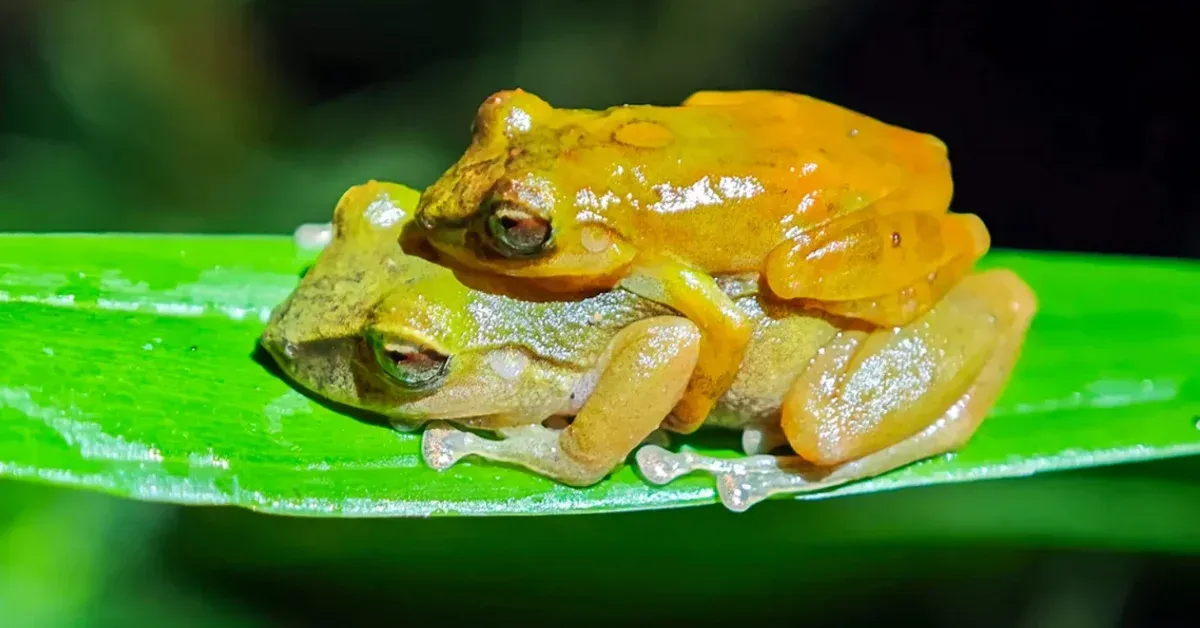
Evolutionary biologist Santiago Ron and his team at the Pontifical Catholic University of Ecuador recently found a new frog species. This frog had been overlooked for over a century.
Unlike many newly discovered species, which are often rare, the Milpe robber frog is common. It lives across 16 million acres in the Chocó forests of western Ecuador and southern Colombia.
It is also easy to spot because its mating call sounds like a smoke detector's chirp.
We're a new kind of news feed.
Regular news is designed to drain you. We're a non-profit built to restore you. Every story we publish is scored for impact, progress, and hope.
Start Your News DetoxResearchers shared their findings about the Milpe robber frog in the journal ZooKeys on July 24.
A Common Frog Hiding in Plain Sight
Ron and his co-authors noted that Pristimantis milpe is one of the most widespread Pristimantis species in the Pacific basin.
They added that it can be very common and noticeable due to its loud call. It is surprising that such a common species remained unnamed until now.
The frogs are also easy to tell apart within their own species. Females have distinct orange or light blue markings with black spots on their groin and thighs. Males are more uniformly golden-brown.
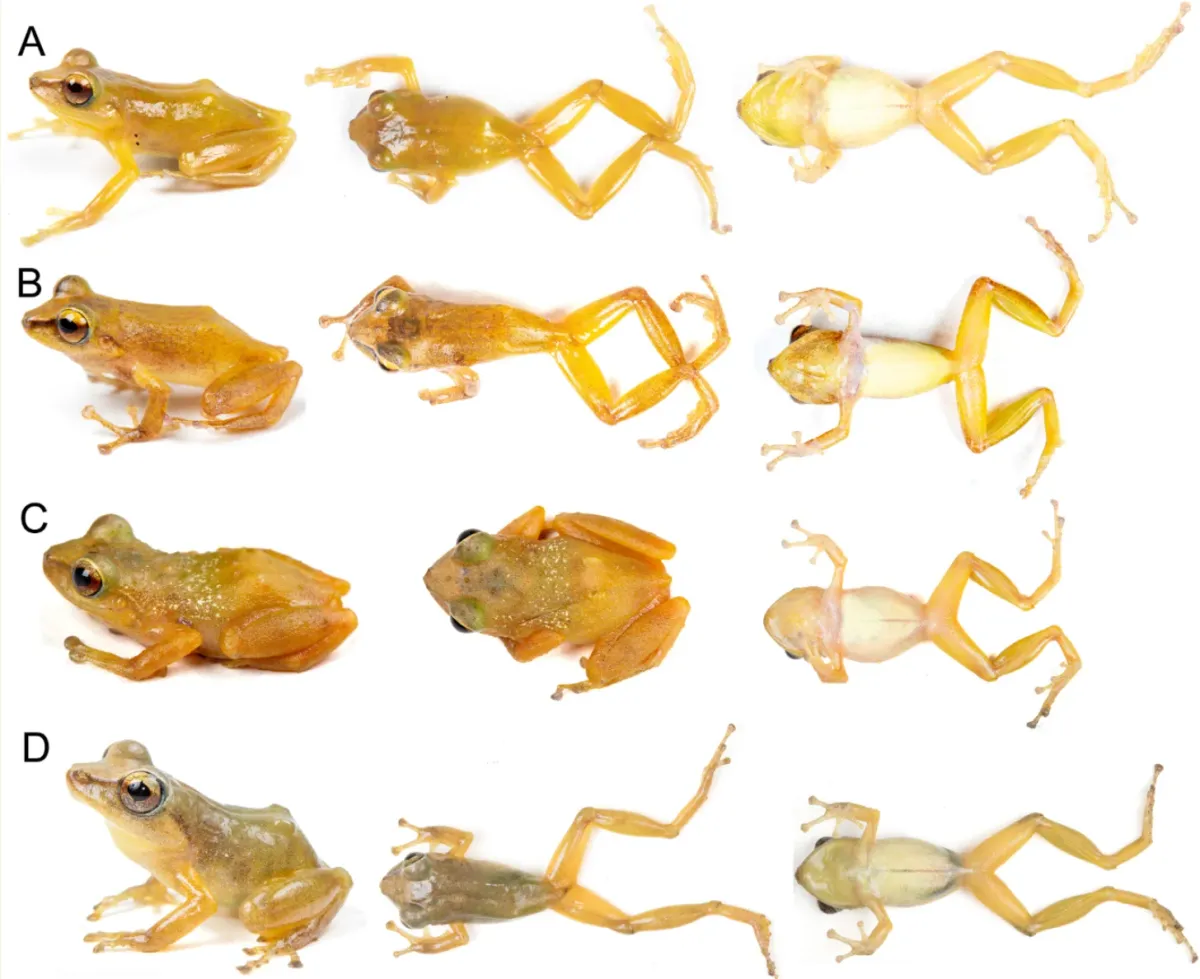
Researchers said that a common species remaining "invisible" to science shows how important it is to correctly link scientific names to real-world populations.
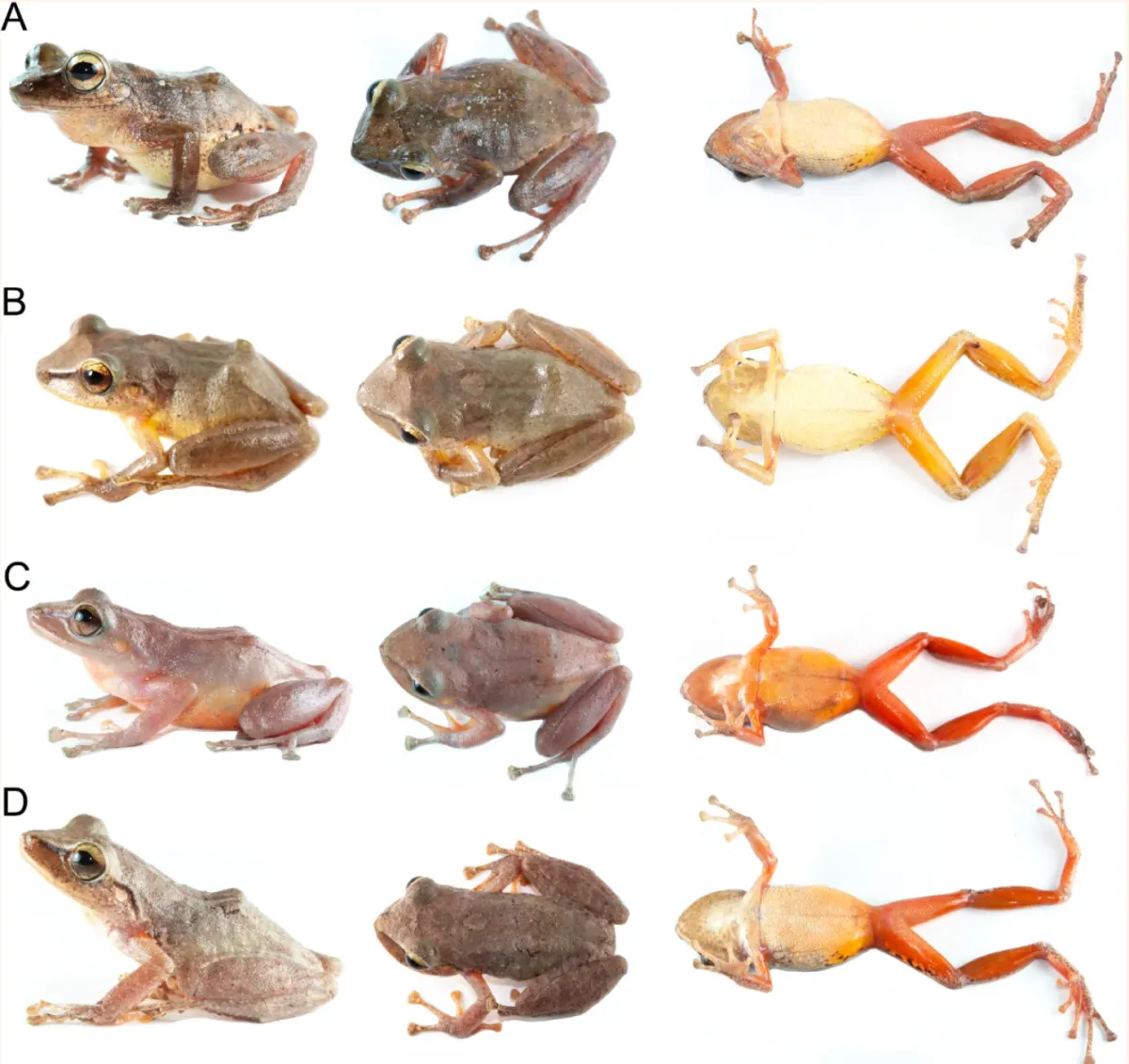
Correcting a Century-Old Mistake
For over 100 years, the Milpe robber frog was mistakenly identified as Pristimantis subsigillatus, or the Salidero robber frog.
The researchers found that the populations thought to be P. subsigillatus were not the same species as the original specimen.
Instead, the Milpe robber frog was more closely related to P. latidiscus. This species had been described four years earlier from a nearby area.
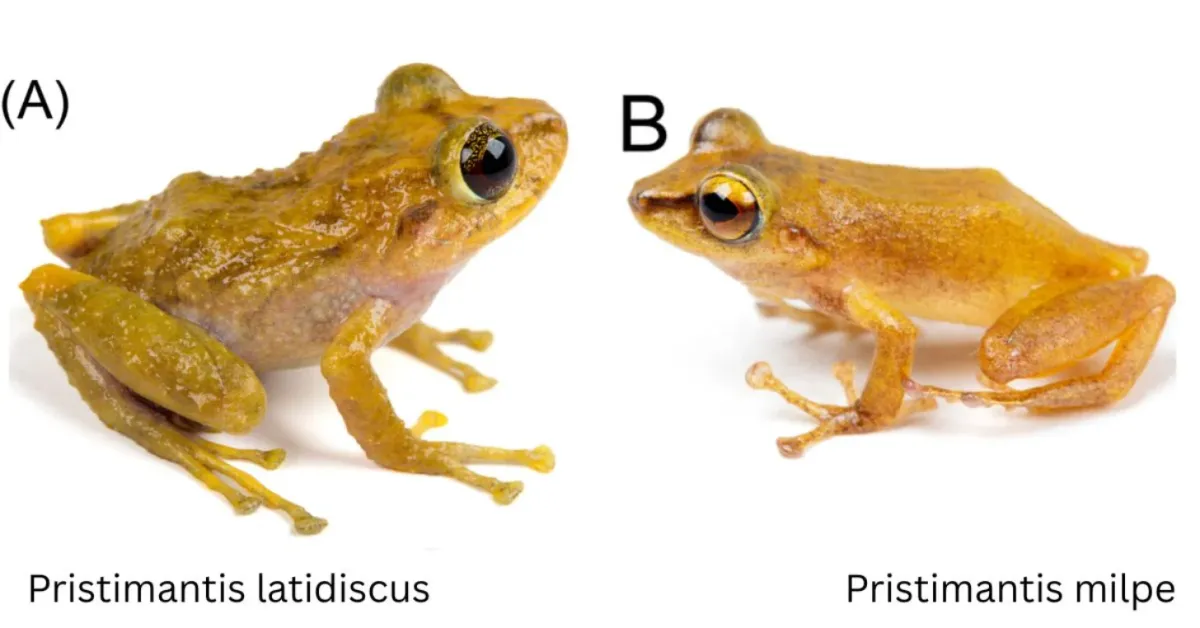
This discovery meant that a whole group of frogs, previously misidentified, now needed a correct scientific name.
Biologist Jhael Ortega, a Ph.D. student at Virginia Tech and one of the study authors, noted that a common species going unnoticed under the wrong name for decades highlights the importance of correctly linking scientific names with living populations.
Other Cases of Mistaken Identity
This is not the first time an animal has been misidentified for many years. In 2025, entomologist Peter Huemer examined 100 moth specimens. Scientists had long called them the common oak carcina moth, Carcina quercana.
Using genetic analysis, Huemer found that some of these moths were a different species. He named it Carcina ingridmariae.
The discovery happened in Northern Cyprus, a region known for its rich biodiversity.
Huemer called it the "prettiest species" he had ever seen. He named it after his wife and lab partner, Ingrid Maria, who supported him during his fieldwork and lab analysis.
Deep Dive & References
A mystery kept in London led to the discovery of a new Ecuadorian frog - Pensoft Blog, 2026 A new species of Pristimantis (Anura, Strabomantidae) from the Chocó forests of western Ecuador - ZooKeys, 2023 A new species of Carcina Hübner, [1825] from Cyprus (Lepidoptera, Depressariidae) - Alpine Entomology, 2023