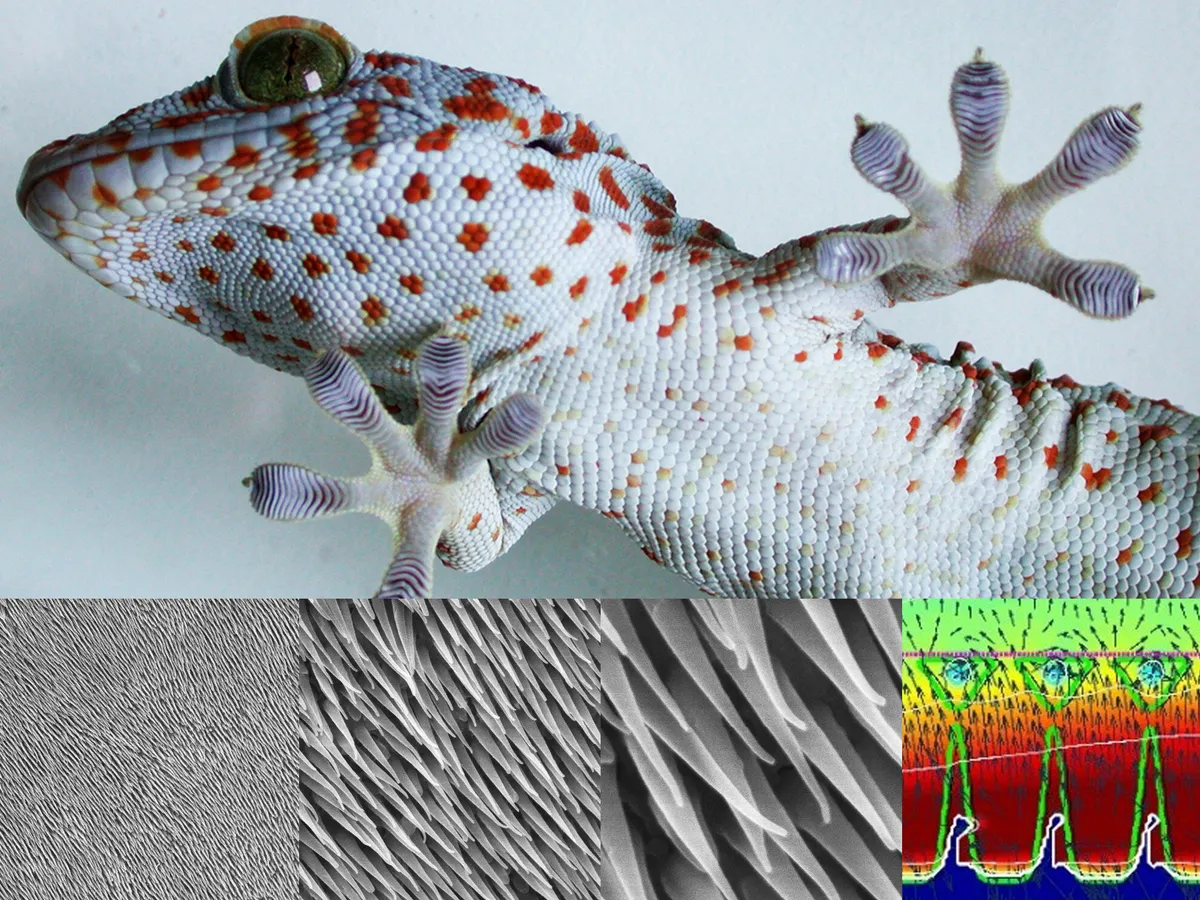
Living in a desert is tough, especially when your skin is basically a leaky bucket. Geckos, those tiny, wall-climbing marvels, face this exact problem: how to keep from drying out when every breath of air is trying to steal their precious moisture. Their solution? A full-body suit of nanoscale hairs so tiny, they make a peach look like a shag carpet.
Scientists have known about these microscopic bristles, called setulae, for ages. They're common on geckos and chameleons chilling in arid locales. But what exactly were these minuscule marvels doing? Were they just for show? (Spoiler: no, nature rarely does anything "just for fun," as one researcher wryly noted.)
The Secret to Not Drying Out
Enter the intrepid researchers from Kiel University, who decided to get to the bottom of this hairy mystery. They published their findings in Biointerphases, confirming what many suspected: these hairs are essentially tiny, personal humidifiers.
We're a new kind of news feed.
Regular news is designed to drain you. We're a non-profit built to restore you. Every story we publish is scored for impact, progress, and hope.
Start Your News DetoxTheir initial thought was, more surface area usually means more evaporation. But evolution, as it often does, had a cleverer trick up its sleeve. The setulae aren't just there; they're arranged in a specific, almost architectural way that traps a layer of air right against the gecko's skin. This creates a miniature, sheltered microclimate.
Think of it like this: water molecules trying to escape the skin hit this trapped air layer, bounce around like pinballs, and a good chunk of them just give up and return home. It's a nanoscale boundary layer, making the skin significantly less permeable to the thirsty desert air.
The team used some fancy computer models, simulating fluid dynamics over gecko skin, to prove their point. Now, they're planning to move from digital geckos to the real (or at least shed) thing, using artificial skin and actual gecko molts to confirm their findings. They also want to dig into how lipids — the skin's natural fats — might be adding to this water-repellent superpower. Because apparently, staying hydrated in the desert is a full-time, multi-layered job.