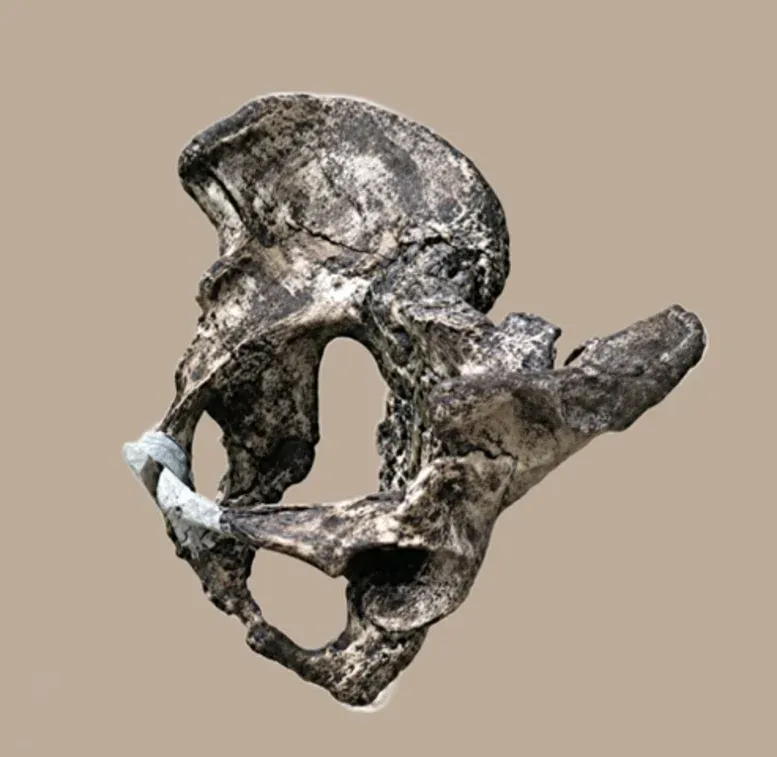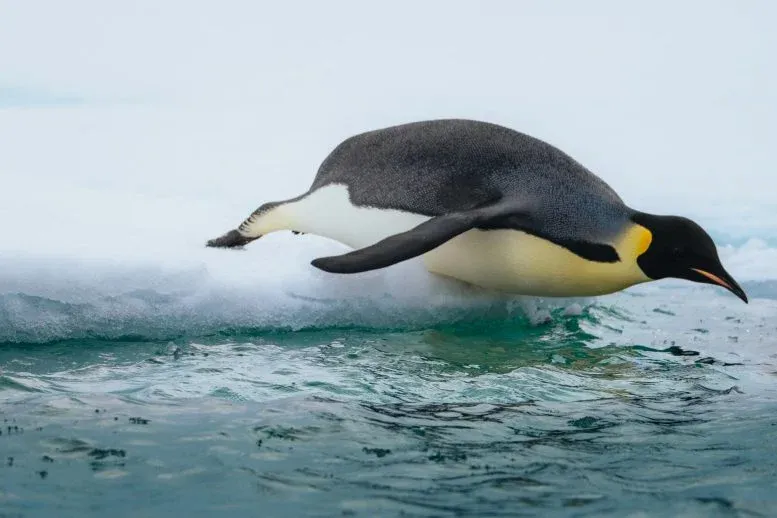
Ancient penguin bones from Seymour Island, near the Antarctic Peninsula, hold clues about Earth's past climate. Paleontologists from China University of Geosciences (Beijing) found that the chemical makeup of these bones can record environmental changes over millions of years.
Using a special X-ray technique, researchers found evidence of Antarctica's shift from a warm, wet climate to much colder conditions.
"Penguins are among the most iconic animals of Antarctica," the research team noted. "Seymour Island has one of the best collections of Eocene penguin fossils. These fossils cover an important time in Antarctic climate history, from the warm, humid early Eocene to the cooler middle and late Eocene."
We're a new kind of news feed.
Regular news is designed to drain you. We're a non-profit built to restore you. Every story we publish is scored for impact, progress, and hope.
Start Your News DetoxChemical Clues to a Warmer Past
Since the fossils are rare, scientists needed a way to study them without causing damage. They used micro-X-ray fluorescence scanning. This method maps different chemical elements on a surface.
The team found clear differences in penguin bones from different geological periods. Fossils from about 55 million years ago showed much stronger signals of titanium, silicon, and potassium. Researchers believe these higher levels mean there was more weathering on land and more runoff during the warmer early Eocene.
Younger fossils from cooler times had much weaker signals for these same elements.
"The most surprising result was that the early Eocene fossil showed substantially higher titanium, silicon, and potassium signals," the researchers said. "This pattern matches stronger continental weathering and land material input during the warm and humid early Eocene."
Getting accurate chemical information from millions-of-years-old fossils was tricky. Their uneven shapes made it hard to keep scanning conditions consistent.
"One of the main challenges was getting reliable elemental information without damaging the fossils," the team explained. They carefully positioned the bones to keep the scanning distance constant.
The technique also revealed changes in the ocean. Patterns of iron, manganese, and sulfur in the bones showed chemical shifts in the marine sediments as the remains were buried.
Fossils Expand Climate Records
These findings suggest that the chemistry of fossil bones can offer new insights into past Earth systems. This can add to what we learn from marine sediment drilling and microfossil analysis.
"An important finding for us was that the elemental information in penguin bones may record not only how external materials entered the bones, but also differences in weathering, deposition, and early burial environments," the team stated. "We believe fossils can provide important extra information for studying past environmental changes on the Antarctic Peninsula."
This study shows how non-destructive chemical scanning and geological evidence can be used together. It helps polar researchers reconstruct Antarctica's distant past using existing fossil collections.
Deep Dive & References
Eocene penguin fossils as archives of Antarctic weathering and climate change: insights from micro-X-ray fluorescence elemental mapping - Fossil Record, 2026