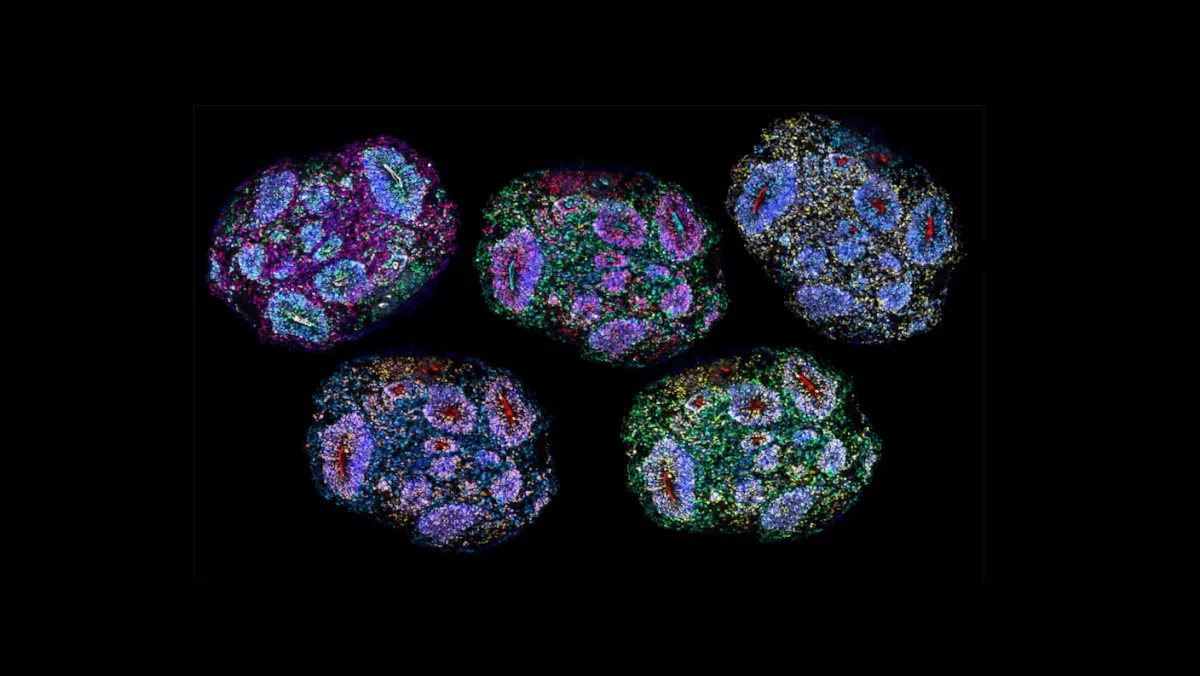
For something that happens in your brain, seizures have always been remarkably camera-shy. Those fast, erratic electrical waves have been notoriously difficult to track in real-time, leaving doctors and researchers in the dark about where they start, how they spread, and when they finally decide to call it a day.
Well, not anymore. Researchers at the University of Georgia just unveiled an imaging system that captures seizures in full 3D, as they unfold. Which, if you think about it, is both impressive and slightly terrifying – like watching a lightning storm inside a really tiny, really important glass sphere.
The Brain on Fast-Forward
To pull this off, the team turned to the humble zebrafish larva, a common research model in neuroscience because, among other things, its brain is conveniently transparent. They then induced a seizure and watched the show.
We're a new kind of news feed.
Regular news is designed to drain you. We're a non-profit built to restore you. Every story we publish is scored for impact, progress, and hope.
Start Your News DetoxWhat they saw was a seizure starting its party at the back of the brain, then moving forward to the optic tecta — a midbrain region that handles visual info and keeps your eyeballs moving. The electrical fireworks slowly faded over several seconds. Peter Kner, a professor at UGA, highlighted the genius of 3D imaging: brains are, in fact, three-dimensional. Trying to understand a seizure with only 2D images is like trying to understand a symphony by listening to only the violins.
Understanding these complex electrical events in their full, chaotic glory could be a major leap toward new treatments for brain diseases. Because if you know how the party starts and how it spreads, you might just figure out how to shut it down.
Cosmic Clarity for Tiny Brains
So, how does this microscopic movie magic happen? The system uses something called light sheet microscopy. Imagine shining a super-thin sheet of light, like a laser pointer's beam flattened out, to illuminate just one sliver of the brain at a time. This gives incredibly clear, fast images without all the distracting background noise.
But here's the kicker: the microscope also uses adaptive optics. This technology was originally developed for astronomy. Ever wonder why stars twinkle? It's the atmosphere blurring their light. Adaptive optics corrects that, making distant galaxies look sharp. Turns out, brain tissues bend light in a similar way, causing blurry images.
So, they essentially borrowed a trick from stargazers to make tiny brains clearer. Kner, for his part, still finds the field of imaging exciting, even after centuries of microscopes. Because apparently, there's always a clearer picture to chase.
It makes you wonder what else is hiding in plain sight, just waiting for the right lens.