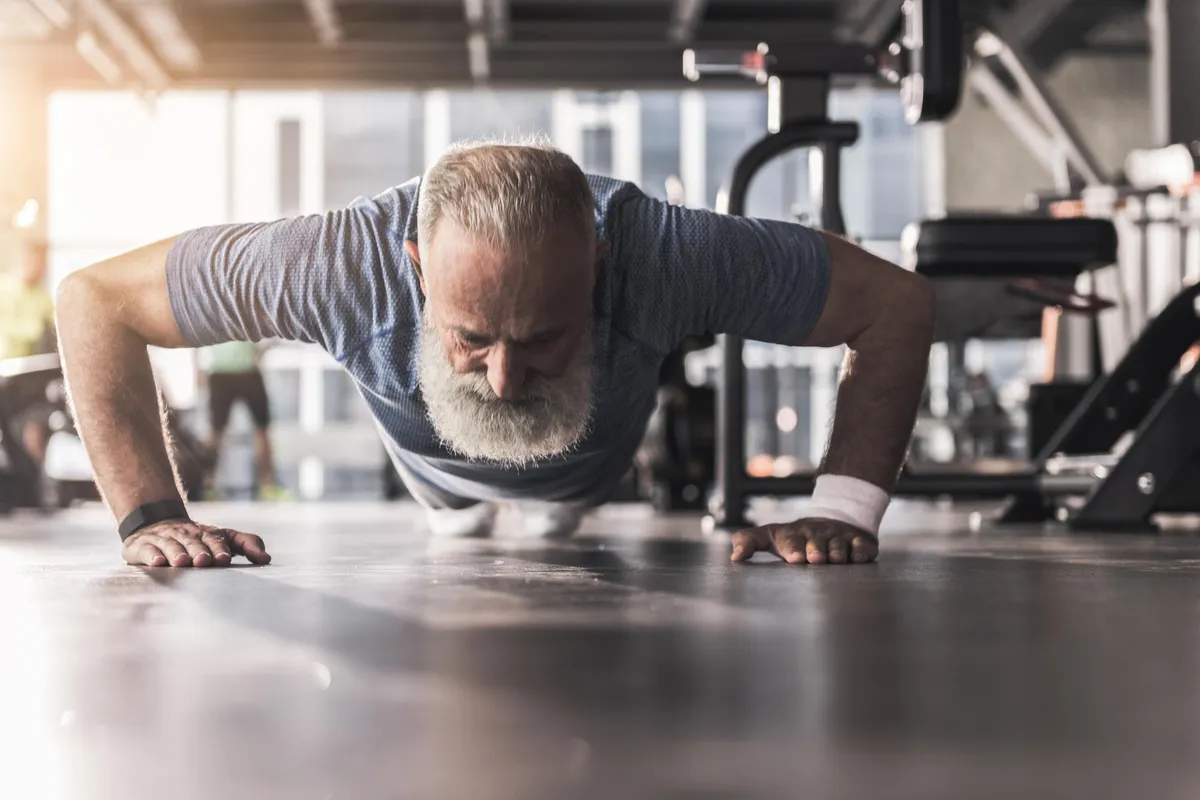
Most exercise reduces body fat. Only one type keeps your muscles intact while doing it.
Researchers at the University of the Sunshine Coast tracked 122 healthy older adults—average age 72—through six months of gym sessions. Three times a week, they exercised at different intensities. The results split cleanly: high-intensity interval training (HIIT) trimmed fat and preserved lean muscle. Moderate-intensity workouts cut fat but eroded muscle mass slightly. Low-intensity exercise showed modest fat loss but less muscle protection.
"We found that high, medium, and low intensity exercises all led to modest fat loss," says Dr Grace Rose, the exercise physiologist who led the study. "But only HIIT retained lean muscle."
We're a new kind of news feed.
Regular news is designed to drain you. We're a non-profit built to restore you. Every story we publish is scored for impact, progress, and hope.
Start Your News DetoxThis matters more than it sounds. As we age, losing muscle while losing fat can leave you weaker, even if the scale looks better. Body composition—the ratio of muscle to fat—directly influences your risk of heart disease, type 2 diabetes, and mobility problems in your 70s and beyond.
Why intensity changes everything
HIIT works by creating a metabolic demand your body can't ignore. You sprint hard for 30 seconds—breathing heavy, conversation impossible—then recover for a minute or two. Repeat. That stress signals your muscles: stay useful. Your body responds by preserving the tissue it needs to survive the effort.
Moderate exercise, while beneficial for fat loss, doesn't generate that same urgency. Your muscles relax their grip on the tissue they're maintaining. You lose weight, but some of it comes from muscle.
"HIIT likely works better because it puts more stress on the muscles, giving the body a stronger signal to keep muscle tissue rather than lose it," explains Associate Professor Mia Schaumberg, who co-authored the research published in Maturitas.
The study participants were typical healthy older adults from Brisbane—normal weight ranges for their age, no special training background. They weren't athletes. They were people who showed up three times a week and did the work.
That consistency, across six months, produced measurable shifts in body composition. Both high and moderate intensities improved the distribution of weight around the middle, a particularly stubborn area for most people. But HIIT did it without the muscle trade-off.
The finding reflects a broader shift in aging research: evidence-based strategies matter more than generic advice. Not all exercise is equal when it comes to healthy aging. The intensity you choose shapes not just what weight you lose, but what kind of body you're left with.